
LA Confidential - The Final Act
Terrence Burns ©2017
Olympic Bids are like icebergs, there are the people you "see" above the water, but below there are many more people who are working hard making things happen seamlessly. You may not see them onstage, or at an Olympic function or on the "travel team" - but they are just as crucial to the success of a bid as the stars onstage.
One of the bedrocks of the LA 2028 bid was Carla Garcia. Carla served many roles for the bid, including Executive Assistant to Gene, and the administrative manager for the office. I met Carla on her first day on the job, when she, Casey, Patricia and I all flew to Colorado Springs for Casey's first speech to the USOC Assembly in 2015. I'm glad she stayed! She added the perfect combination of glamor and competence to our little team!
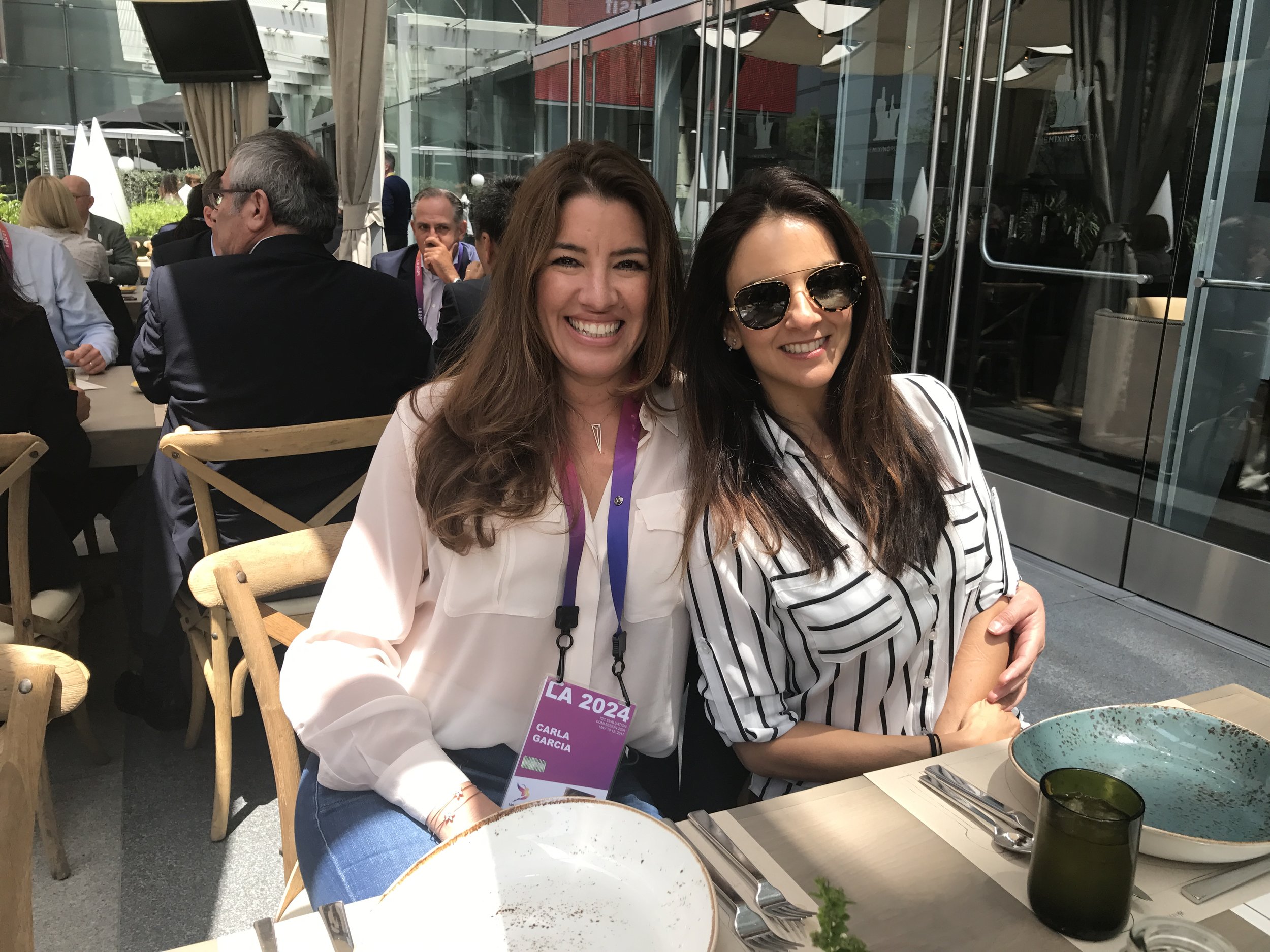
LA 2028 had a deep bench of awesome people. Two more who deserve shout outs are Rochelle and Alexa. Rochelle Farnum was a key member of our marketing team. We always could count on Rochelle (thankfully) to give us the perspective of the "younger demo" in our marketing planning - and it was always helpful.
Alexa Carrington was a true utility player on the team. She manned the front desk but also worked on assignments with virtually every functional group. When I think of a sunny, southern Californian smile and attitude I always think of Alexa - she made everyone in the office feel, well, happy.

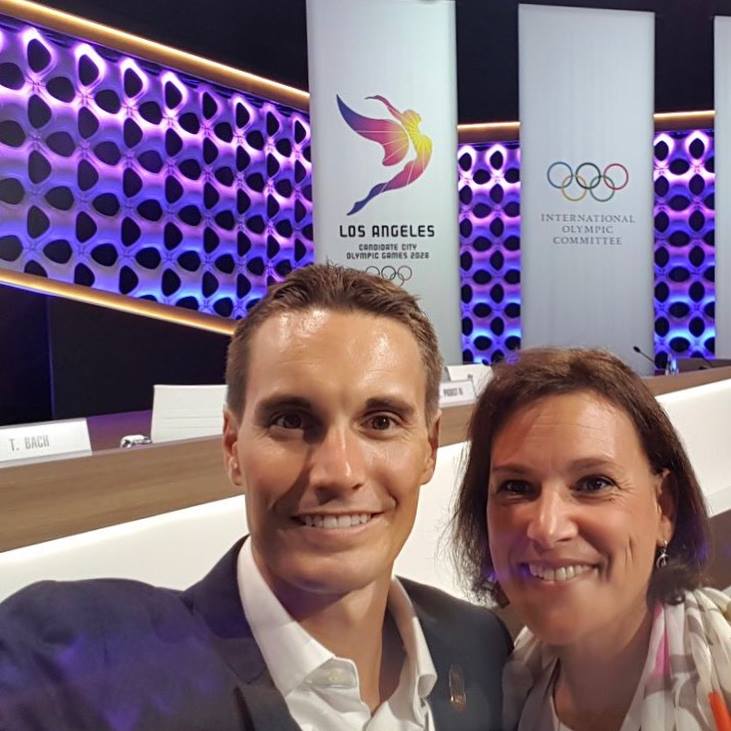
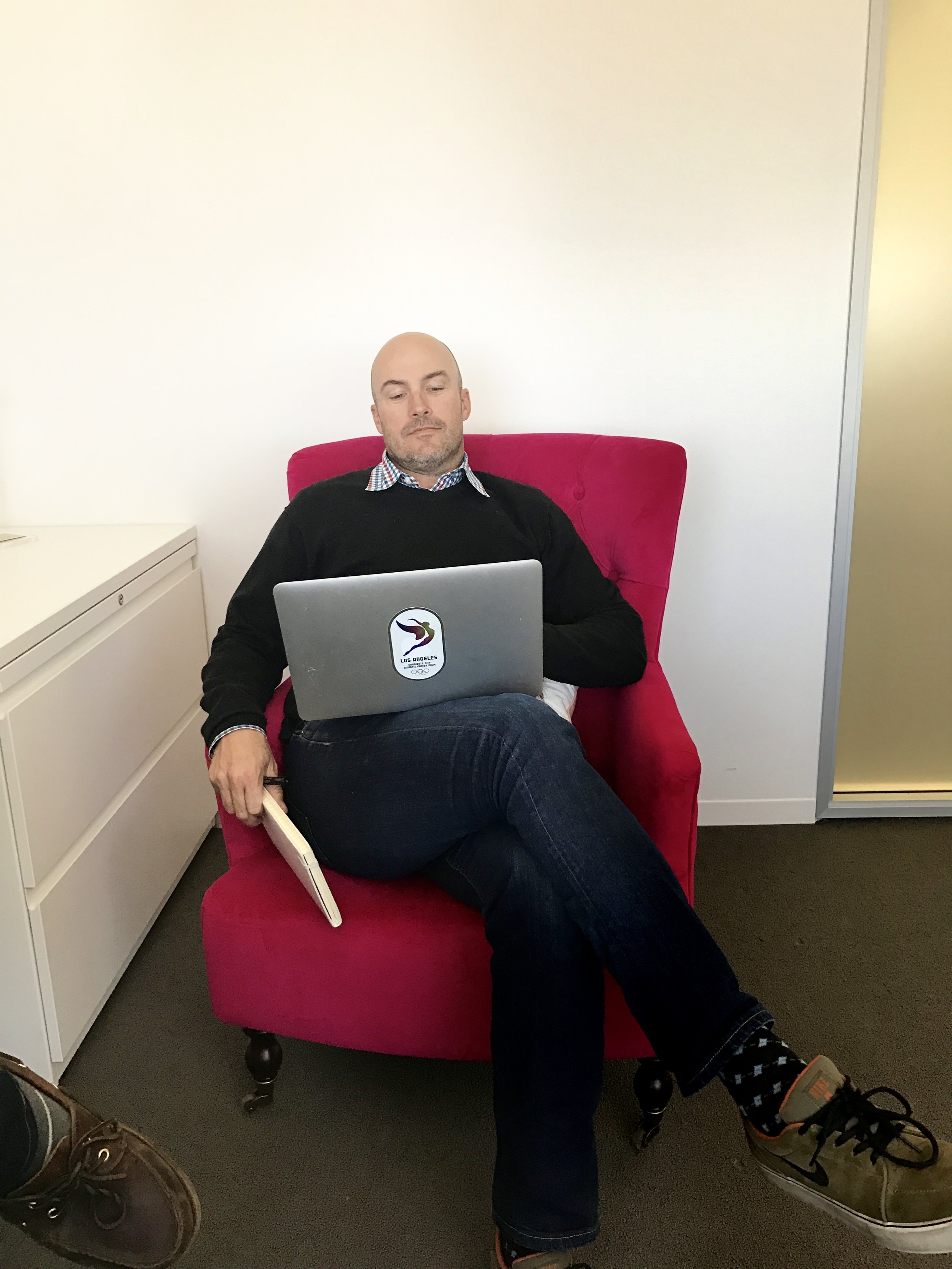
One dude who was hard to get a photo of was Lenny Abbey, our Director of National Olympic and Paralympic Committees Relations and Operations. This is the only photo I could find because he was never in the country!
Lenny worked on five summer and winter Games, and his role was to "refine LA 2024’s plans for optimizing the Games experience for National Olympic Committees (NOCs), National Paralympic Committees (NPC) and their teams." Lenny was our "Star Wars Bar" guy, meaning he could fit in anywhere. He was born in Sudan and lived and worked in 10 different countries in Africa, the Americas, Asia, and Europe.
And finally, the international communications firm, Weber Shandwick joined in LA 2024 on March 1, led by my freind Svetlana Picou and her excellent team.
Uncharted (Bid) Territory
As 2017 bowled along, we began prepping for what would be the most important presentation for the bid: The Technical Presentation to the IOC and International Federations in Lausanne, in July. Our saying was "Lausanne is the new Lima."
The Bids are given "guidelines" from the IOC for the specific types of data and information expected in the presentation, and it's usually heavy on technical details. Most bids pay lip service to this guidance because frankly, it has little to do with a winning story and strategy. For the 2024 Technical Presentation, both bids realized they needed to go with their "A" game because at that point, we had no idea if there would even be a Final Presentation in Lima - neither did the IOC.
The IOC scheduled an “Extraordinary Session” of the IOC to discuss the bid process and 24/28. The four IOC Vice presidents were asked to present their findings and recommendations regarding the dual award and to ask for the members' approval if indeed that is what the vice president’s recommended.
The week had many memorable moments for me personally and for the bid because we really were watching history being made.

And then this happened:

A word about yet another USA Olympic legend who was integral to our bid, Mr. Michael Johnson (yes, he of the Golden Shoes from the Atlanta 1996 Games). Michael worked tirelessly for us behind the scenes with the Olympic Family. He's polished, well-spoken, knowledgeable, approachable, witty, and well, he's Michael Johnson.
Olympic cocktail parties are interesting. Often, the person to whom you are talking is simultaneously scanning the room for someone more important than you. Long ago, I learned to not take it personally, in fact, it's rather entertaining to watch. It goes like this: "Ah, my friend (when they don't know your name)" "When did you arrive?" "Where are you staying?" When do you leave?" Then, boom - off to something or someone shinier.
Try walking into an Olympic gathering with Michael Johnson and Allyson Felix. It's electric and instantaneous how quickly heads turn, and bodies gravitate to these two. Michael and Allyson are Olympic royalty in every way, and we were so honored, lucky, and humbled to have them on our team.
The Lausanne 45-minute presentation (which began with the 2016 Summer Games race) is ostensibly focused on the technical components of each bid. It was created because IOC members needed more context given they were not allowed to visit the Bid Cities.
Our speaker team/content was as follows:
Intro Film Physical beauty of LA
Anita: Opening
Casey: Intro team, LA 2024 Vision
Larry: USA’s commitment to the Olympic Movement
Janet: LA2024’s commitment to athletes
Games Concept Film
Gene: Governance & transition to OCOG, Budget
Doug: Accommodations & Transport
Angela: Olympic Village, Agenda 2020
Candace Cable: Paralympic Plan & Overview
Allyson: America story/personal perspective
Mayor: Close, reiterate Vision
Closing Film
Anita began this presentation to the membership because she is the most senior US IOC member and one of the longest-serving IOC members in the Movement. I remember completely re-writing her remarks (with her) on the day before the presentation. Sometimes it's like that, speakers change their minds at the last minute. And it's fine - they need to be comfortable with what they're going to say. IOC members speaking to IOC members tend to be more intensely interested in every word. It makes sense. Her delivery was warm, and her love of the Games and the Movement genuine and heartfelt.

She reminded the membership that they could trust LA, because “…we’ve been partners before, and to be frank, that relationship worked out very well – for both of us.” It was a light moment appreciated by the audience. She then referenced people in LA who attended the 1984 Games as children by introducing one of them, Casey Wasserman.
We thought it would be good for Casey to continue the reference to LA84 as his transition from Anita. Casey recounted a story from those Games, which he attended with his grandfather, the famous Hollywood agent Lew Wasserman (Mr. Wasserman was also instrumental in the LA 1984 Games). Casey said, “I remember him telling me the most remarkable thing; he said, the Olympics aren’t just in the sports business – the Olympics are in the magic business….” Then he said, “so are we…”
We felt like we didn't have anything to prove technically about our bid; the IOC EC report already made a case for us - and for Paris, too. So, we decided to stay true to our brand and keep focused on the attributes that LA offered uniquely - namely, a focus on the future beyond 2024. We wanted to also focus on optimism and partnership - not brinksmanship.
Casey reiterated that he did not believe this Bid was only about LA or Paris – it was about the future of the Olympic Movement. He also stated that LA’s objective was to serve the Movement’s needs, not dictate ultimatums such as “now or never.”
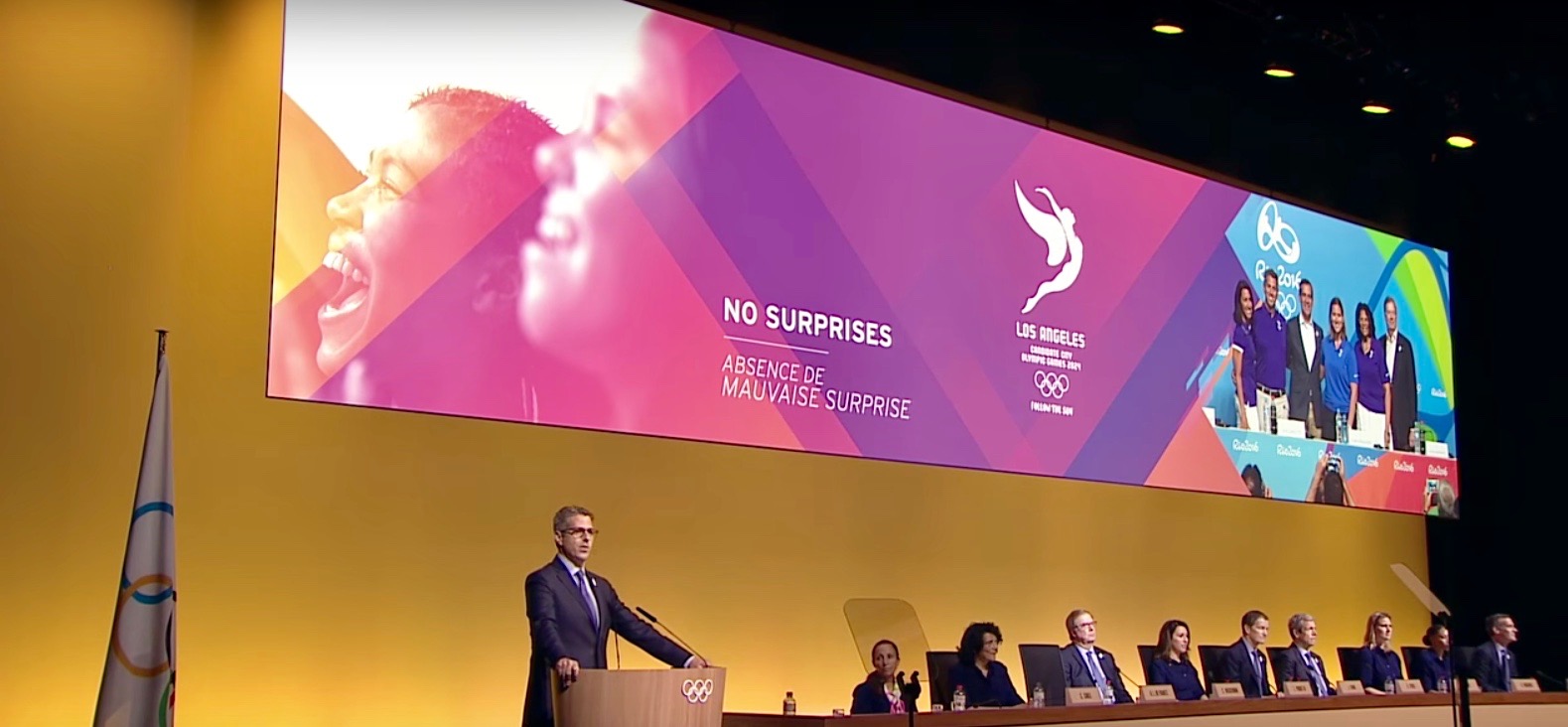
Our goal was to demonstrate the concept of true partnership. Casey spoke of LA creating "the stories that the world loves to enjoy and the technology it uses to share them."
We also wanted to strike up a new conversation about the word innovation. Up to that point in the campaign, the word "innovation" was overused - by everyone; it was about as unique as air. We wanted to change the conversation about innovation because it was something we did feel that we owned as a Bid.
Casey said “innovation is the key to survival, and the Olympic Movement is no different…but when we talk about innovation, we're not talking about flying cars, we’re talking about our mindset.” We believed that the IOC's EC report reflected this, but subtly. With a room full of almost 100 IOC members from all over the world with different perspectives, you cannot depend on being subtle.
So, speaking of not being subtle...
Larry was up next and generated a collective intake of breath in the room when he said, “…the Olympic Games, as we all know, are not and have never been immune to politics.” Given the politics of the United States at that moment, many wondered where he was going with this narrative.
He continued, “…as Members, we strive to separate politics and sport in our decisions. I know this is difficult, especially today – it is difficult for me as well…”
Rarely has an IOC member publically shared personal feelings about the challenges all Members must face regarding geopolitics and the Games. It was especially challenging for an American IOC member in a Bid presentation with - and let me put this as mildly as possible - as controversial a President of the United States as we had at that moment. After the November 2016 US presidential election, I felt like our Bid was trying to thread a needle in a hurricane - at night - with gloves on. It was a powerful moment, and the members watched and listened intently.

Larry then talked about the USA’s commitment to the Olympic Movement in terms that were bold, but we felt needed. For example, did you know that at the Rio Games, over 1,000 Olympians from 107 countries trained at universities in the United States? They won 58 medals in 18 sports.
“Let me put it another way,” Larry said, “our university system actually trains your athletes to compete – and to win – against American athletes.”
Then the kicker, turning a controversial US political tagline on its head.
He said, “Dear colleagues, that isn’t putting America first, that’s putting the Movement first." Many members smiled, a few grimaced, and some looked genuinely confused. But, it had to be said.
Like I said, Larry got the pointy bits, and he delivered.
Janet was up next and was a charming and buoyant as always. Janet is a fierce competitor, and of all the speakers, she probably needed the least amount of practice. Yet, Janet was always the first speaker to ask for additional practice time - every time. That’s why she’s the champion she is.
Janet painted a picture of a city committed to and dedicated to sport. She reminded the room that over 1,000 Olympians and Paralympians choose to live and to train in LA, every day (I found that fact astonishing when I learned it). Janet oversaw LA 2028’s outreach effort to over 4,000 Olympians and Paralympians from around the world, obtaining their input into our Games Concept.

Janet went onto to explain the framework of our Games plan, full of existing, modern venues as a prelude to the technical film to follow. But to starkly draw a distinction with Paris, she closed with these lines:
“We could have built a new Olympic Village – but we didn’t.
We could have built a new Media Village – but we didn’t.
We could have been an array of other new venues – but we didn’t.
What we did do was build the best 2024 Games Concept for our city, the athletes and the Olympic and Paralympic Movements for the future.”
Gene was up next, and as CEO, he had the unenviable task of speaking about governance, budget and our transition plan to an OCOG. These were not exactly the most scintillating topics, yet profoundly important as recent troubled Games have shown.
Gene noted he’d asked his fellow Goldman Sachs colleague, Paul Deighton, the former CEO of London 2012, for some advice. He said Paul’s advice was simple: “take care of the athletes first, then make sure you take in more money than you spend...” It got a chuckle from the audience; really, a budget reference got a laugh. You just never know.

Gene also had another crucial point to clarify for the audience. LA 2024, like all US Bids before it and US Games as well, was funded by a private enterprise model.
The US doesn't have a cabinet-level sports minister. There is no national budget or funding mechanism for sports. Our system of sport is privately funded.
For many in the audience, this “private model” concept could be perceived as risky – what do you mean the government doesn’t fund your Bid or your Games? A government-funded or supported model is one that many nations represented in the room were used to.
Our US model is an outlier. Some of our Bid’s detractors were working being the scenes to portray our model as “risky,” and no doubt, our current political climate back home helped further that view.
Gene pointed out that our model made LA 2024 independent from government influence, and this would apply to our Games as well. As an aside, one only need to look at Tokyo 2020 to understand how government interference with an OCOG has its own set of challenges.
Doug Arnot was up next with the equally unenviable topics of transportation, accommodations, and security. Doug is an excellent speaker. He is knowledgeable. He is animated. He understands the ebb and the flow of the content, and he has a great smile.
But most of all, Doug has a voice that sounds like the voice of God.
This is a speech writer’s dream. It means that even if half the audience isn't listening to what he is saying, they are listening to how he is saying it. But Doug’s content was as good as his delivery.

For transport, Doug cut to the obvious: “…traffic is a challenge in major cities all around the world – and LA is no different…but there is a huge difference between daily traffic problems and an Olympic and Paralympic transport plan.”
In other words, we decided to hit this issue head-on (we’d learned this from an aggressive question about our traffic from one of the EC members during our EC visit). Frankly, it was Patrick Baumann who answered it before we could. I am paraphrasing here, he said, “…it isn’t the OCOG’s responsibility to fix a city’s ongoing traffic problems, it only has to minimize them with a great plan acceptable to the IOC during Games time.”
It was one of the most eloquent, honest, and logical points I ever heard in an EC meeting. Suffice it to say that the EC and the members were fine with LA 2028’s transport plan. Casey used to joke, “if you want to stop traffic in LA, hold an Olympic Games because, in ’84, no one was on the road…”
Angela was up next to give an overview of LA 2028’s incredible site for the Olympic Village – the campus of UCLA. Angela was Chair of the IOC’s Athlete’s Commission, and she had been a member of several IOC Evaluation Commissions. I’ve known Angela a long time, and she takes her IOC duties and roles very seriously.

Angela stressed that when assessing a Bid’s plans, she focuses on the plan for the Village. She said, “…the Village is one of the most important aspects because it is the athletes’ home…and it is often one of the most challenging aspects of every new OCOG (because it has to be built) … well, we have some good news for you – LA 2024 offers you an existing Village … and it’s amazing”. And it is.
When the EC visited it on the UCLA campus, they were, without question, blown away that 10,500 athletes could theoretically walk into it tomorrow and almost everything would work out perfectly. This hadn’t been offered since - wait for it … the 1984 Games in LA! We also weren’t shy about using the exact same words that the IOC used to describe our bid and plan – “forward-looking, innovative and cool.”

Next up was Candace Cable, Vice Chair of the bid and Director of Paralympic and Disability Engagement for LA 2024. Candace has won multiple medals in both the summer and winter editions of the Paralympic Games, and she competed in LA 1984.
Candace stressed that LA 2024’s goal for the Paralympic Games was equality of experience with the Olympic Games. She stressed the input by Paralympians into our plan and how the Paralympics and Olympics would be planned and implemented as a single organizational effort. Candace did a great job of delivering her remarks intimately in a large space and room.
News of Allyson’s remarks in Doha almost a year earlier had spread, and everyone in the room was waiting as she approached the podium. IOC members meet, see and hear Olympians all the time, it’s part of their jobs. But Allyson, a six-time Olympic champion, and eleven-time world champion, always got a round of sincere, impressive applause from the room. She deserved it.
Allyson again spoke about the USA because we felt like we needed to address our politics head on – our competitors certainly were. She said. “in many ways, America is an experiment, still unfolding … and watching something form and mature can be refreshing and beautiful, but it can also be awkward or difficult.”
She went on to say that it’s important to always take the long view because "short-term views can cause old friends, even like us, to doubt each other.”
She also quoted her favorite Martin Luther King, Jr. quote because, she said, “it’s about hope, but it’s also about taking the long view.” Here’s the quote:
We must accept finite disappointment…but never lose infinite hope.

She continued: “All I can do is tell you about the America that I know and love. First, America isn’t perfect, no country is…but we always strive to be better tomorrow than we were yesterday.
Second, a nation isn’t just a political construct, a nation is a family of people. Many of you have friends that live in America…and some of you or your children even attended school there…that’s not because of our government, it’s because of our people.”
And finally, “…there is no such thing as a typical American. Look at me. My heritage is African…my ancestor’s path to my country was one of bondage, not one of freedom…but out of that painful past, our nation grew, it adapted, and it changed for the better – and it will again.”
I still get goosebumps watching her in that presentation. It was simple and brutally honest about our country. Just what the audience needed to hear instead of jingoism, boasts of exceptionalism and blind confidence.
Bringing it home was Mayor Garcetti. To say the man knows how to give a speech is like saying Frank Sinatra knew how to sing pretty well. The guy delivers; every time. The challenge I thought I would have with Mayor Garcetti was a simple one that I have with every Bid City mayor: the audience and the message are completely different from a local political campaign. But, it was never a challenge at all - true to form, Mayor Garcetti understood the nuances implicitly and never looked back.

The LA 2024 Technical Presentation can be viewed here:
https://www.youtube.com/watch?v=c3_3IlXtu1U&t=2422s
After the presentations, the IOC vice presidents made their own presentation to the room about the proposed dual award of 2024 and 2028. I think everyone knew what the results would be, but for long-time students of the IOC like me and many others, it was interesting to watch it all unfold, real time. There were a few questions to President Bach and the VPs, but it was clear the IOC members would go along with the proposal – and they did, unanimously with a show of hands.
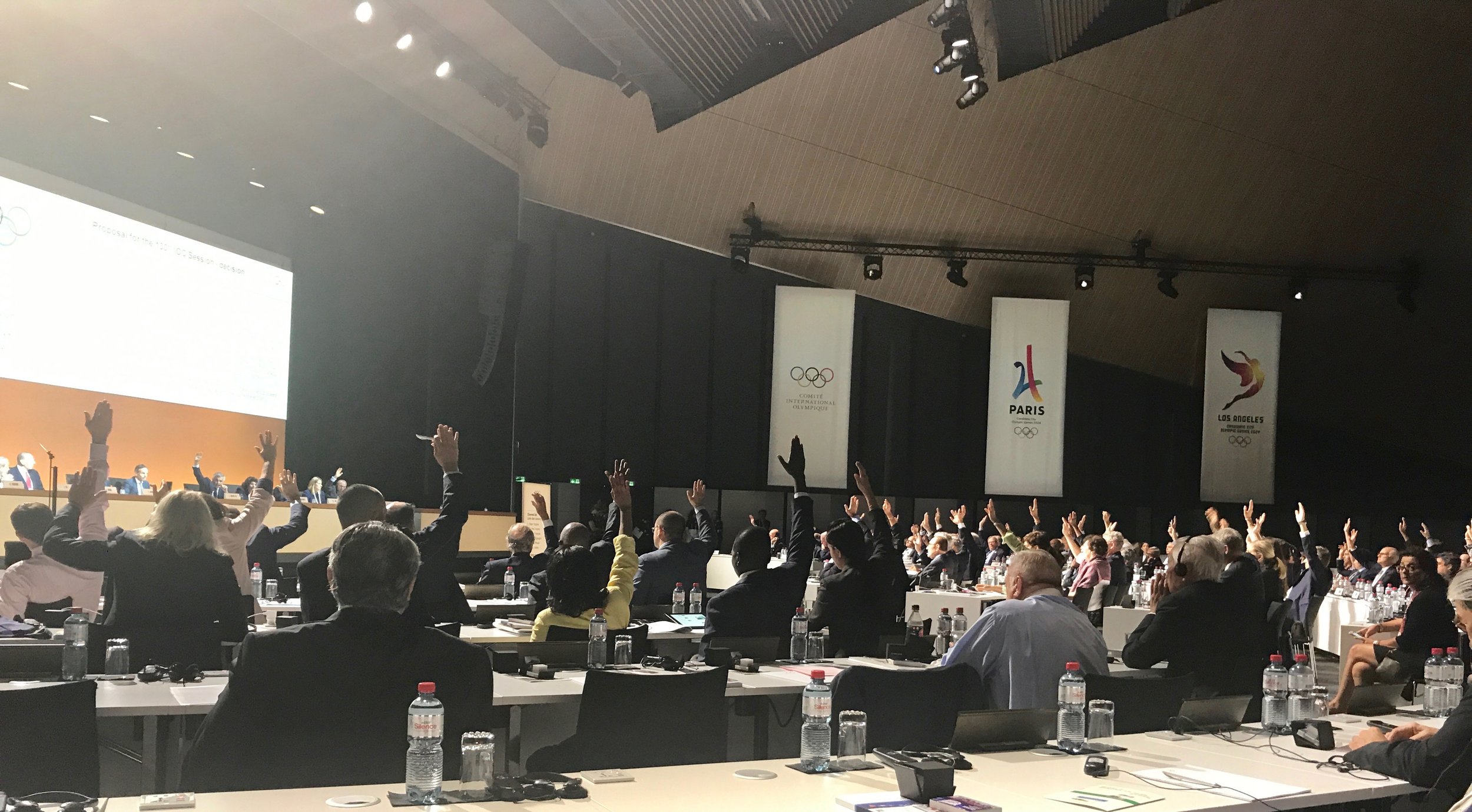
Now, the question as to which city would host 2024 and which would host 2028 boiled down to the negotiation of a “tripartite agreement” between the IOC, and the LA 2024 and Paris 2024 Candidature Committees.
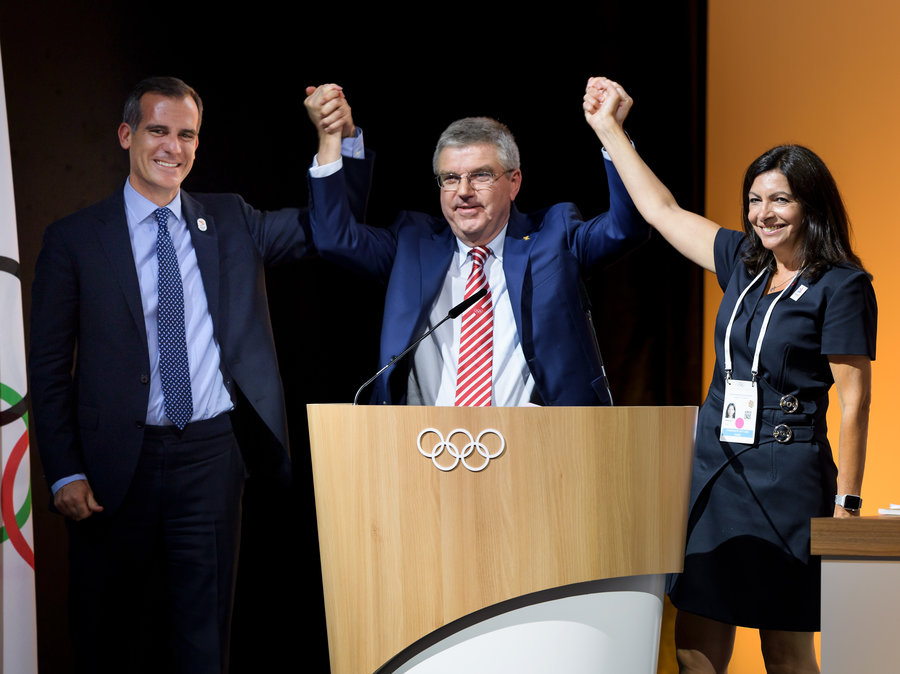
It didn’t take long. On 31 July, both cities and the IOC reached an agreement where Paris would host 2024, and Los Angeles 2028. The only piece left to complete the 24/28 puzzle was a “ratification” by the IOC membership at the IOC Session in Lima, Peru in September.
The Final Lap - On to Lima
For Lima, it was decided that each city would give a twenty-minute presentation to recap their Candidatures. Normally, this “Final Presentation” is forty-five minutes in length, and represents the emotional climax of the two-year campaign. These presentations are filled with the Bid’s key messages, soaring Olympic rhetoric, and punches and counter punches sometimes disguised by humor, humility, or charm; and, finally, the emotional “ask” for the Games.
The 2024/2028 agreement changed the typical Final Presentation dynamic. It was no longer a campaign, depending on a secret vote and a sealed envelope, which would send a planeload of people home either in ecstasy or in despair. That aspect evaporated.
So, we had to recalibrate what we were going to say and how we were going to say it.
Out went the well-honed, sharp-elbowed messages about our key differentiators. Out went the lyrical, soaring rhetoric about looking forward to the future, not back at the last one hundred years. And out went the proactive positioning about the current state of American political affairs and its impact on our Bid.
Instead, we focused on gratitude, partnership with Paris and the Movement, and how LA 2028 would help create New Games for a New Era.
Oh, and there were two more crucial issues to decide: tie or no tie, and sneakers or dress shoes? Casey advocated for sneakers in previous presentations, and he finally got his wish in Lima. As to ties, we decided at the very last minute - and I mean in the very last Green Room minute - to go with ties for the men. It worked out fine.


Our presentation opened with a beautiful film of LA by one of the Mayor’s favorite filmmakers, Colin Rich. The film can be viewed at
https://www.youtube.com/watch?v=C5AqI34WkHo
Next, our three IOC members, Anita, Larry, and Angela opened with a brief welcome to their fellow members. Each carried a distinct yet unified message of friendship and gratitude, and they did a wonderful job of hitting the right balance of humility and pride.

Janet was next with a poignant note about her father, and how this campaign would be his final opportunity to see Janet in her “final race,” and how she wanted to share one more victory with him. I remember showing her the first draft. I was a bit nervous I’d included something so personal in her speech. She sat in my LA 2028 office and read it with eyes full of tears, which of course, made me tear up as well.
I told her I’d be happy to take it out and try something else and she said, “no, this is really something I’d like to say…especially for my Dad…I just hope I can get through it.” We made a vow not to look at each other in rehearsals or in the actual presentation – because I knew we’d both react emotionally.
In the presentation, I watched her work up to this moment in the speech. I saw the grit and the determination that made Janet Evans the Olympic legend that she is. I knew she was struggling a little bit, but she took a big breath, smiled that great smile of hers, and got through the part about her father beautifully.

She touched many in the audience, including my friend and former Madrid 2020 client, Juan Antonio Samaranch. After the presentation, he grabbed me and said, “Terrence, your presentations always make me cry…Janet touched my heart.” I said, “then you should tell her, my friend, it was all her up there, not me.” I hope that he found Janet that afternoon, and told her.
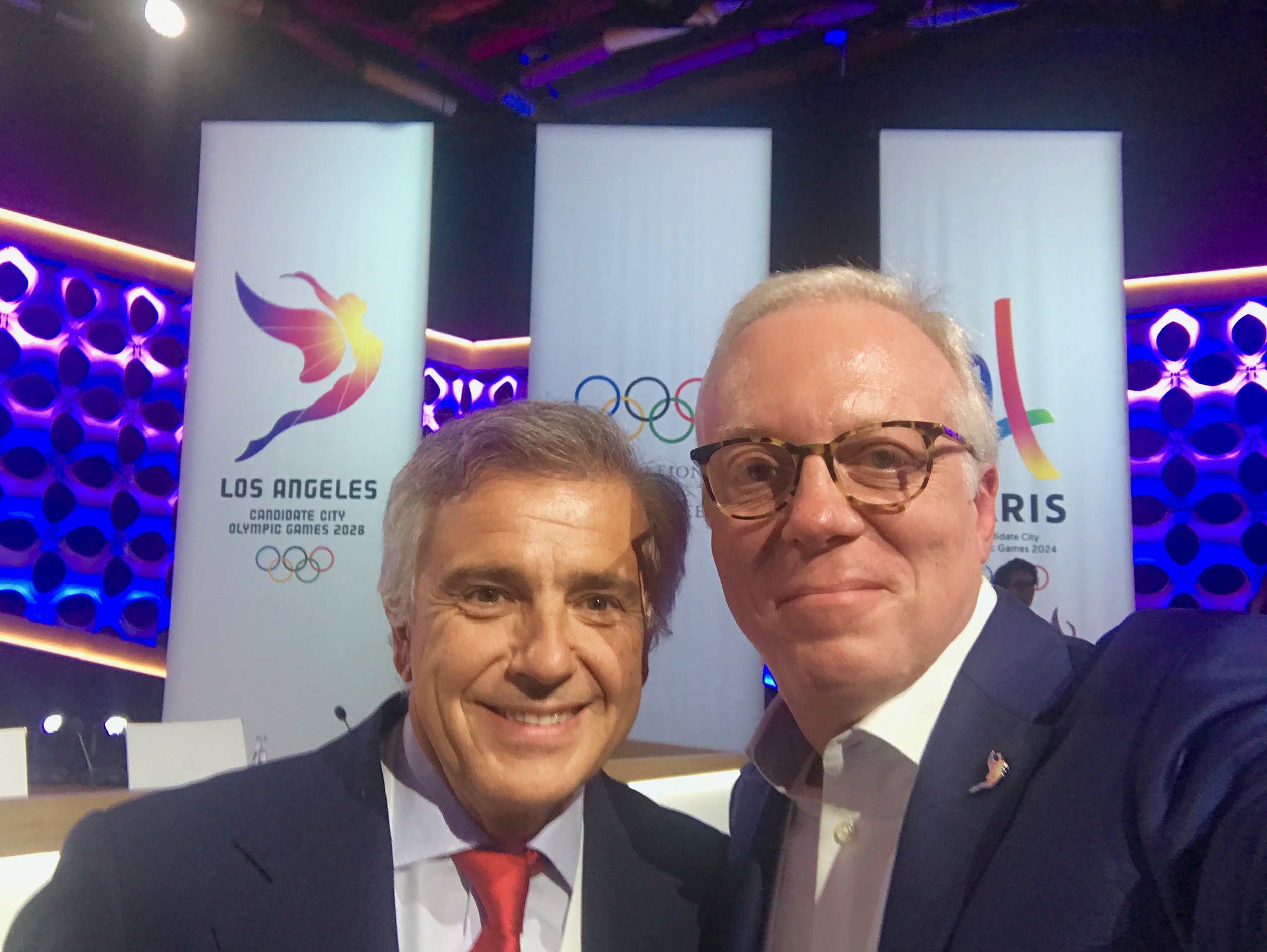
Casey really “grew” as a public speaker over the course of the campaign, and he was good, to begin with. Given his business, he delivers dozens of speeches and prepared remarks year around. He is at his best, however, unscripted; and he is one of the absolute best interviewees I’ve ever seen; genuinely gifted.

Olympic presentations are different. They tend to be highly scripted because it is a story told through several speakers, each with different yet complementary remarks, all supported by background slides and films. This can make it difficult for someone who is more accustomed to a free-wheeling speaking style.
I was very proud of Casey’s performances in all four of LA 2028’s official presentations. In my opinion (both personal and professional) he generated the perfect mix of gravitas, humility, chutzpah ( look it up), and California charm that the bid needed from its young Chairman.
Casey began by thanking Larry and Scott for their incredible work over the past seven or so years, re-engineering the image and reputation of the US within the Olympic Movement. LA 2024 would not have been standing on that stage without the efforts of these two gentlemen – period. And, neither Larry or Scott would have been on that stage without LA – which Scott would acknowledge later in his remarks.
Casey said, “Today is the last time I’m addressing you as Chairman of the LA 2028 Bid Committee…and to be honest, for two years I’ve wondered what I would say at this moment.”
He went on to say that the bid process taught him a valuable lesson about perceptions. More specifically, he said that “it is human to make assumptions about each other…and far too often those assumptions are wrong…we only truly learn to understand and appreciate each other when we connect as individual human beings.” How ironic (and profound) for an American bid leader to be discussing stereotypes...
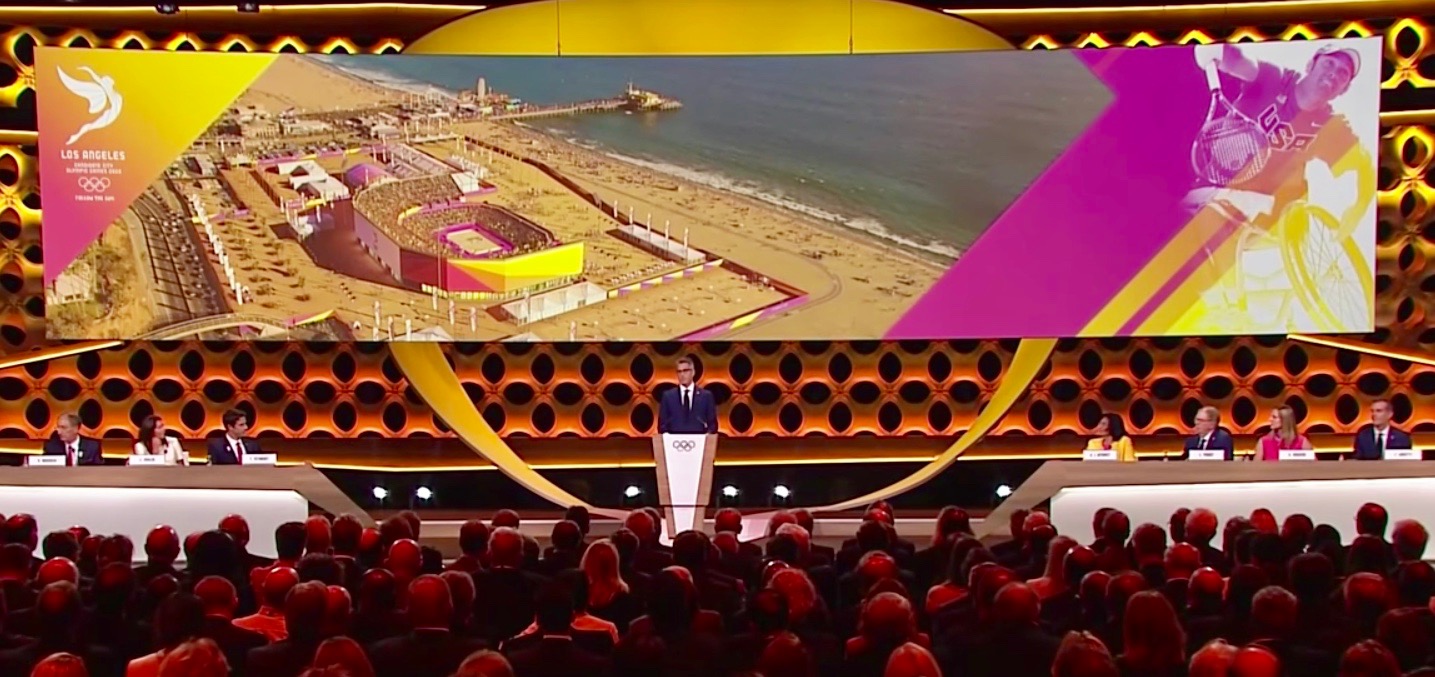
Watching the Final Presentation of every bid I’ve worked on, I’m very focused but slightly melancholy as well. I know it’s over. I know that bluntly, all the emotion and intensity of two years has reached its final, beautifully poignant moments.
As I sat there watching Casey give his final speech, my mind flashed back to the first time we met in his office. It seemed like yesterday. When you begin a Bid, it feels as if it will go on forever, yet when it’s over, it is amazing how quickly it flew by.
You realize there is a good chance you will never see any of these people again. And you are aware that they are not aware, they cannot be, of any of this. It's a little heartbreaking, to be honest.
I looked at the LA 2024 team sitting around me. These were the people with whom I’ve traveled the world for two years. We shared stories together, we celebrated birthdays, holidays and meals together, and we laughed (a lot) and even shed a few tears together. They had no idea, really, what they’d just accomplished, but it would hit them soon enough.
It’s always a touching moment for every bid, but LA 2024 was different for me because for the first time I was part of a team of my own citizens – I was no longer an outsider. I felt part of them in a way I'd never felt part of any bid. I honestly felt like we were a family - maybe The Addams Family at times (again, look it up) but a family nonetheless. Families love each other, regardless.
When President Bach held up the Paris 2024 and LA 2028 envelopes, I turned around and trained my phone’s video camera on our team and its reaction. They looked like kids on Christmas morning. I still watch it from time to time.
Scott Blackmun followed Casey and our technical film. As long-time CEO of the USOC, Scott was very well known to the audience in the room. I’d never written for Scott, so this was new to both of us.
Often, I have to imagine what someone would say when I write their first draft, but, I’d known Scott a long time, so it was a bit easier. Scott is a quiet and humble person who is extraordinarily capable but doesn’t wear it on his sleeve. I wanted to reinforce that in his remarks.
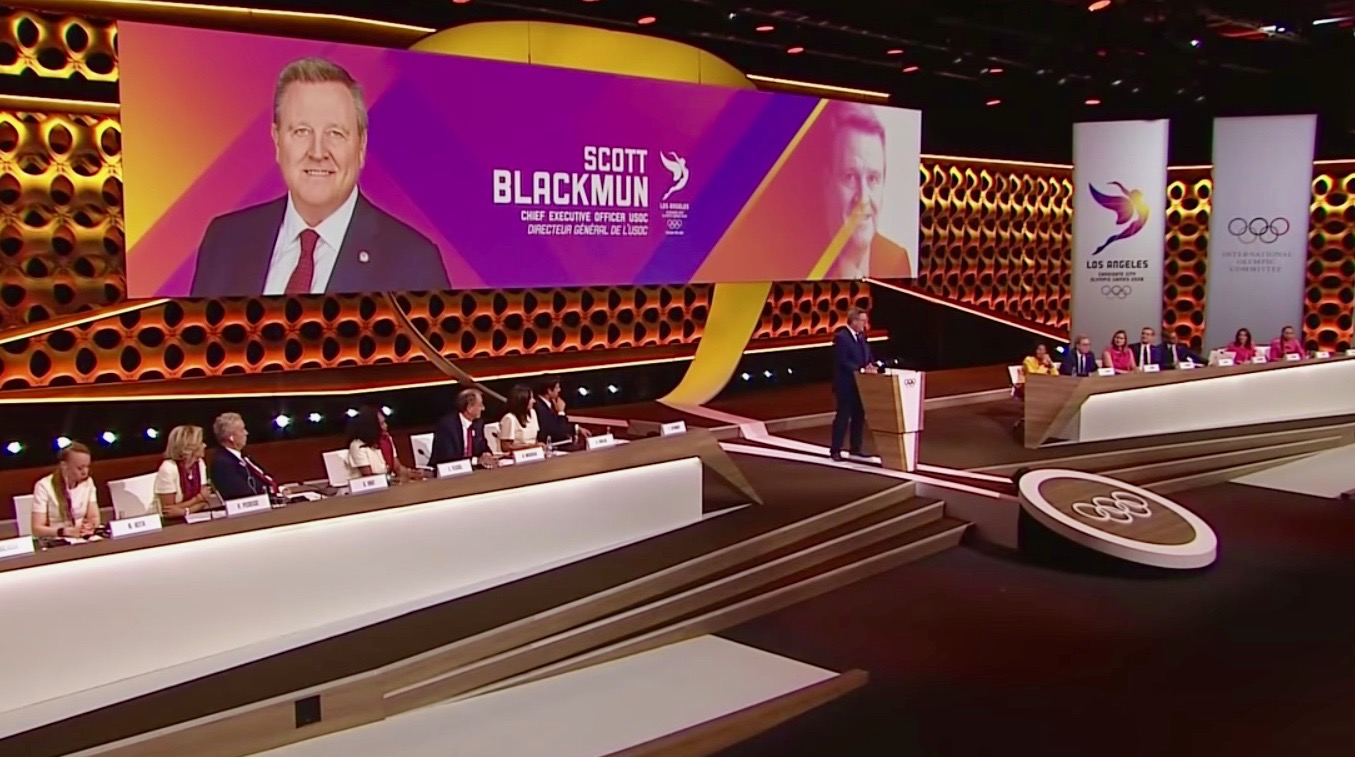
Scott graciously began by saying that the quality of the LA bid was the result of two people: Casey and the Mayor. He said, “…these two gentlemen never gave up on LA’s Olympic dreams – and thank goodness they didn’t”; a not-so-veiled reference to the LA team saying “yes” after Boston said “no.” I also felt it was important for Scott to reference that the USOC was one of many, not THE one of many. His natural humility was the perfect touch.
Allyson was next up, she brought her magic to Lima and didn’t disappoint. Echoing Casey’s remarks, Allyson said that the Olympic Movement teaches us about respect for others. She pointed out that Olympians are natural diplomats because they have to be.
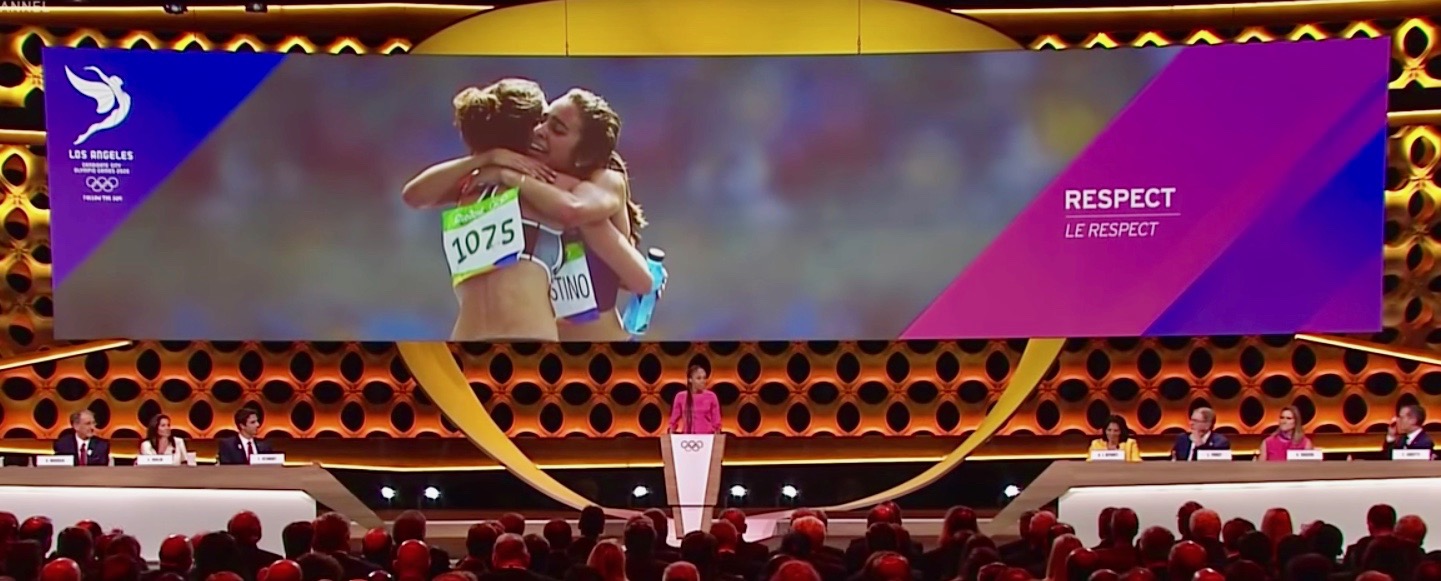
“Think about the pressure and complexity of ten thousand athletes living together in the Olympic Village…preparing for one of the most important moments of our lives…we get one chance to win…that’s a lot of competitive people in one small space…it could be chaos, but it’s not…we make it work because we respect each other.”
She also got a laugh from the audience when she spoke about the need for diplomacy. She said, " So, if anyone from the UN is watching this today, you might consider Olympians as future diplomats because if you can live peacefully, side by side with your fiercest competitors for 17 days in a row, believe me, you can get along with anybody!"
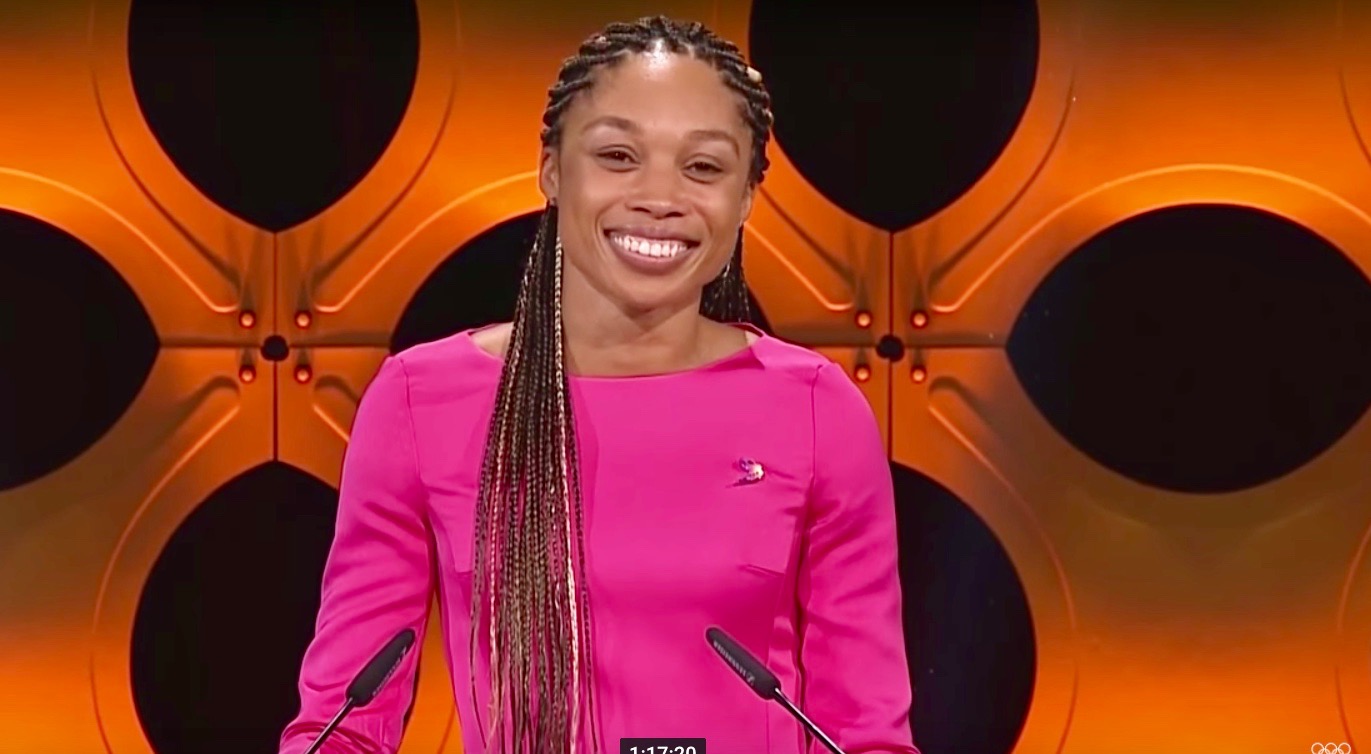
She closed on another personal note. She said, “…
generally, most Olympians don’t get to spend a lot of time with IOC members…and now that I have, I can describe my experience with all of you in three words – It’s been wonderful
.” Then the smile. And the room melted.
Now it was time for our closer, Mayor Garcetti, to bring us home – figuratively and literally.
I’ve written a lot here about Mayor Garcetti. All I can add is that whatever I wrote for him, his delivery or adaptations always made it better. He is an extraordinary person, and if he chooses to dedicate the rest of his career to public service, everyone, everywhere will benefit from it.
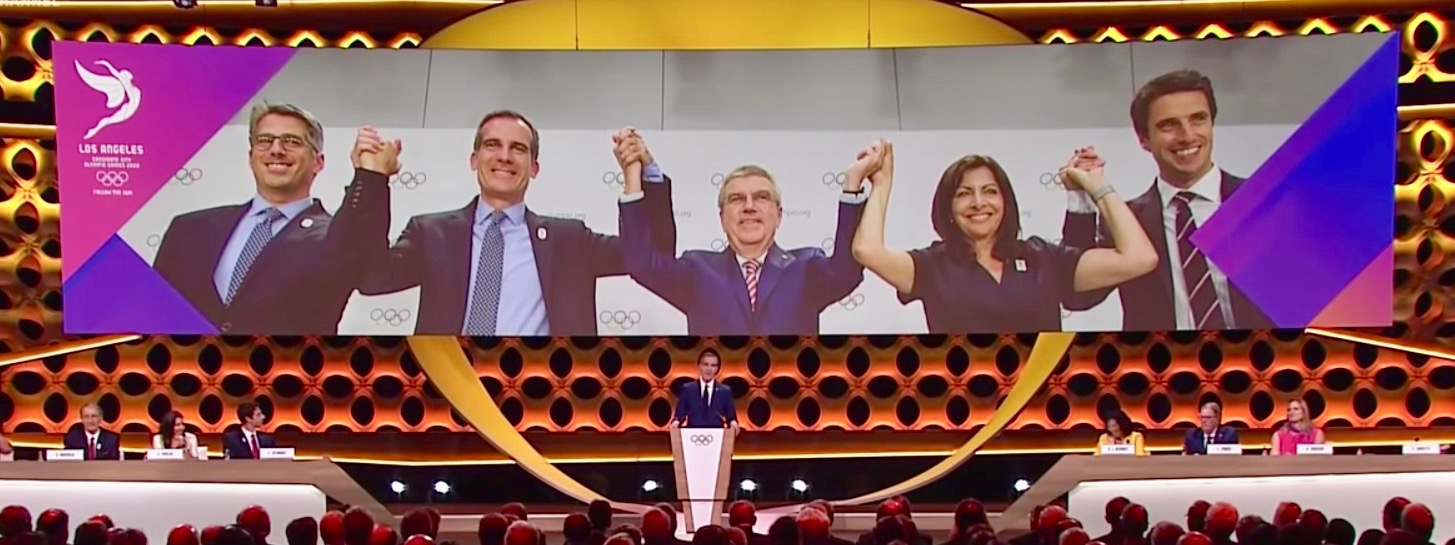
Both the Paris 2024 and LA 2028 Final Presentations can be viewed here:
https://www.youtube.com/watch?v=7wQab6DaNGg
Endings
When the Almaty 2022 bid campaign was over, the staff sent me a giant card with the lyrics from the soundtrack to the 1967 movie, To Sir, With Love. The movie is about a teacher, played by Sydney Poitier, in a troubled school in East London. He is a tough task-masker, but in the end, the students come to love and appreciate him. They all signed it, even the ones who didn’t speak English. I found it very touching, and it reflected a sweet sentimentality that isn’t universal everywhere in the world. It summarized my Almaty experience, and to some degree, LA as well.
Bids are like that. In the beginning, consultant’s roles literally are as teachers. Working with bid committees is an honor for me. It is one of the most rewarding things I’ve ever done. I get adopted, more or less, into a small family of dreamers like myself. Believers. And sometimes, together we achieve something so beautiful and unique that it will impact a city and its people for generations to come. I've had that honor five times in my career, but as I said, LA 2028 was special for a lot of reasons.
LA 2028 was a joy to work on. I began working there about a week a month in the initial phase of our contract. Early on, Casey and Gene asked me to serve as the Bid's Chief Marketing Officer, and to do that justice, I agreed to spend two weeks a month in LA.
Gene and Casey eventually asked if I could work full-time in LA for the last almost year of the bid; I couldn't do that, but I did agree to three weeks a month in LA (that took some finessing with my wife, to be honest). The Bid rented an apartment in Westwood for me, and I walked to work and back every day. It was glorious; really it was, all of it.
All in all, I'd never spent as much time in one city for a single Bid as I did for LA. And I must be honest, it's a place that's easy to fall in love with. From Malibu to Laguna, and from Santa Monica to Silver Lake, it was a city that I never tired of. I will miss it, every bit of it.
So, to my LA 2028 family, thank you from the bottom of my heart, Godspeed, take care, and have fun. You've earned it.
And to the IOC and the Olympic Movement, you're in good hands for 2028.
Finally thank you, Aaron Schulman, Corrine Taylor, Allen Vo, Amedea Tassinari, Rodrigo Libano Soares, Daniel Zayas, Cristina Lucas, Jim Ford, Thomas Martin, Tiffany Rockman, Tony Vitrano, and Carley Markovitz! And if I've forgotten anyone, leave me a comment, and I will fix it--
Follow the Sun.
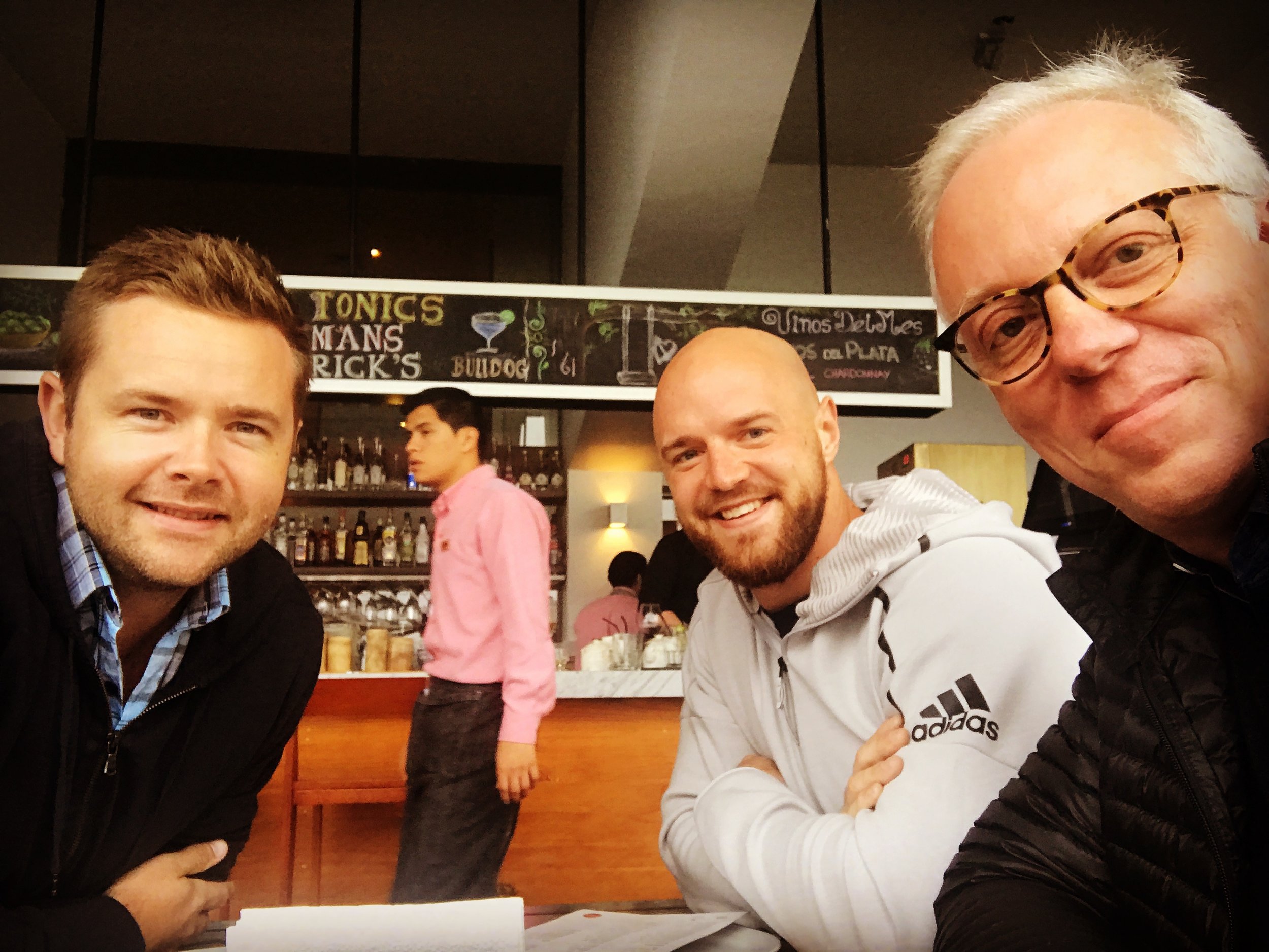
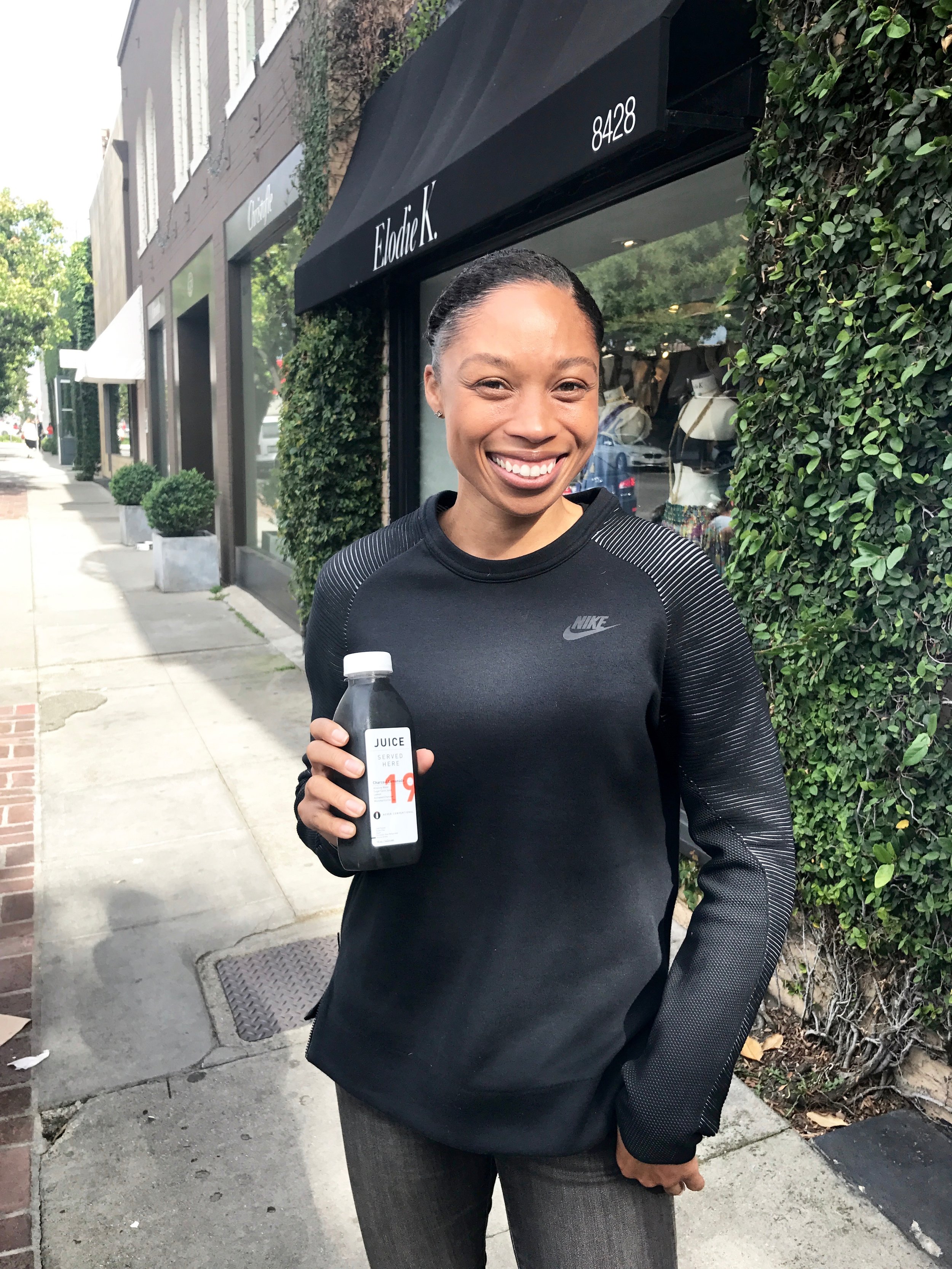
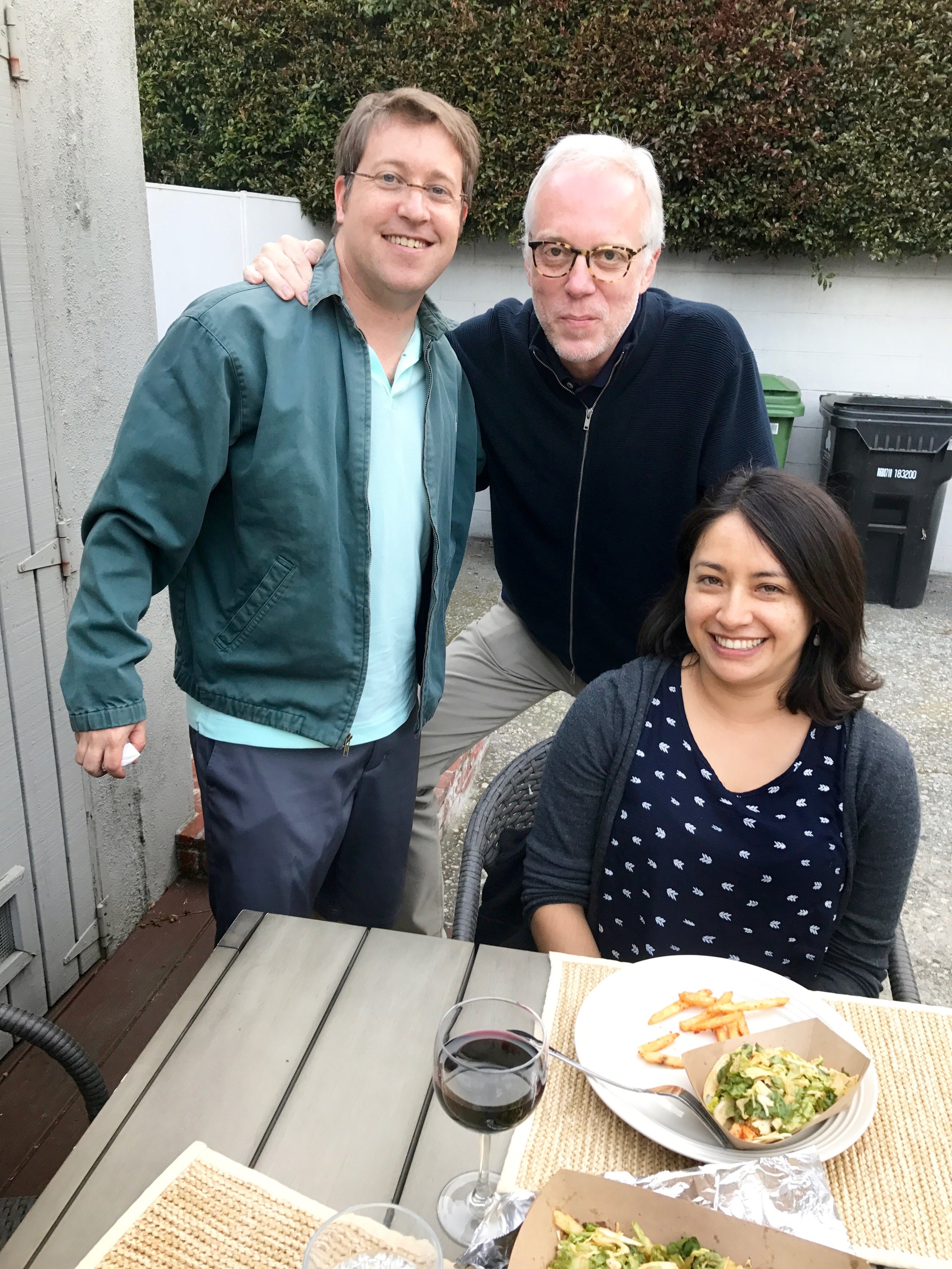
A few final memories with some very special people.




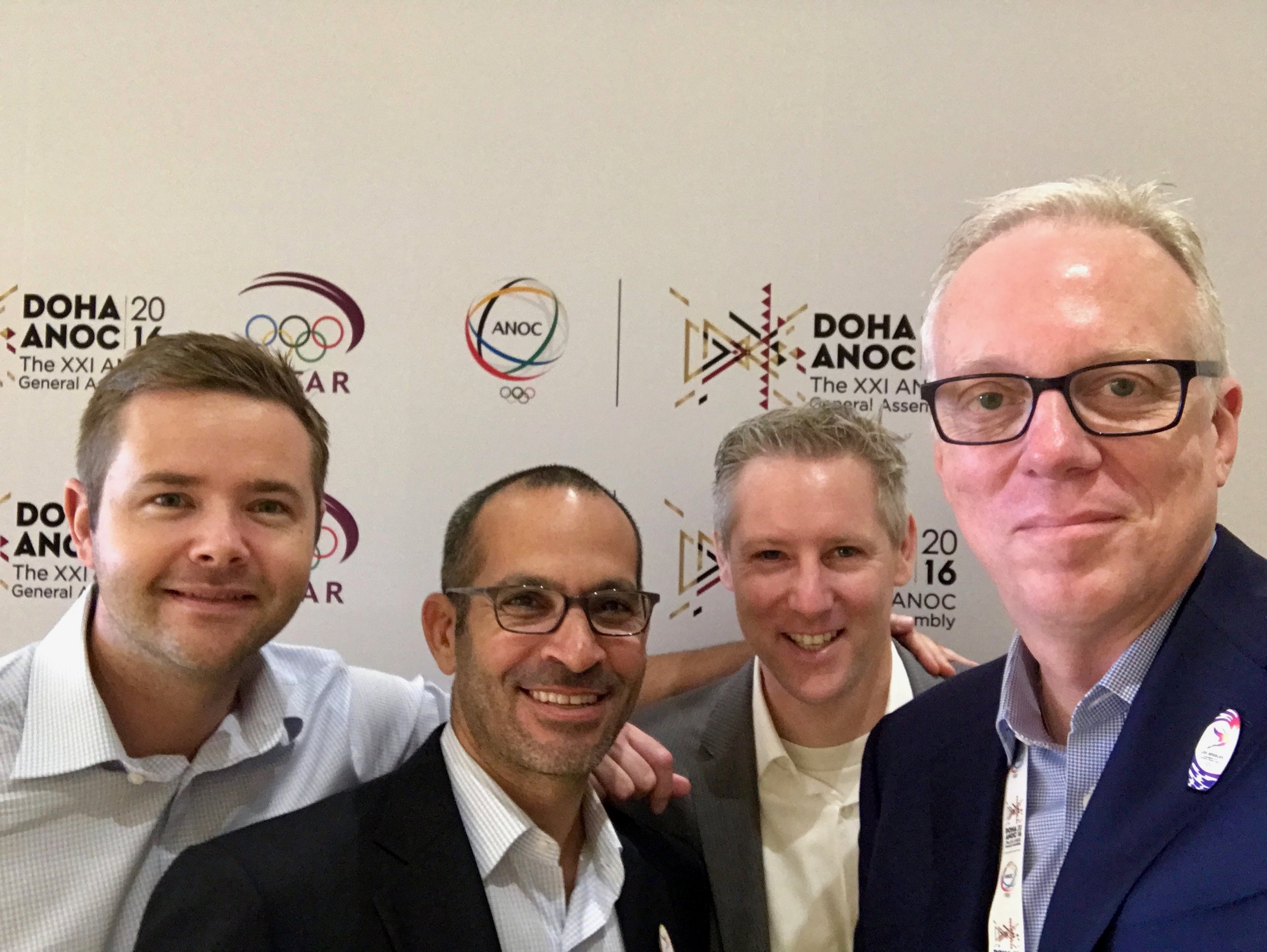
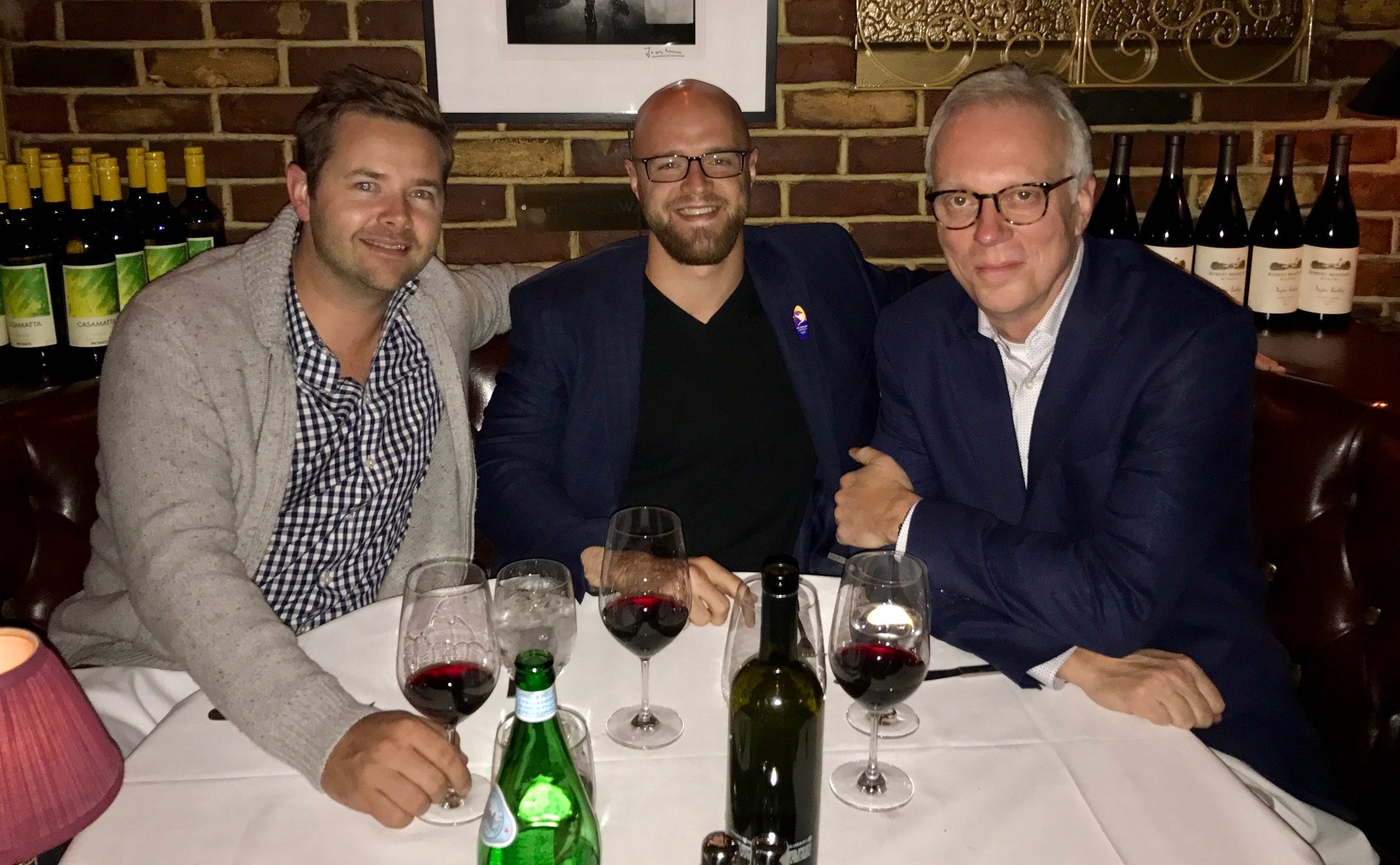


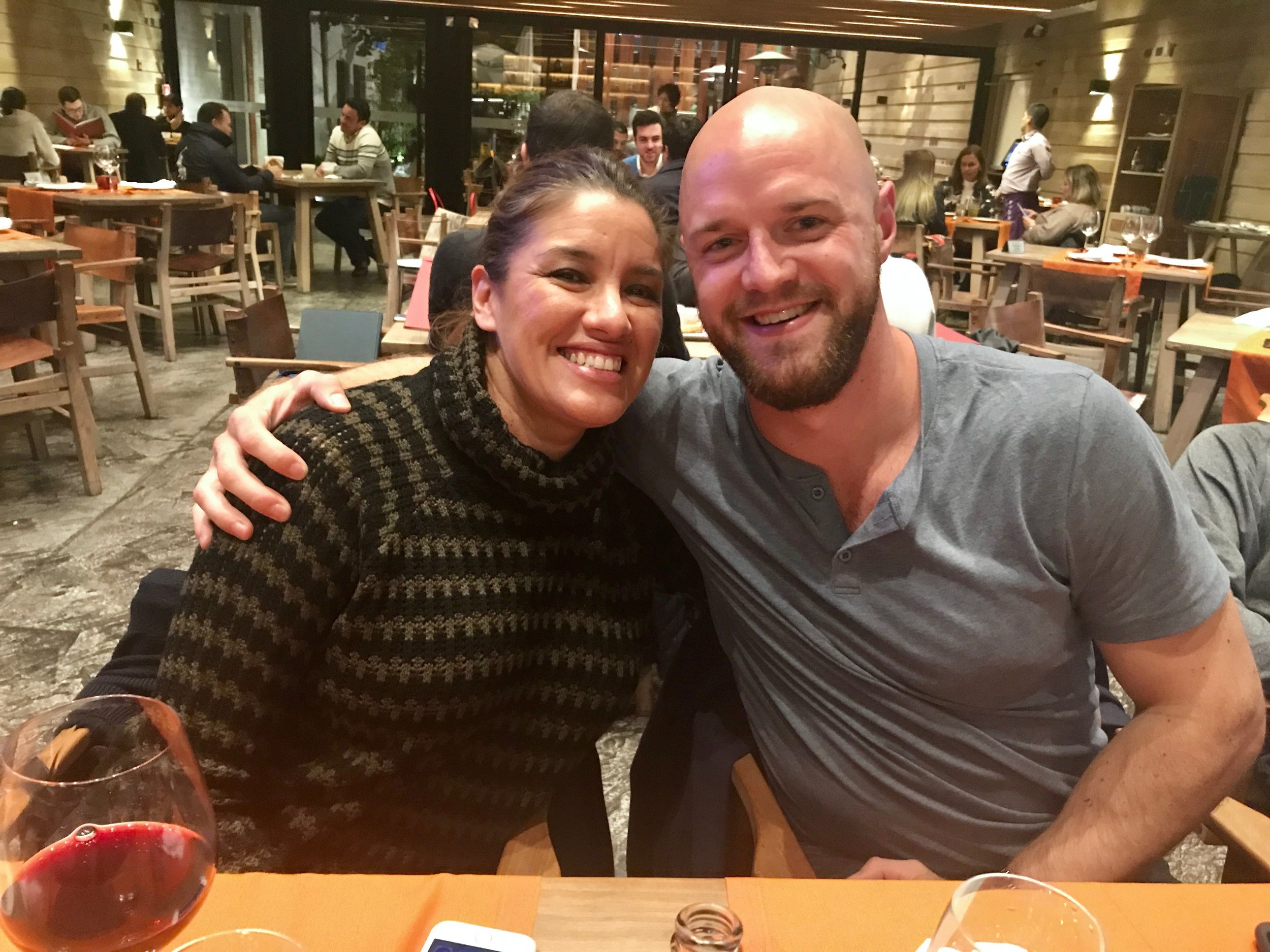

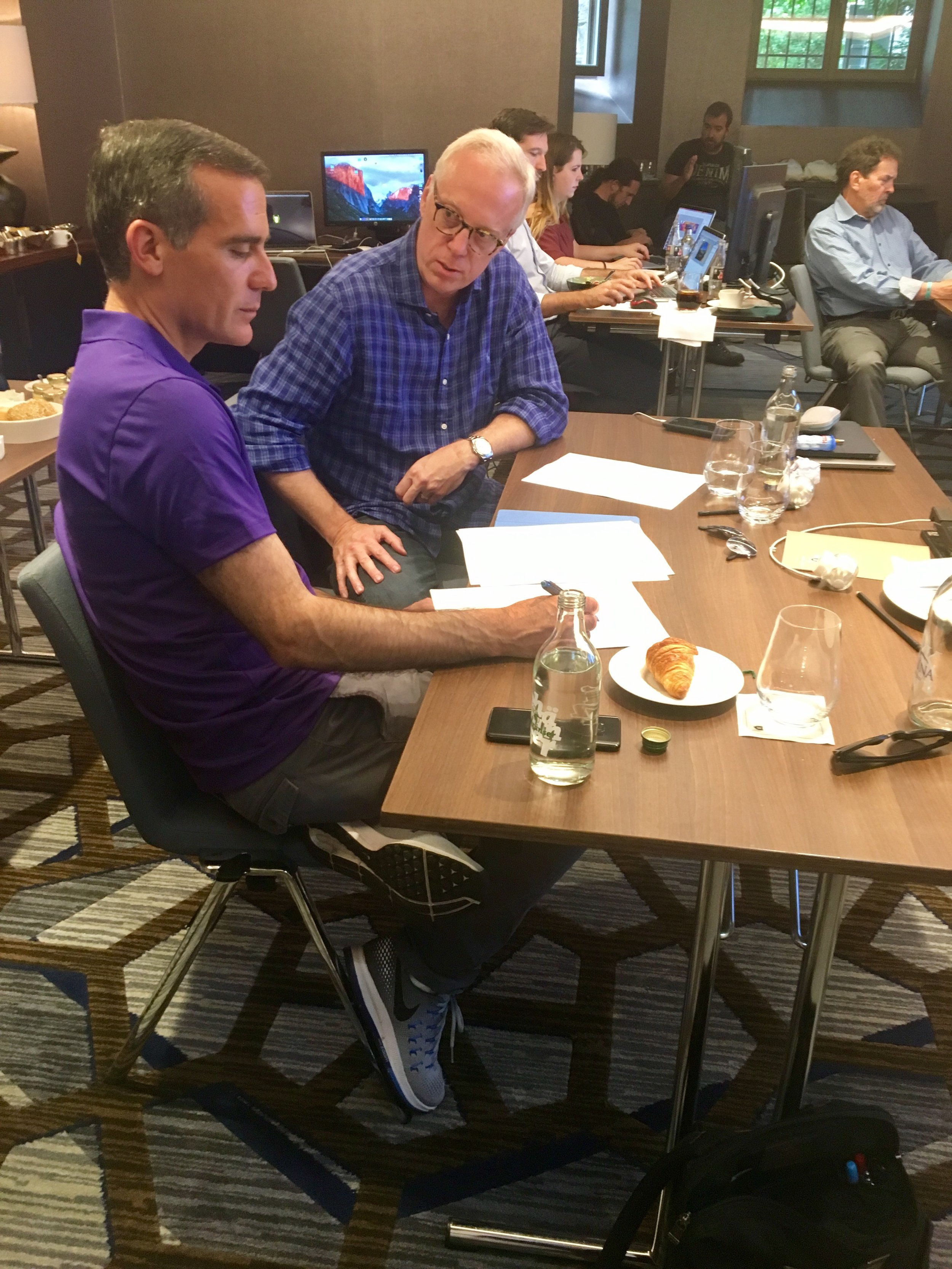
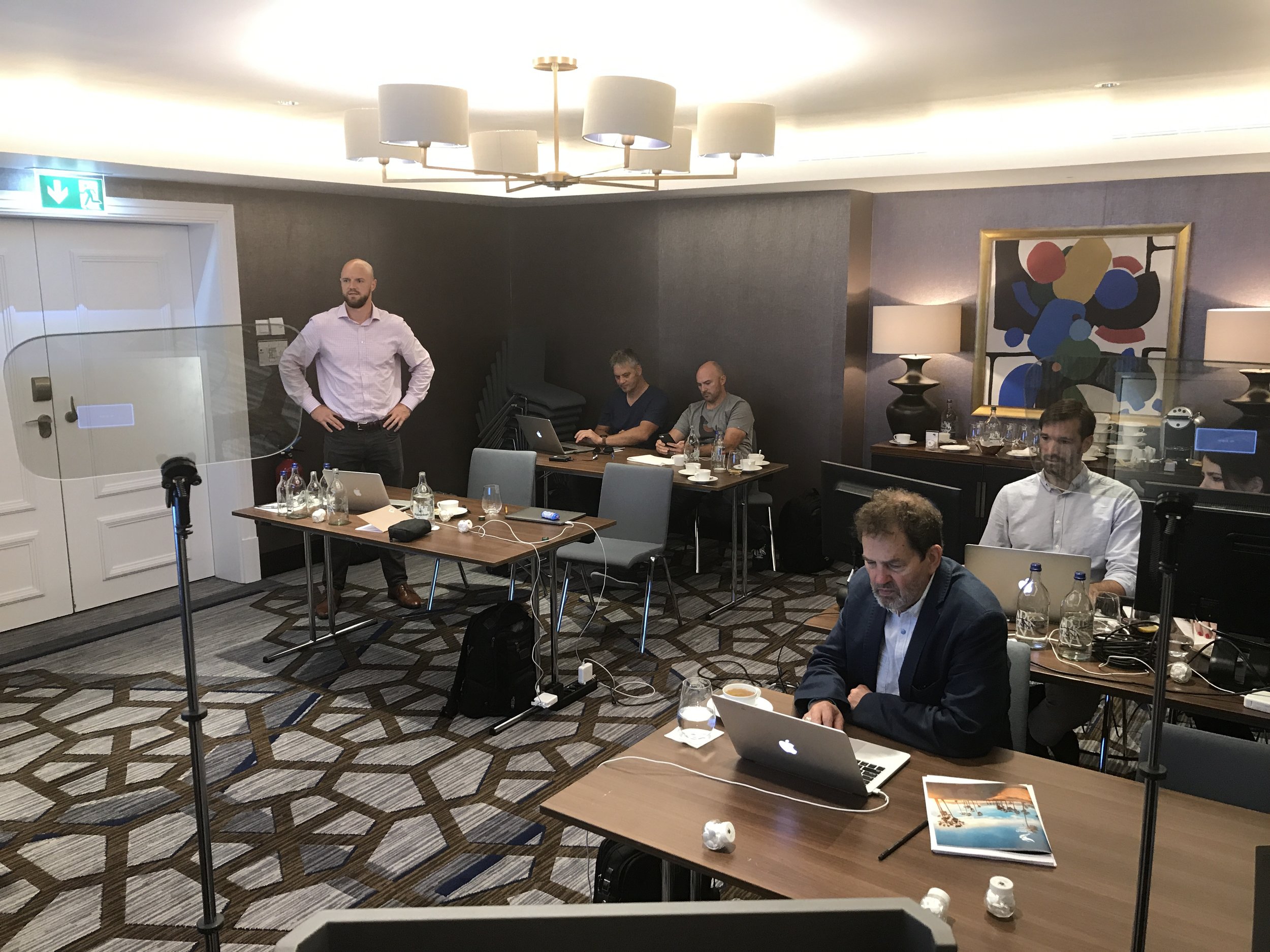
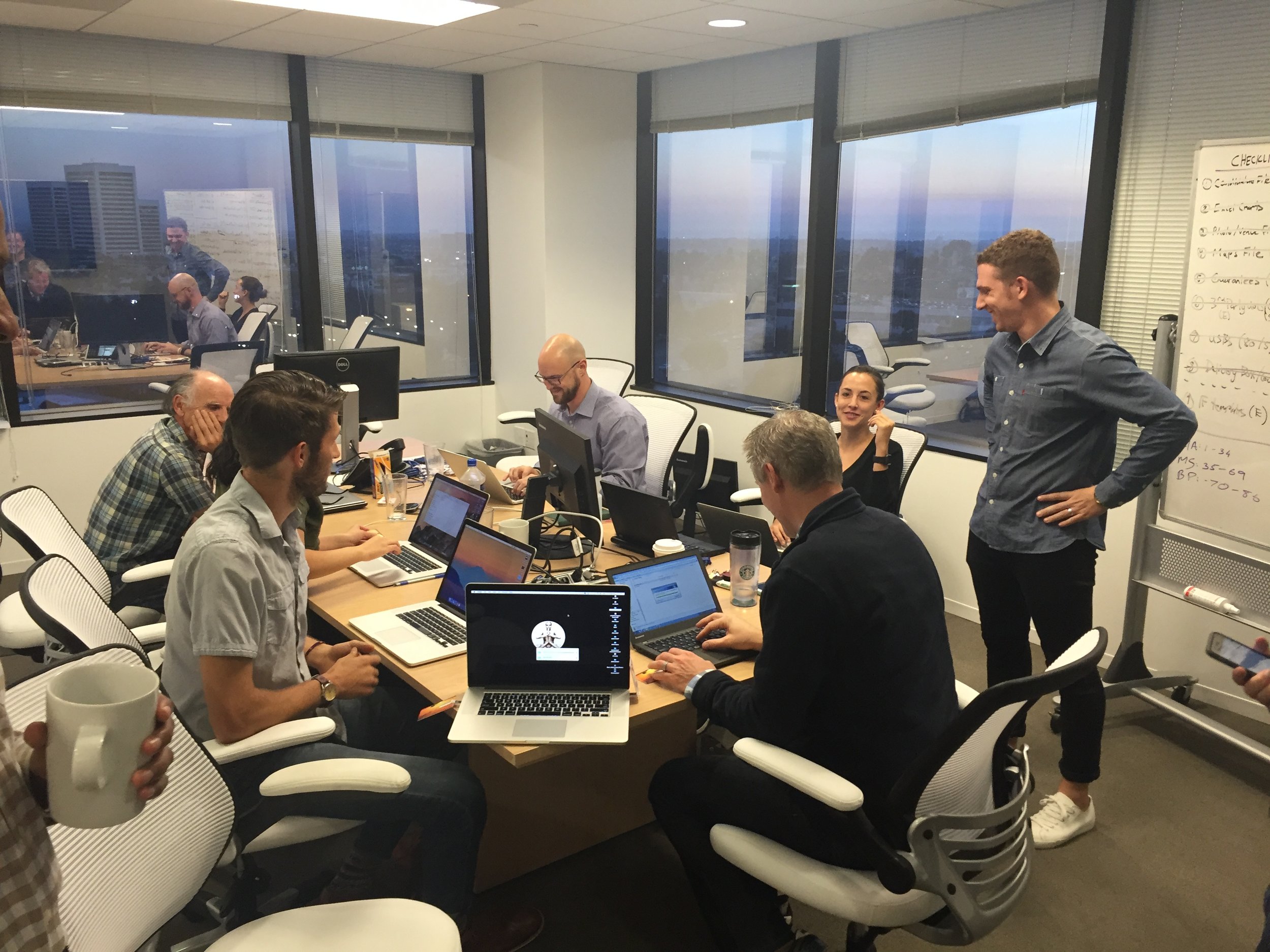

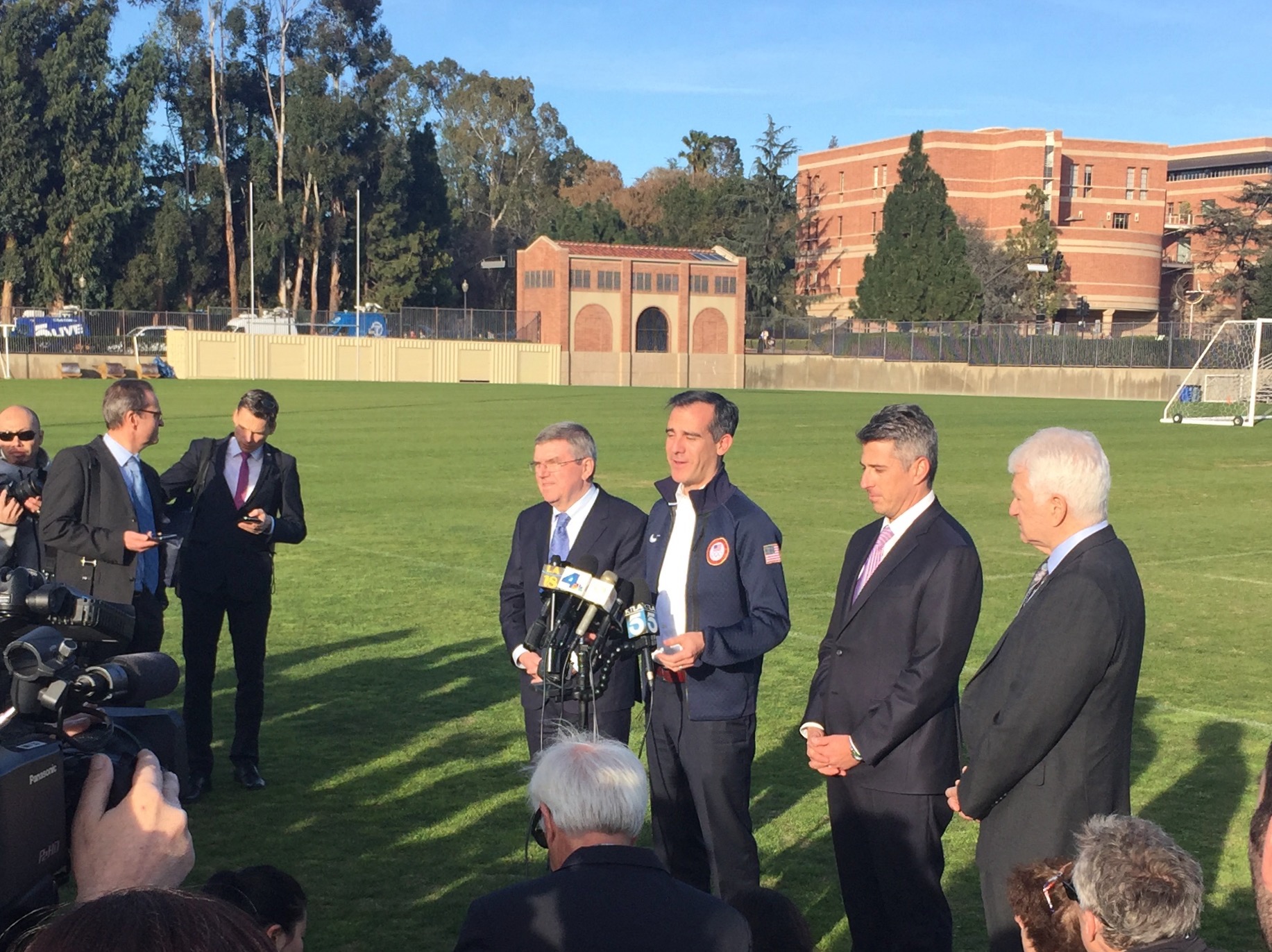


LA Confidential - Act 2
Terrence Burns ©2017

From the beginning, I was impressed/astounded with how relatively small the LA 2024 bid team was. I'd worked in a lot of countries where bid committees were grossly over-staffed with functionaries doing very little, and this made LA unusual in its economy.
That concept of economy began with how the Bid was funded. Casey was adamant that the bid be funded by Angelinos, people who believed in the Games by putting their money where their hearts were. And they did. LA 2024, unlike any other Bid on which I'd ever worked, was entirely funded by private donations. No public money. No government support. That in itself was an astounding story. The Bid got great people to work there, too.
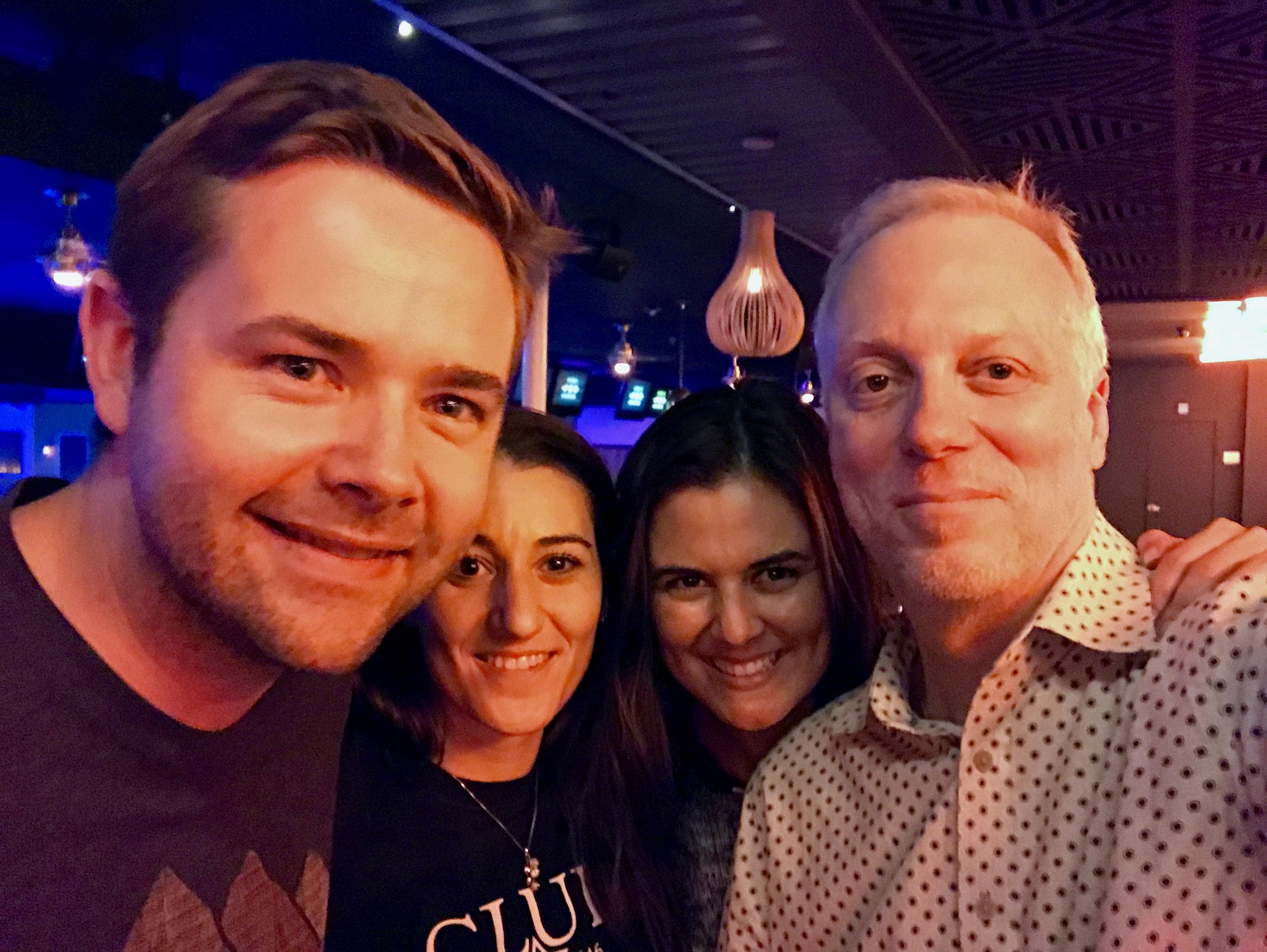
The legal team of Brian Nelson, Tanja Olano, and Anna Schmitz was outstanding in ability and a very fun group of people to hang around with. Rather than show the team hard at work in their offices, I thought it would be better to show them in every attorney's natural habitat, a bowling alley (sorry, Brian, I don't know where you were when this was taken!)
I'd also be remiss if I did not acknowledge two of the nicest (smartest) members of the team, Brence Culp, our Executive Director of Sustainability and Legacy and Peter Tomozawa, our Vice President and Executive Director for Partnerships and Board Relations.
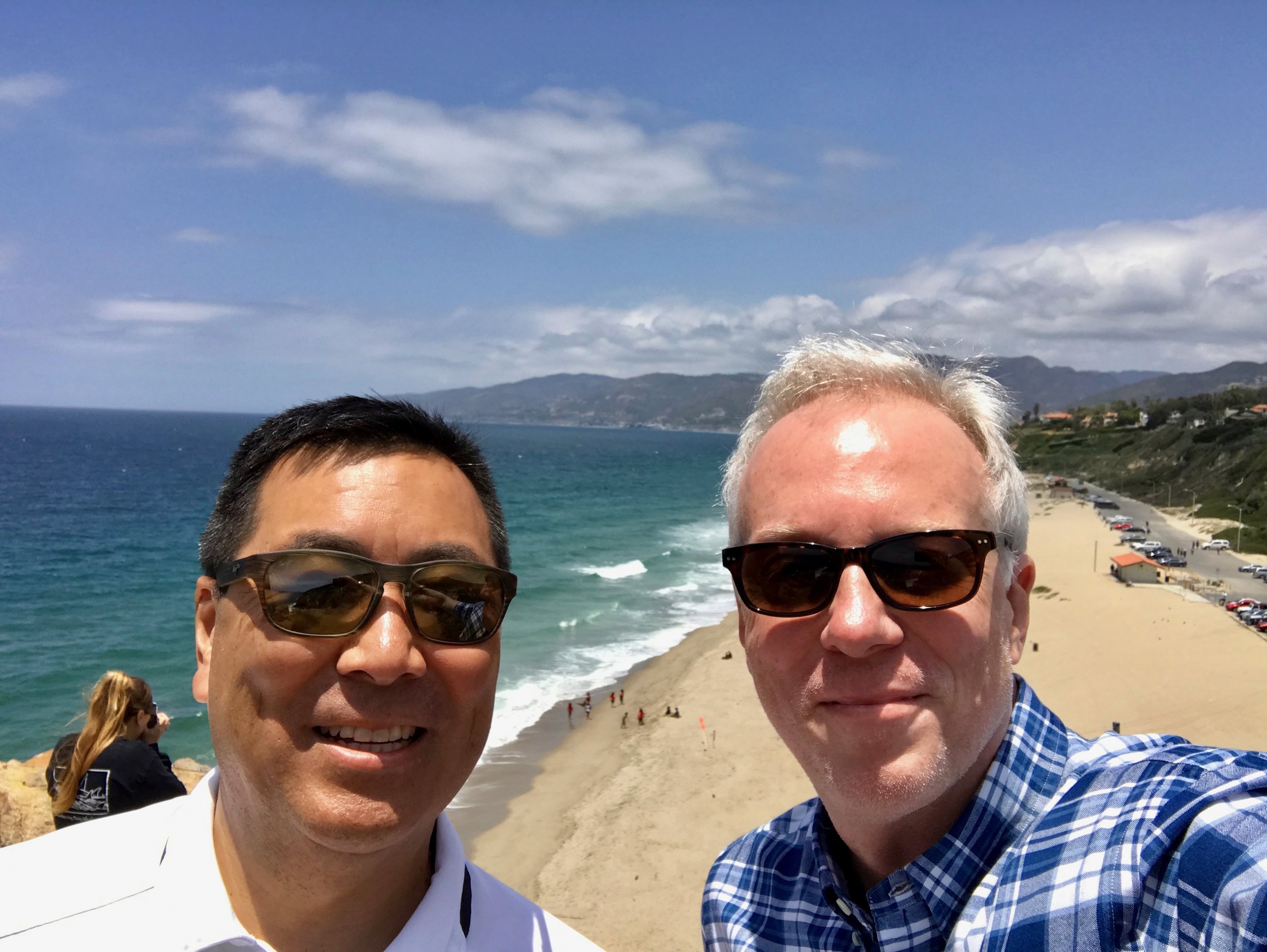
These two fine and funny (as in humorous) people were always positive and upbeat, in addition to delivering one hundred percent for the Bid.

Marla Messing joined the Bid as our Vice President and Executive Director of Sport Leader Relations, working mainly with the International Federations of sport to help make sure our venues were exactly what they needed.
Olympic Family communications and International Relations was handled by the JTA agency, based in the UK. I'd worked with Jon Tibbs, the owner, on Beijing 2008 and Sochi 2014. His solid team of Sevi Hubert and Alex Corp (Alex was based in the LA office and quickly adapted to the SoCal lifestyle) did exceptional work as always. Jon's team worked with Jeff Millman and his group (Luca Servodio, Leigh Flores, and Barb Solish) on Comms, and with Jared Schott and Andrew Chatzky on IR.

The Games that Almost Weren't
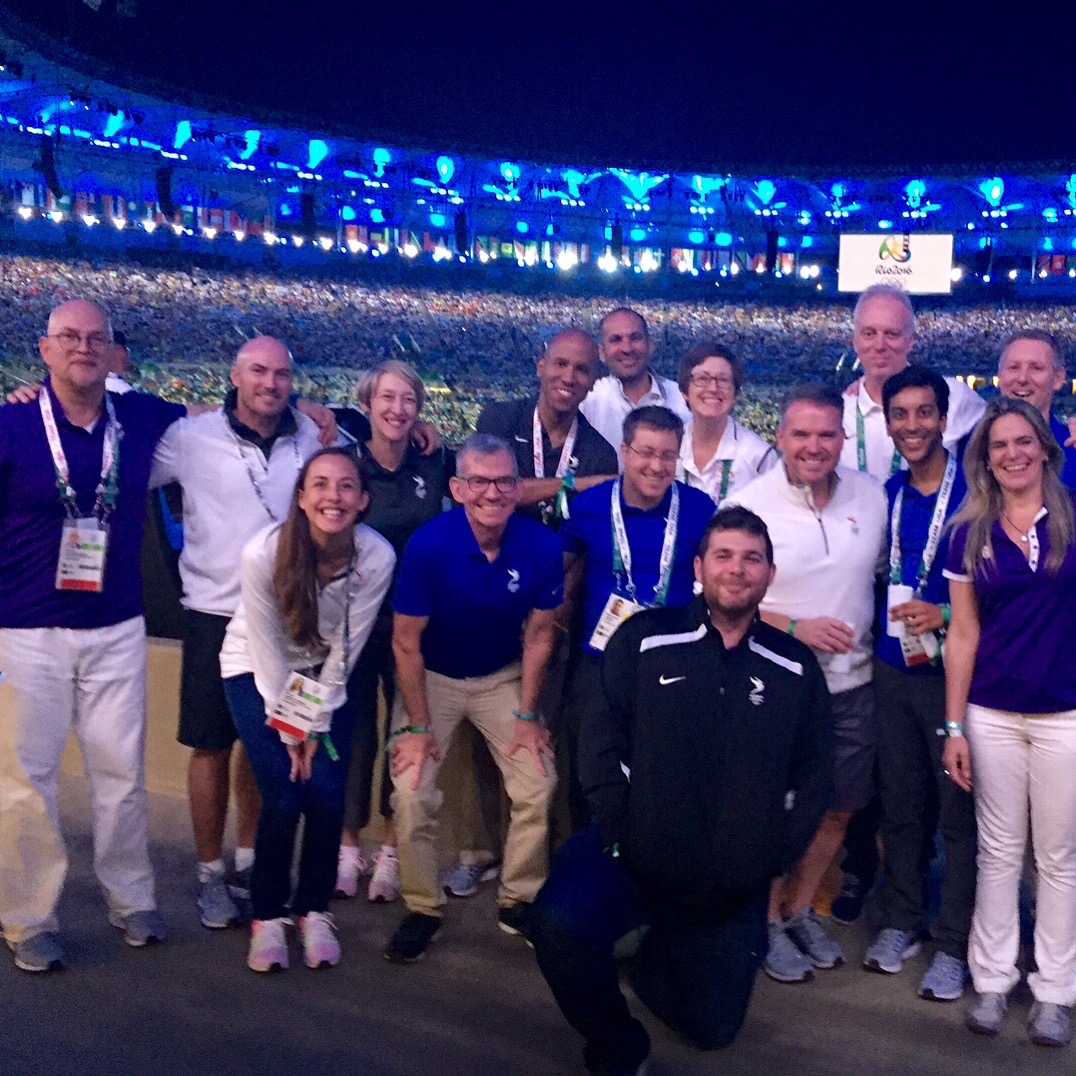
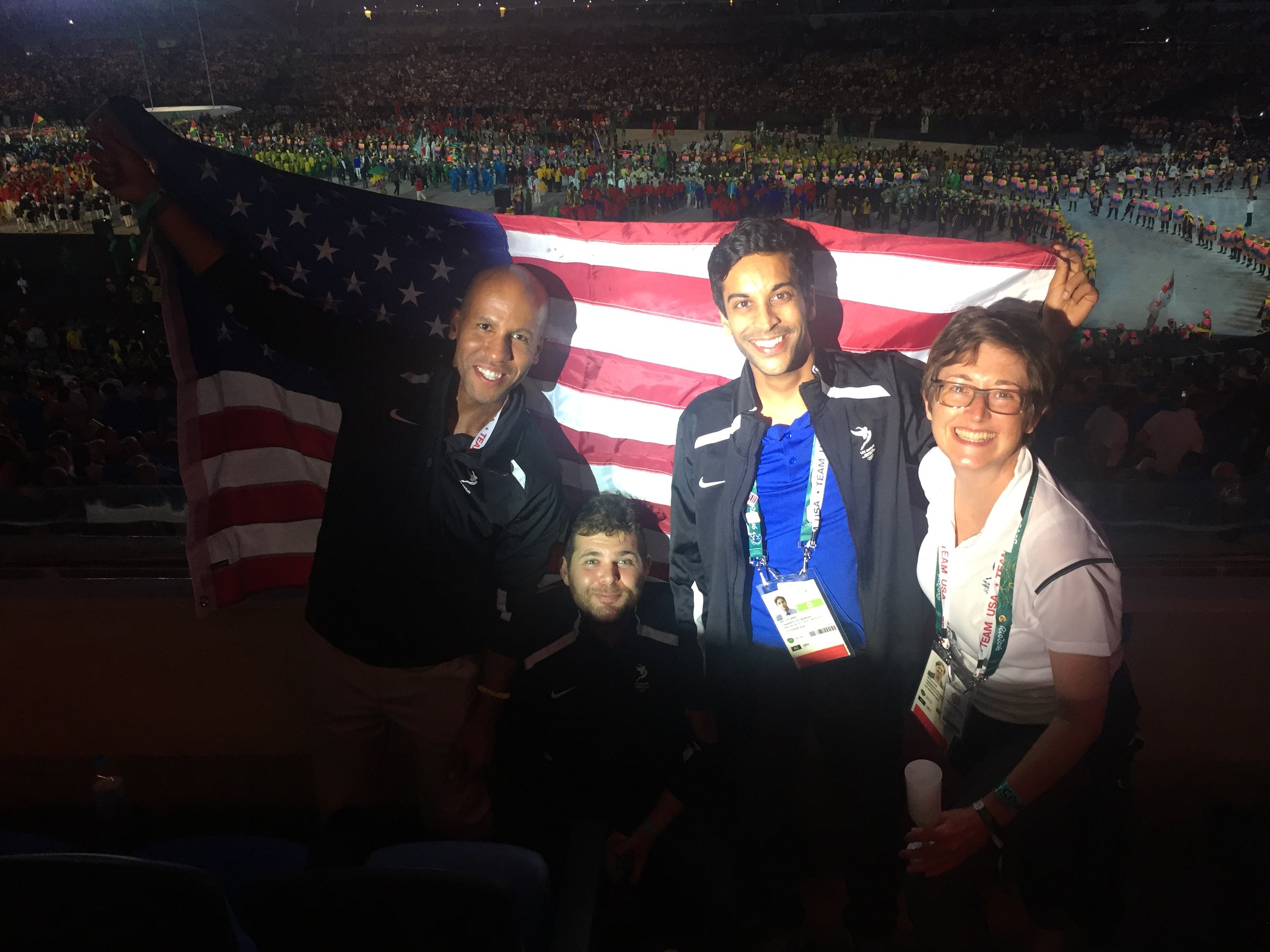
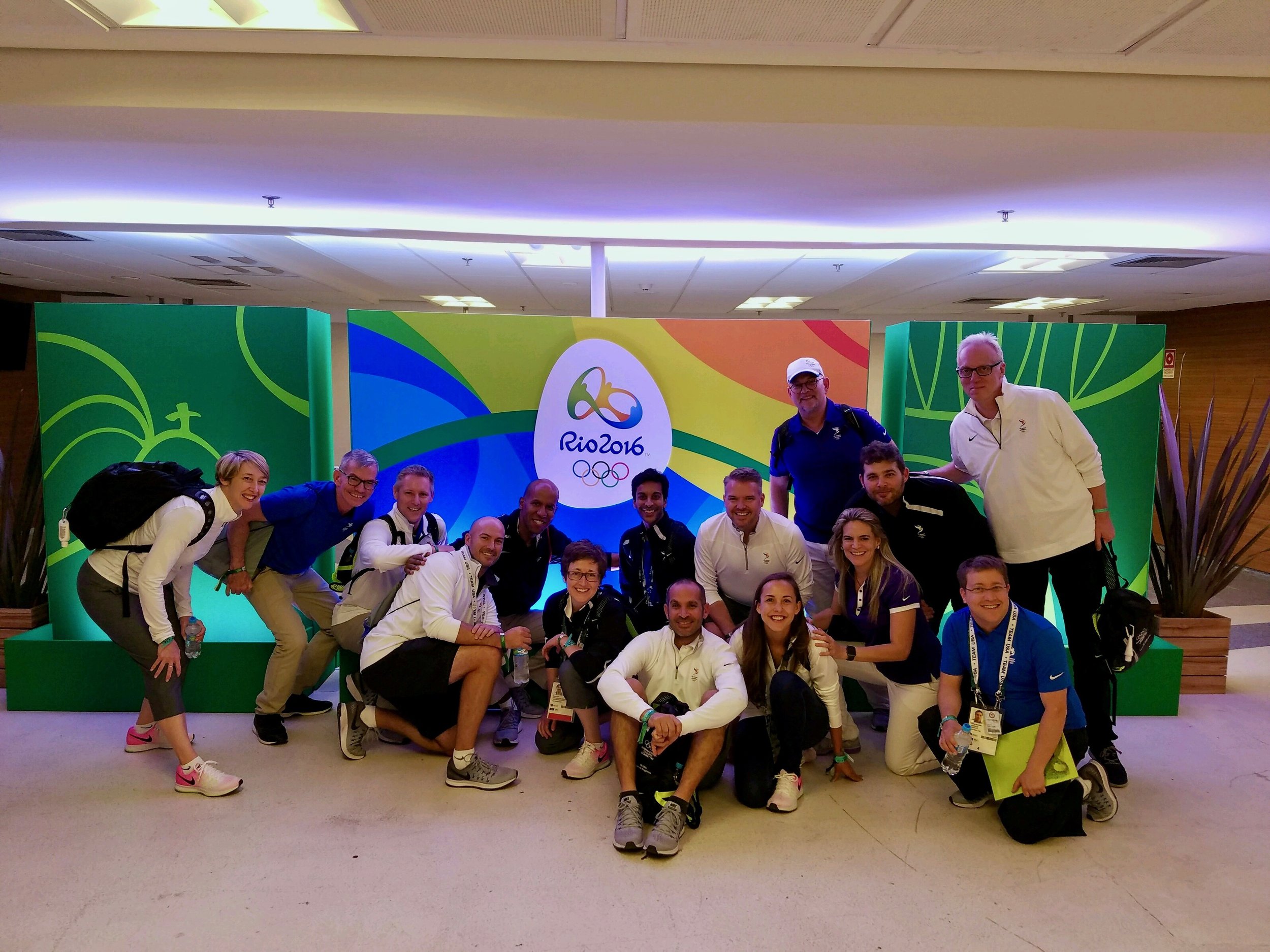
The team was ready for its first big turn as a Bid Committee on the grand Olympic stage at the Rio Games. Once again, the logistical team did a tremendous job - it always amazes me, every time. The LA 2024 team was spread around town in several hotels, and our main office was in the USA House on Ipanema Beach. Our role there was to listen, learn, meet and greet. And drink Caipirinhas. Which we did. Rio was fun. Here are some gratuitous photos in no particular order.




Over the next months, we tested and refined our messaging in anticipation of our first big presentation to the Olympic Family at the ANOC November meetings in Doha. Unlike previous bids I’d worked on (except for Vancouver 2010) I had a bid team fluent in English (although I am sure some of my UK friends would debate this) and all were accustomed to public speaking. (If you only knew how many previous bid presentation speeches in English were learned - and delivered - phonetically.)
When you have only twenty minutes to communicate complicated technical information and package it in a set of emotional, moving brand messages, it can be quite difficult. It is even more so when English is the second, third or sometimes fourth language of many of the speakers. With LA, I didn’t have this challenge. We had great speakers, and boy did they deliver – every time.
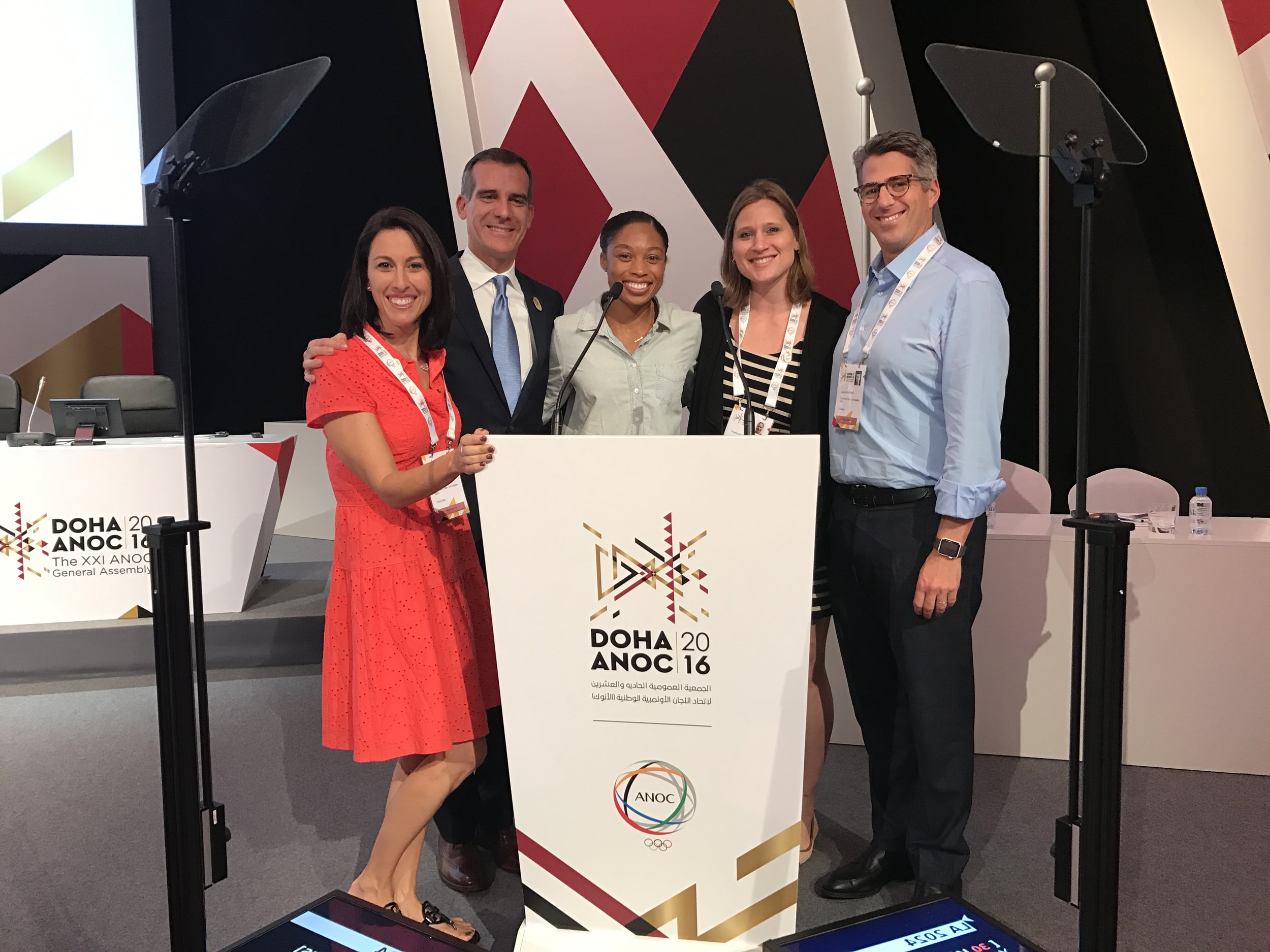
I’ve worked on Olympic bids with minimal IOC membership, and some with zero IOC membership, such as Almaty 2022. The United States had three IOC members during the LA 2028 campaign – Anita De Frantz, Larry Probst (also Chairman of the USOC) and Angela Ruggerio.
This was a blessing but also a challenge when it came to presentations, where only a limited number of speakers were allowed.
In some cultures, this would have been a nightmare, but our three members were fair and objective as to who got to speak and when. They were gracious with each other and did an excellent job of helping our presentation team connect with their IOC member colleagues.
I was particularly impressed with Larry Probst’s performances later on in the Bid. If you know Larry, I am sure you’ll agree that to say "he doesn’t crave the limelight", and "he isn't super enthusiastic about public speaking", are both understatements. However, like everyone in the bid, he was in it to win it. Larry and Scott Blackmun (CEO of the USOC) worked tirelessly over the past seven or so years to reset the relationship between the USOC and the IOC, so this bid was incredibly important to him personally.
Because of his personality and stature, I was comfortable giving Larry some of the “pointy” messaging, gently challenging his IOC colleagues. I showed him his drafts, and he was fully engaged. He had some very sobering lines to deliver – and a few were starkly honest in their appraisal of previous US bid efforts. Humility wins every time if it’s honest. Larry performed like a champ, and many people remarked positively on his statesmanlike delivery.
The most significant concern I had for our first presentation was how the US presidential election and the political climate in the US would affect us. In a word, it was distracting. I knew our competitors would seize upon it for political advantage (I would), and they did. So, we had to think of a clever way of reminding everyone in the audience that the United States was still the same country of ideals and values that we’d always aspired to be.
That’s when an incredible, pleasant surprise fell into our laps named Allyson Felix. Janet suggested Allyson. Of course, I knew who Allyson Felix was (the most decorated female track and field Olympian of all time, and LA native), who didn’t? But could she speak and carry the message I already had forming in my head?
We arranged a meeting with her and her brother/manager, Wes. I am rarely star struck anymore, but with Allyson, I just couldn’t help it. She is an icon - not only an Olympian but a legend, like Janet. And you know what? She is one of the kindest, most humble people I’ve ever met. I realized, immediately, what a treasure I’d been given to work with.

The first meeting went something like this:
Me: Allyson, we want you to speak with our LA 2024 team, but I don’t want you to talk about all the medals you’ve won, or even about being an Olympian…
Allyson: OK that sounds interesting, what do you want me to talk about?
Me: I want you to talk about what it is like being a black woman in America, and of your love for and faith in our country because of its diversity; because this election is being used against us, and I believe you are the only person who can help refute that…are you comfortable doing that?
Allyson: (not batting an eye) I would love to do that.
And she did. Brilliantly. She was electric on stage, no one could take their eyes off of her or their attention away from what she was about to say.
Here’s a bit of what she said:
I’m not here today to speak only about my sport...my accomplishments...or even, LA 2024.
I’m here to talk about America.
I want to tell you about the America that I love, and, the America that needs
the Olympic Games to help make our nation better...now, more than ever.
America is diverse.
We are a nation of people whose descendants came from all over the world for a better life.
But...we’re also a nation with individuals like myself...descendants of people who came to America...not of their own free will...but against it.
We just finished our presidential election, and some of you may question America’s commitment to its founding principles.
I have one message for you:
Don't doubt us.
America’s diversity is our greatest strength.
Diversity is not easy.
Diversity is a leap of faith...that embraces all faiths.
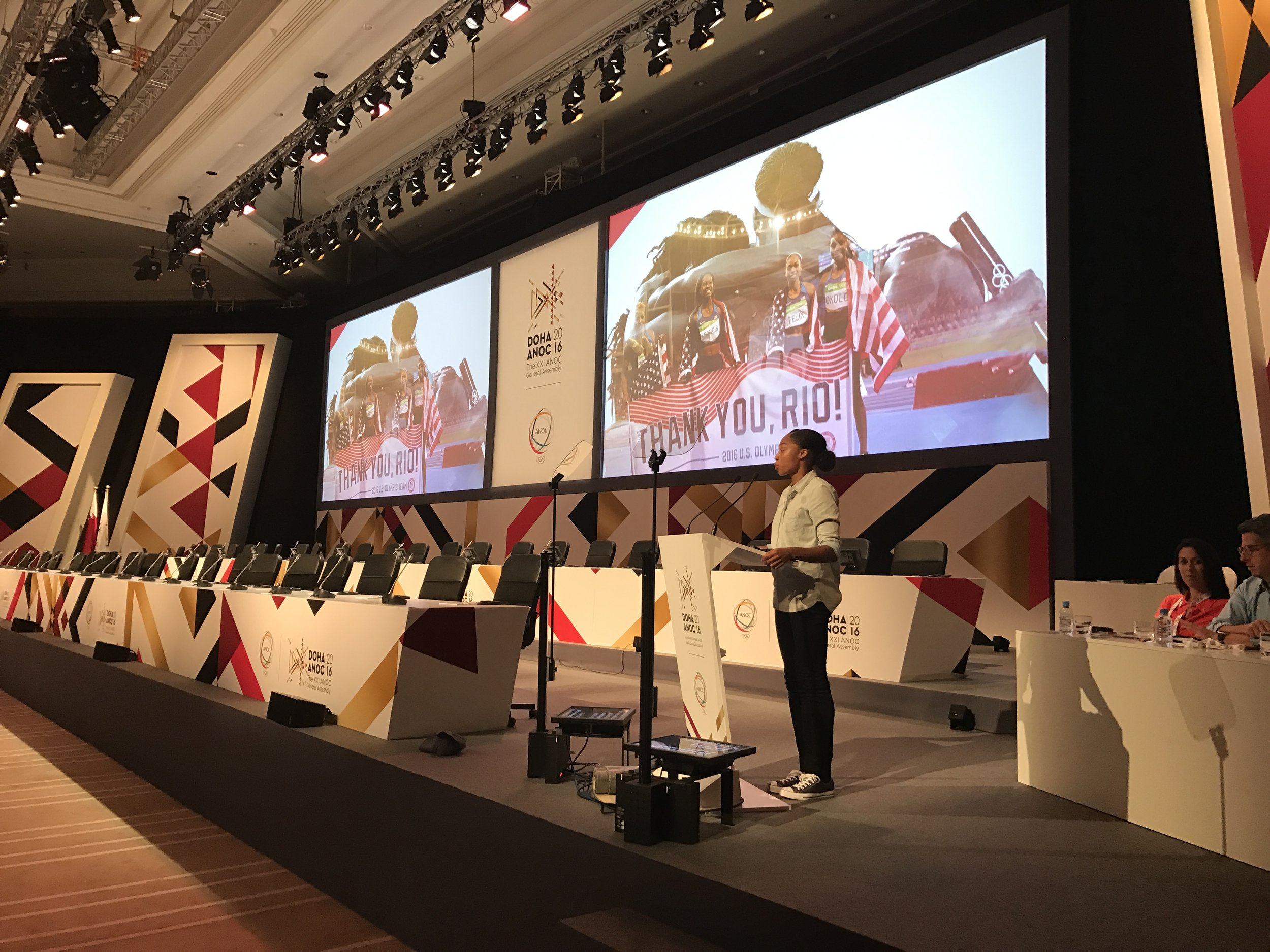
And with those words, the election and doubts about the US evaporated from the LA 2024 discussion. We knew we had to hit it head on, as we did (and will show) for every challenging issue in the 2024/2028 campaign. We felt great about it in the room that day.
The positive feedback was instantaneous as well. The Olympic media called it a “masterstroke” to diffuse the issue. It was one of those moments in every bid that serves as a tipping point, meaning, if it works, there is a clear line of sight to victory. After Allyson’s speech and the entire team’s performance, our vision improved to 20/20, we could see the path forward.
Bid Promotion and Communications: A Brave New World
The 2024 Olympic and Paralympic Games campaign was the first to fully embrace social media as a tool promoting the Bids. The IOC rules limit promotion of each Bid in its national territory for a period of time, and only then are the Bids are allowed to promote themselves internationally after a specific date: in our case, it was 3 February 2017.
You can immediately see the porous nature of this distinction in today’s media environment. In the old world, geographical limitation meant we could not purchase media or ad space outside our home territories until a specific date. In the new world, as long as our Facebook Live posts, Tweets, and Instagram posts, etc. originated in our home countries, we could do whatever we wanted whenever we wanted. A post by the Bid or a Tweet by Casey went around the world, instantly, and both LA and Paris were very aggressive with social media.
Knowing the efficacy of this new tool, we worked closely with LA 2024's social media agency, Laundry Service, led by Cosette Chaput, to create a novel concept to kick off the international campaign in early 2017.

We called it “What’s NOT in the Bid Book, with Casey Wasserman.” The concept was simple and its objective two-fold.
First, we wanted to raise Casey’s profile within the Olympic Movement because was a newcomer. He was less known than the executives of the Paris bid. Second, we wanted to do something creative and fun instead of endless Tweets and posts about our Games Concept and venues (we did that too, by the way). So, we created a concept showing fun facts about LA that were NOT in the bid book, hosted by Casey. Cosette's team created some fun ideas that were easy, quick and affordable to do, nice to get all three.
Casey is a natural in front of the camera. He has good instincts, a quick wit and frankly, the camera loves him. Cosette and her team at Laundry Service came up with an outline of content for the series, and we filmed the teaser on 19 January in Casey’s office. You can find it here:
What’s Not in the Bid Book Teaser
https://www.youtube.com/watch?v=MlrRRw0SbmE
Then we shot and rolled out the remaining pieces over the next few months. They can be viewed here:
Episode 1 – Hollywood Behind the Scenes, starring ET
https://www.youtube.com/watch?v=0OIpDIEh9h8
Episode 2 – Shoe Shopping with Allyson Felix
https://www.youtube.com/watch?v=2XznppkipZ0
Episode 3 – LA Fashion & the Olympics
https://www.youtube.com/watch?v=P6M1kkjwCl0
Episode 4 – Casey & Mayor Garcetti reminisce about the Bid
https://www.youtube.com/watch?v=R89qhowg8OA
The results exceeded all our expectations, with over 5 million views.
2024 or 2028?
A lot has been written as to who first said what to whom about the possibility of awarding 2024 and 2028. I’ll leave it to others to debate, but we began hearing about it in earnest in late 2016.
In hindsight, it was a brilliant idea - and whoever thought of the idea should take pride in its creativity and its stabilizing impact on the Movement for years to come.
Rome 2024 dropped out of the race in October, right after the Rio Games. Of all our competitors, I must say the Italians were the nicest and friendliest of the lot. They were always gracious, and they hosted all the bids at Casa Roma during the Rio Games for an incredible meal. I hope Rome bids again (I enjoyed working for them on their equally fated 2020 bid), it could be a spectacular Host City.

As the 2016 holiday season began, it appeared that discussions about 24/28 were taking place in Lausanne.
In December 2016, President Bach finally hinted at the possibility of a dual award by stating that the current bid process produced “too many losers,” and he “wouldn’t rule out” a dual award of 2024 and 2028, but the IOC had to “study the issue.” It seemed apparent to everyone that he was intrigued, but the idea needed to clear more than a few hurdles within the IOC membership to make it happen.
Then, Budapest 2024 dropped out in February. It wasn't a surprise given the ongoing struggle the Bid was having with public opinion, but they were a great team full of young, enthusiastic people and we were sorry to see them go. They'll be back.
On 17 March, the IOC set up a “Working Group” consisting of the IOC’s four Vice Presidents. The group consisted of Australia's John Coates, Turkey's Uğur Erdener, China's Yu Zaiqing and Spain's Juan Antonio Samaranch. Its mandate was to review and discuss reforms to the bid process, including the possibility of a dual award for 2024 and 2028.
It was clear that if this discussion was taking place, we needed a strategic plan; so, we set one in motion with specific messaging tied to specific timing. We designed a frank approach to the reality of the situation. Our goal was to be part of the discussion and the solution, but on our own terms as much as possible.
I vividly recall our discussion around the IOC's new Working Group at our Monday morning staff meeting in late March of 2017, in the LA 2024 “Downtown Conference Room.”
Paris continued to state that 2024 was “now or never.” We thought that sounded a lot like an ultimatum. What we needed was a gracious, yet calculated way of addressing it. Lots of comments were flying back and forth. Finally, I said, “…let’s give the IOC some air cover on this …let’s say that LA 2024 that supports the IOC’s strategy of considering 2024/2028 - this paints us as good partners…”. Everyone agreed. Several of us began scribbling out the copy for a Casey Tweet, which went out the next day, 23 March.
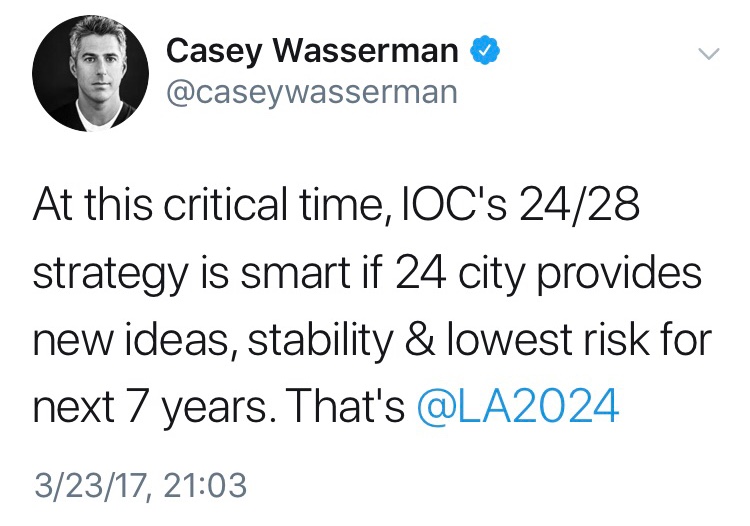
The Tweet generated a lot of chatter in the Movement as we were the first Bid to address the possibility in a positive light. I think that many of us in the Bid felt (or guessed) where the 24/28 debate might eventually be going, but a campaign is a campaign, and nothing is a done deal until it is a done deal. Our goal was to position against Paris’ perceived inflexibility and portray LA 2024 as an excellent partner to the Movement.
Parallel to the global discussion, we made another strategic decision to craft an Open Letter” from Casey to reinforce our position and to support the IOC. It was titled “An Opportunity, Not an Ultimatum” and can be found here:
https://medium.com/@LA_2024/an-opportunity-not-an-ultimatum-e7845082850e
The penultimate paragraph:
The 2024/2028 strategy under consideration by the IOC is precisely the type of new thinking that the Movement needs. But, it only works if the IOC chooses the right 2024 city – the city that brings new ideas and new solutions to the Games – not more of the same. That city is LA. So instead of “now or never”, we think the IOC should focus on “new or more of the same.” That’s not an ultimatum, that’s an opportunity. But as in life, opportunities only exist for brief windows of time.
In the midst of all this, we were told by the IOC that we and Paris would be making presentations at SportAccord in April. SportAccord is an annual sports and business symposium held in different locations around the world. One of the biggest draws every other year is a presentation by the Olympic Bid Cities.
The 2017 SportAccord was held in the city of Aarhus, Denmark, one of Manav Kumar's (our key contact in Mayor Garcetti's office) favorite cities. SportAccord had its ups and downs with the IOC in recent years, and initially, the 2024 Bids were not slated to present. However, the International Federations requested a presentation from the 2024 Bid Cities because the NOCs received one in Doha at ANOC. So, the IOC allowed us a short presentation. We believed that the timing was perfect to deliver, in person, our thoughts on the 24/28 issue.

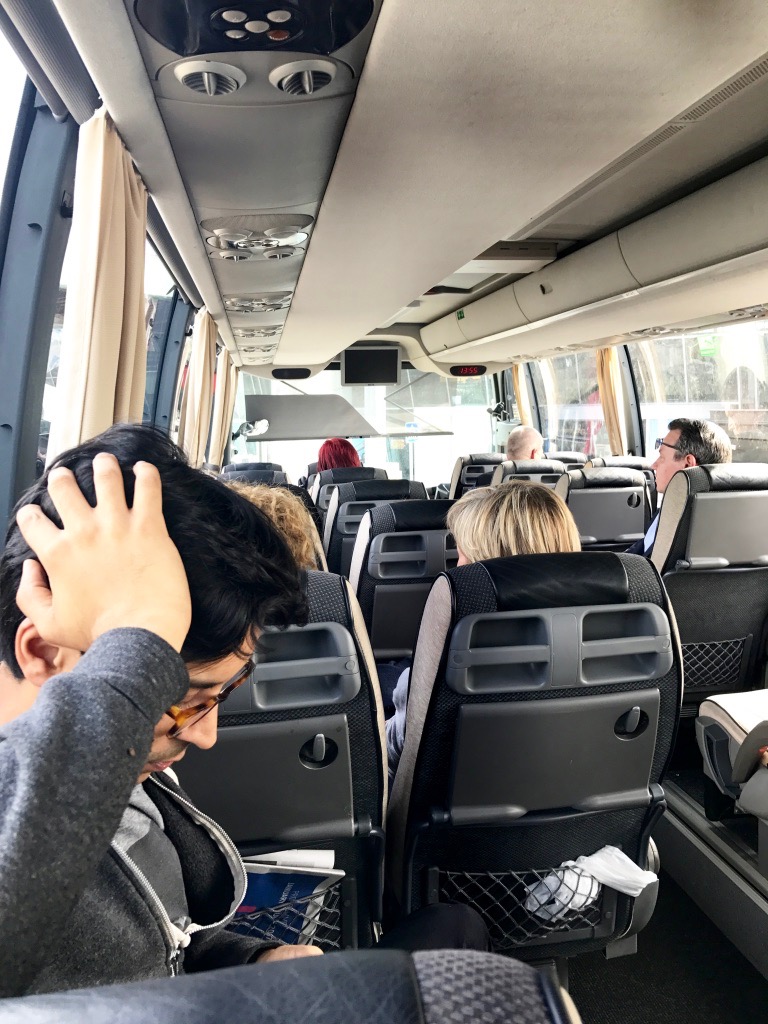
The issue of 2024/2028 was finally out in the open and on everyone’s minds, so in typical fashion, we decided to address it head-on. Our speaker lineup for the short presentation was Mayor Garcetti, Gene Sykes, IOC Member Angela Ruggerio, and Casey.
Normally, Mayor Garcetti closed our presentations because he was the most emotional speaker we had. But for this presentation, I chose Casey to close because, in his role as Chair of the Bid, I felt that it was important that he deliver the final comments on the 2024/2028 issue.
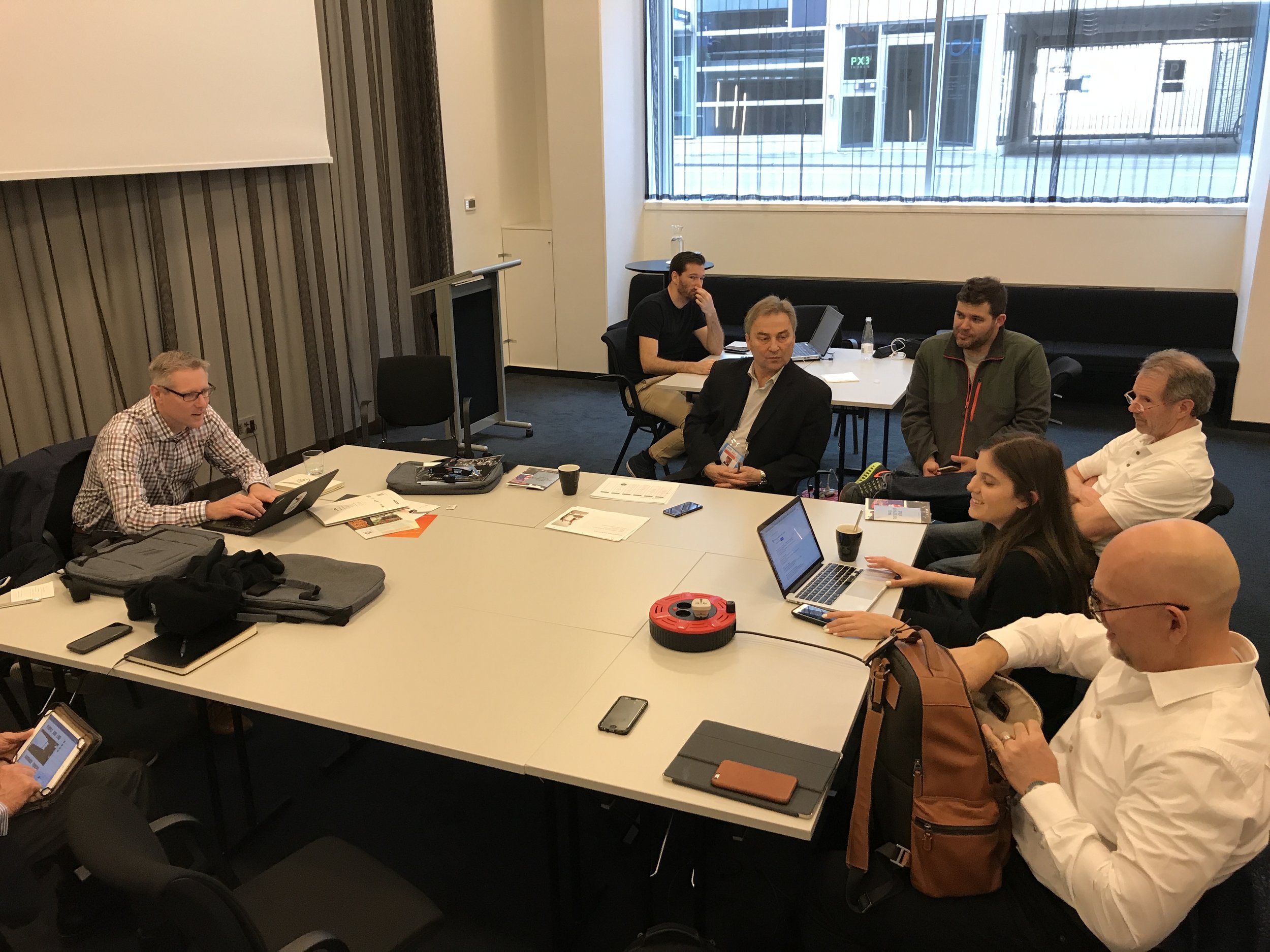
Because of the "presentation order draw" at the beginning of the campaign, LA always went first in each presentation, and Paris last. If you can’t go last in a larger group, first is always best because you can pre-empt what the other Bids are going to say. And when it gets down to just two, going first is almost better than going last - especially if you have a great story. We used that to significant effect in Aarhus.
So, after the Mayor, Gene and Angela spoke, Casey stepped up to the podium. Instead of his usual Southern California smile, he looked serious, even earnest. I could tell he was eager to say what he was about to say. So, instead of the usual Olympic bid platitudes, Casey’s opening line was “My topic for today is our Games Concept, but first, let’s talk about the elephant in the room – the 24/28 Games. We believe that the 24/28 discussion makes a lot of sense and it's fortunate that the IOC has two great cities to consider, each capable of hosting magnificent Games in 2024.”
There was an audible and collective gasp in the room, many frozen fake smiles evaporated, and everyone wondered what in the hell Casey Wasserman was going to say next.
He continued on, laying out the case why LA 2024 was “something new, not more of the same.” He said that the 2024 Games had to be transformative for the Movement because "the next seven years will help define the next one hundred years.”
And finally, to address the negative, just under the surface, ever-present, and thinly veiled Anti-American sentiment we always experienced from some, he said, “Our bid isn’t about money, or ego, or American pride or even losing or winning – it’s about ensuring that the Olympic dream is achievable for everyone, as far into the future as possible…”. Juan Samaranch turned around, found me in the audience, and gave me a thumb's up at that point. I knew we'd hit the right tone and message.
Casey delivered a great speech that day, and it got the room and the media buzzing. Our design partners at "MoveWild", from Madrid, Spain, once again dominated the visual backdrop. The people in the room and the Olympic media complemented our clear and crisp messaging, beautiful design, and our speakers’ performances. I met the MoveWild team on the Madrid 2020 Bid, and worked with them again on Almaty 2022, and with LA2028. They are superb people and world-class professionals.


The IOC Evaluation Commission Comes to Town
While we were busy prepping and implementing the messaging and the presentations, a huge team in LA was busy for months prepping for the IOC’s Evaluation Commission’s visit. Budapest’s departure from the race changed the dates long planned for, and our team did an excellent job of adjusting and rearranging an extraordinarily complex set of logistics at the last minute.
John Harper and Hillary led the planning and management of an army of LA 2024 staff and external consultants. I would also like to point out the ongoing heroic efforts of Dwayne Jones, our logistical guru and the best party planner in LA. Dwayne and I had many shared moments, laughs and memories as two Southern Boys in the big city of LA. He's one of the best people I know.

From the outset, we knew that we could not compete with the cultural bias (a well-earned one, by the way) that Paris enjoyed in the campaign. Paris is simply, in my humble opinion, the most beautiful major city in the world. Architecture, museums, culture, gastronomy…I could go on, but you get the idea, Paris has it.
We knew we could not compete on any of those attributes. So, we fashioned LA’s Olympic vision on a very different set of attributes such as forward-looking, future-focused, dynamic, optimistic, modern, and yes, cool.

A phrase that we used in the brand model working sessions, “New Games for a New Era”, became a workhorse phrase for the bid alongside the tagline, “Follow the Sun.” Our goal was to show the IOC EC that LA 2024 was ideally suited to deliver a New Games for a New Era – and we did.
From the beginning, one of the most difficult challenges for the technical team, led by the uber-competent duo of Doug Arnot and Bill Hanway, was to sift through the plethora of existing, world-class venues spread all around LA for our Games Concept. We had an embarrassment of riches from which to choose for our venue plan.
I’d written a line for Madrid 2020 that said: “we’re not changing our city to fit the Games, rather, we are adapting our Games Concept to fit our city.” Madrid 2020 was Olympic Agenda before Olympic Agenda 2020 was cool. But that’s another story.
LA was in the same position – it had everything it needed to host the Games, including the Achilles Heel of most Olympic bids – LA had an existing, functioning, state of the art Olympic and Paralympic Village on the campus of UCLA. The entire LA 2024 team worked on the visit, serving as guides and speakers and whatever needed to be done. It was an incredible effort by an incredible team.

After three days of touring the LA 2024 Games Concept, the EC Commission Chair Patrick Baumann was impressed. He said, “Los Angeles is already a great Olympic city, but after these three days we now realize that was an understatement.”
“It goes from spectacular venues to impressive venues to mind-blowing venues.”
And the kicker (unlike previous bids on drawing boards) - “It was very positive because we were able to see them.”

When the IOC’s final report came out, we were happy to discover that our brand and messaging plan not only worked but worked splendidly.
From the IOC report:
Members of the Evaluation Commission have used the terms “forward-looking,” “innovative,” “vibrant,” and “cool” to describe the Los Angeles candidature.
When discussing the main differentiators of both candidatures, the two words the Evaluation Commission often attributed to LA2024 were “dynamic” and “futuristic.” Los Angeles is prepared to put its story-telling skills, creative energy and cutting-edge technologies to good use in delivering what it proposes will be a transformative Olympic Games that will thrill and inspire the world, just as some Hollywood masterpieces have done over the generations.
And finally, all the hard technical work of the team paid off as well:
As for Los Angeles’ Games concept, it’s all about inclusion. LA 2024 has proposed four self-contained Sports Parks that would extend the Games’ celebration across the entire city.
Los Angeles would have very little to do regarding venue construction, as existing and temporary structures make up almost the entire venue proposal.
I’d worked on more than a few Evaluation Commission visits around the world and over many years, and I would emphatically state that the IOC’s revised EC procedure is light years ahead of the old format. Chairman Patrick Baumann and his team led by Christophe Dubi and Jacqueline Barrett were superb – they were there to listen – and to help. It was refreshing, and I think signals a new, enlightened approach by the IOC, which will serve it well in choosing future Host Cities.
But at some point, the cities do get to show off their creativity. LA 2024 hit a new high (for me at least) with its dinner with the EC - and in Sochi, we had dinner with Putin! Casey's idea was to have the dinner at his home in Beverly Hills with some of his friends from the LA media, business, and entertainment community.
With guests ranging from Sly Stallone to Kobe Bryant, the evening was set for something special. Then Casey told us about his idea of hosting it outside in his backyard, within a 360-degree, ten-foot-high video screen - and no ceiling - just the LA sky overhead (yes it was a clear night). Really. I was fortunate to be invited by Casey to attend. It was a fantastic evening, and one I told Casey and the Mayor that I would never forget. And I won't.
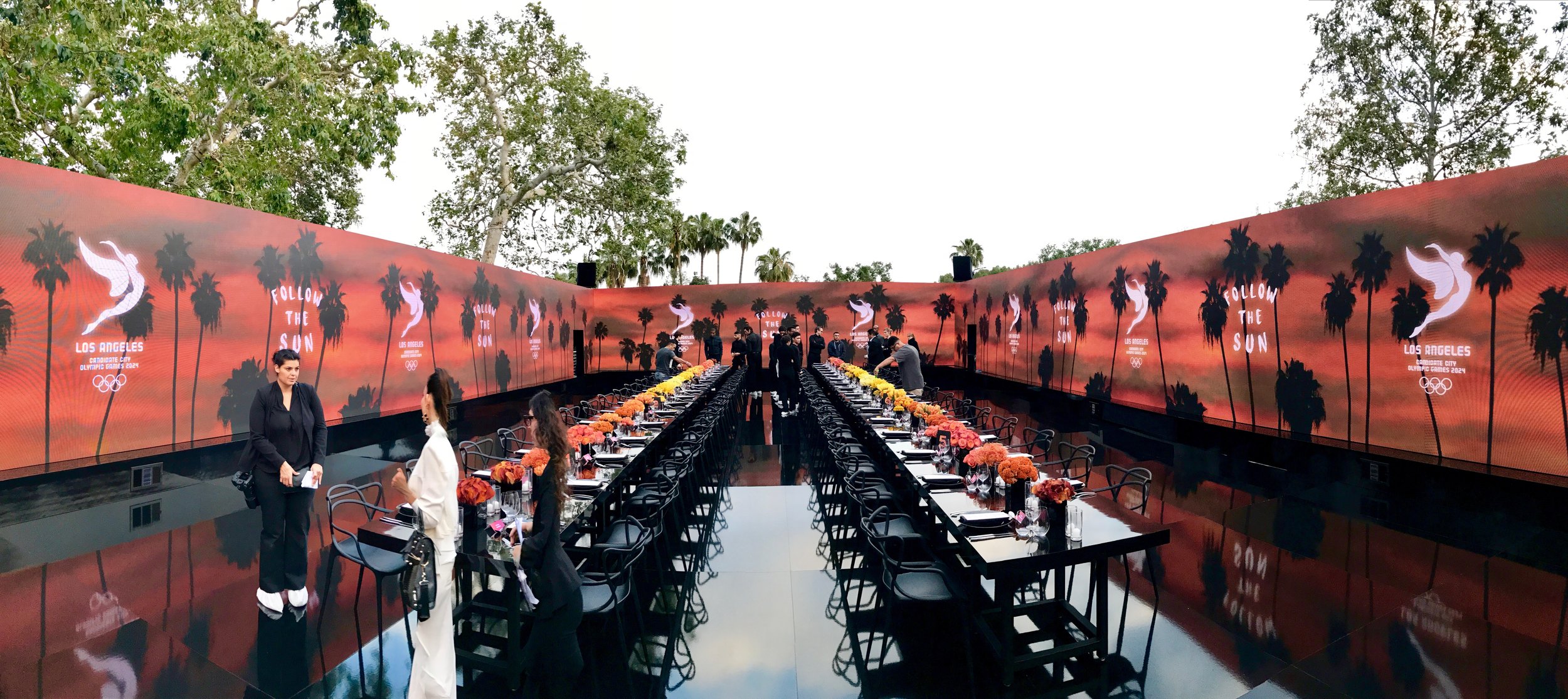


After the EC’s visit to Paris, it was apparent to everyone involved that a) the IOC had two excellent bids, and b) it was trying very hard to make them appear “equal” in every way. Again, it was obvious where this was headed, or attempting to head, but it was also clear that some members of the IOC and the Olympic Family still weren’t sold on the idea of a dual award. We believed that at least one of us in the race should hold up our hand and indicate a willingness to play ball, and remind the Movement that even though LA was flexible, it wouldn’t and couldn’t last forever.
So, we decided to reiterate our position on the 24/28 matter and our belief in partnership instead of ultimatums. On 7 June, Casey submitted another Open Letter to the Movement.
The Open Letter can be found here: https://medium.com/@LA_2024/an-opportunity-to-serve-83983ffa6112
Some perceived it as bold, and some as confusing. Our goal was two-fold: take control of the 24/28 narrative as it pertained to LA (before someone else did), and generate some goodwill in Lausanne.
From the beginning, we’d decided that the LA 2024 brand voice would be respectful, but also honest and straightforward, minimizing the Olympic bid clichés one hears so frequently. All of our speeches and promotional efforts reflected this tone, and this Open Letter was no different. The key paragraph was this one:
To be blunt, LA 2024 has never been only about LA or 2024. Even when the issue of a dual award for the 2024 and 2028 Games was initially raised, we didn’t say it’s “LA first, ” or it’s “now or never” for LA: that sounds like an ultimatum. We could have used that strategy, but we didn’t because we thought it was presumptuous to tell the IOC what to do and how to think. We’re better partners than that. It has always been our contention that LA 2024 had to make as much sense for the Olympic Movement as it did for the people of LA. And we’ve stuck to that premise.
And it closed with this:
We don’t believe in ultimatums — we believe in partnership; that’s why we are willing to look beyond ourselves and ask the question “how can LA best serve the long-term needs of the Olympic and Paralympic Games?
Almost immediately the Olympic media pounced, some using the term “capitulation”. Even people on our team were taken aback by some comments whirling around the Olympic world. I admit, the next morning even I had second thoughts, and I helped write the damn thing. But, we endured it because we believed in the strategy behind the words, and frankly, our stated desire to “look beyond ourselves” was perceived quite favorably in Lausanne. In hindsight, it was the perfect, strategic foil at the right time of the campaign.
End of Part 2; stay tuned for LA Confidential - Part 3. The Final Strech to Lima.
LA Confidential - Act 1
Terrence Burns ©2017
For those of you wondering, the title of this post is “borrowed” from the 1997 movie, L.A. Confidential, starring Russell Crowe, Danny DeVito, and Kim Basinger. It's the first time I’ve ever worked movie stars’ names into an Olympic blog post, but, it is LA, so... By the way, the movie’s plot and its title have nothing to do with the LA 2028 bid, this post or the Olympic Games. I just thought it was an apt title.
Note: I use both LA 2024 and LA 2028 in this article, but not interchangeably; I do so in an attempt to capture the nature of the bid at specific timeframes in the two-year long, unprecedented campaign.
This story is an Olympic story, which means, it is a children's story; a story for children aged from 5 to 105. If we are lucky we all retain that special spark of childhood, the belief in what really matters in life - dreams, and hope. That is the essence of the Olympic brand. This is LA 2028's version. Oh, and I should add, this is also a bit of a love story between this humble writer and a city and her people.
My own LA 2028 story began very late on a cold, snowy, February evening in Almaty, Kazakhstan, at the offices of the Almaty 2022 bid committee.

Boston was just selected by the USOC in January to compete with Paris, Rome, Hamburg, and Budapest for the 2024 Olympic and Paralympic Games.I got a call from the brand-new Boston 2024 CEO, John Fish.
John said, “we want you on the team – tell me what it will take, and I’ll send you a contract." He talked very fast in a strong Boston accent, but the mobile reception was terrible; frankly, it was hard to understand him. But I got the gist.
I told John I appreciated the call but wasn’t quite ready to commit to any 2024 city and was in discussions with another city. Then I went back to the evening, which was in the middle of the IOC Evaluation Commission’s visit to Almaty – a tense week. But eventually, due to some issues surrounding our firm’s other business interests, we said “yes” to Boston 2024. So, after many years working around the world, Boston was to be my first American Olympic bid, and the opportunity to work in the United States for the first time since 1996.
We began work on 1 April 2015. Then things got weird. To make a short story even shorter, Boston 2024 didn’t work out so well. By June it was obvious the bid was dying, and by July, it was dead.
One of our firm’s principals called and asked me if I’d considered LA 2024. I said, “no, I haven’t really, and given what just transpired with Boston I don’t really think I want to….”
To make another short story even shorter, he and I had a call with the LA 2024 Bid Chairman, Casey Wasserman. I’d never met Casey but knew of him by reputation in our industry. I knew he had a growing and thriving business and was well connected in sports, entertainment and political circles. And, I knew he was young and on the move - up.
All of these things piqued my interest because frankly, he seemed exactly what a US bid needed in a leader.
I had about ten questions on the call. Casey answered them. He asked me some questions, I answered them. For a phone call between two strangers about something so important, it went pretty well. We agreed to a deal.
One week later I flew to LA to meet Casey in person. He was as advertised – charming, smart as a whip, and surprisingly funny as hell. I thought we hit it off quite well personally, which is always a plus with a new client.
In bidding, chemistry is incredibly important because there is nothing, and I mean nothing, more emotionally intense than the client/consultant relationship in an Olympic bid. For me, it is always a romance, and each time I do it leave a piece of my heart when it's over. Yes, I’m aware of how dramatic that sounds, but ask anyone who has ever worked with me on a bid; I’m all in.
You cannot deliver a winning bid without total, 100% emotional commitment. You have to trust each other implicitly and have each other’s backs. It’s a high wire act and its uncomfortable for anyone not used to it – there are no do-overs or second chances. Get it right, you win. Get it almost right (or wrong, they’re the same thing in a bid) and you lose.

The day was a stunning Southern California day; the kind of day that you read about or see in a movie but aren’t quite sure it’s real: incredibly blue skies, low humidity, swaying palm trees and a temperature of about 78F/25C. Casey said, “It’s like this all the time.” I was smitten.
The truth is it probably had a lot to do with the view from his office on Wilshire Boulevard, overlooking Westwood and the campus of UCLA, with mountains in the background and the Pacific Ocean to the west. For two years I had a one-on-one weekly meeting in Casey’s office, and every time, I stopped for a moment and looked out that window and enjoyed the view. And whenever I mentioned the beauty of the place, Casey always shared my enthusiasm; he really loved his city.
I also met Casey's Chief of Staff, Patricia Feau, who, over the two years became a dear friend, a confidant and key part of the bid. Her French husband, David, is the Head Chef at one of Beverly Hills most chic restaurants, Wally's. It's an amazing place to eat and a must if you ever visit.

That day I also met with Danny Koblin and John Harper, two key Wasserman employees who were leaders in LA’s domestic USOC bid that lost (inexplicably) to Boston. The meeting was hastily thrown together in a Wasserman meeting room. I hadn’t prepared anything specifically, so we spoke about the recent Almaty 2022 presentation and watched it online as an example of the type of work we’d be doing for the bid. Danny went on to become the Chief Bid Officer of LA 2024, and John the COO. Our team would work extensively and very closely with these two for the next two years
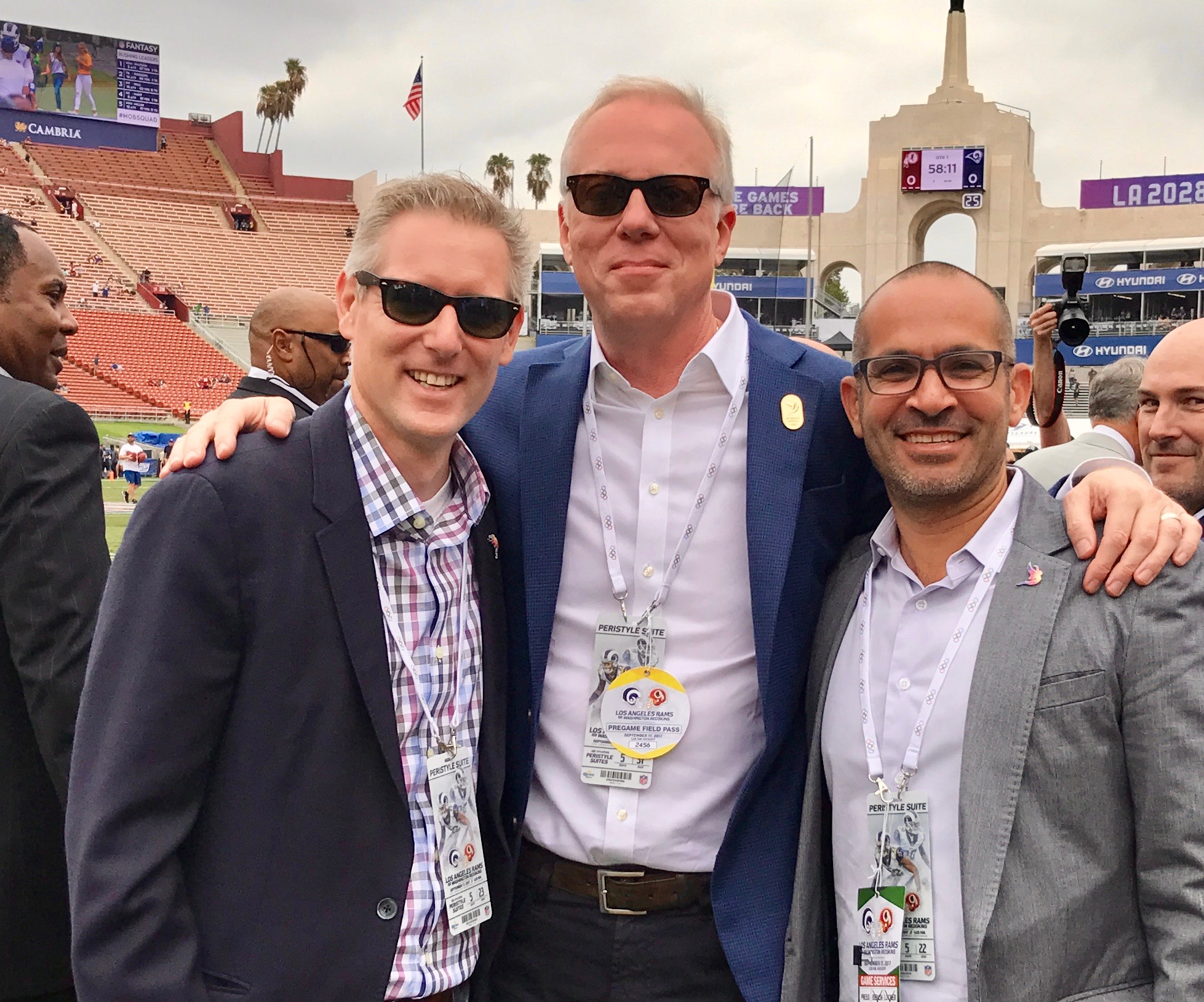
It’s often delicate parachuting into a team that already exists and has been working together on a project for a time, and even more delicate when you are billed as the “external expert.”
It’d been a long time since I worked with Americans and I admit, it took a while for us all to get used to each other. I thought we made a good team. And in the end, it's results that matter, and together we achieved something wonderful for LA; for that, I am proud and thankful.
Another key player on the team from the domestic bid was Jeff Millman, LA 2024’s Chief Communications Officer. Jeff’s background was political campaigns, and he worked tirelessly to help ensure the local LA community remained engaged and supportive of the bid – no small feat in the new era of “No Olympics.”

Also, Jeff is also a fashion pioneer, spearheading the marriage of the New Balance classic 574 with dress pants and Lacoste polos. He graciously treated George Hirthler and me to a lovely evening of tacos at his house and, on my many long weekends alone in LA, would invariably send me a text inviting me for a bite or to hang out (much appreciated Jeff, thank you).
During this trip, I was also treated to a private meeting with LA’s mayor, Eric Garcetti at his office in the iconic LA City Hall. I recall describing him as an “Olympic bid mayor out of central casting.”
By the end of the campaign, I realized just how insufficient a description that was. Mayor Garcetti was simply amazing – in everything he did for us.
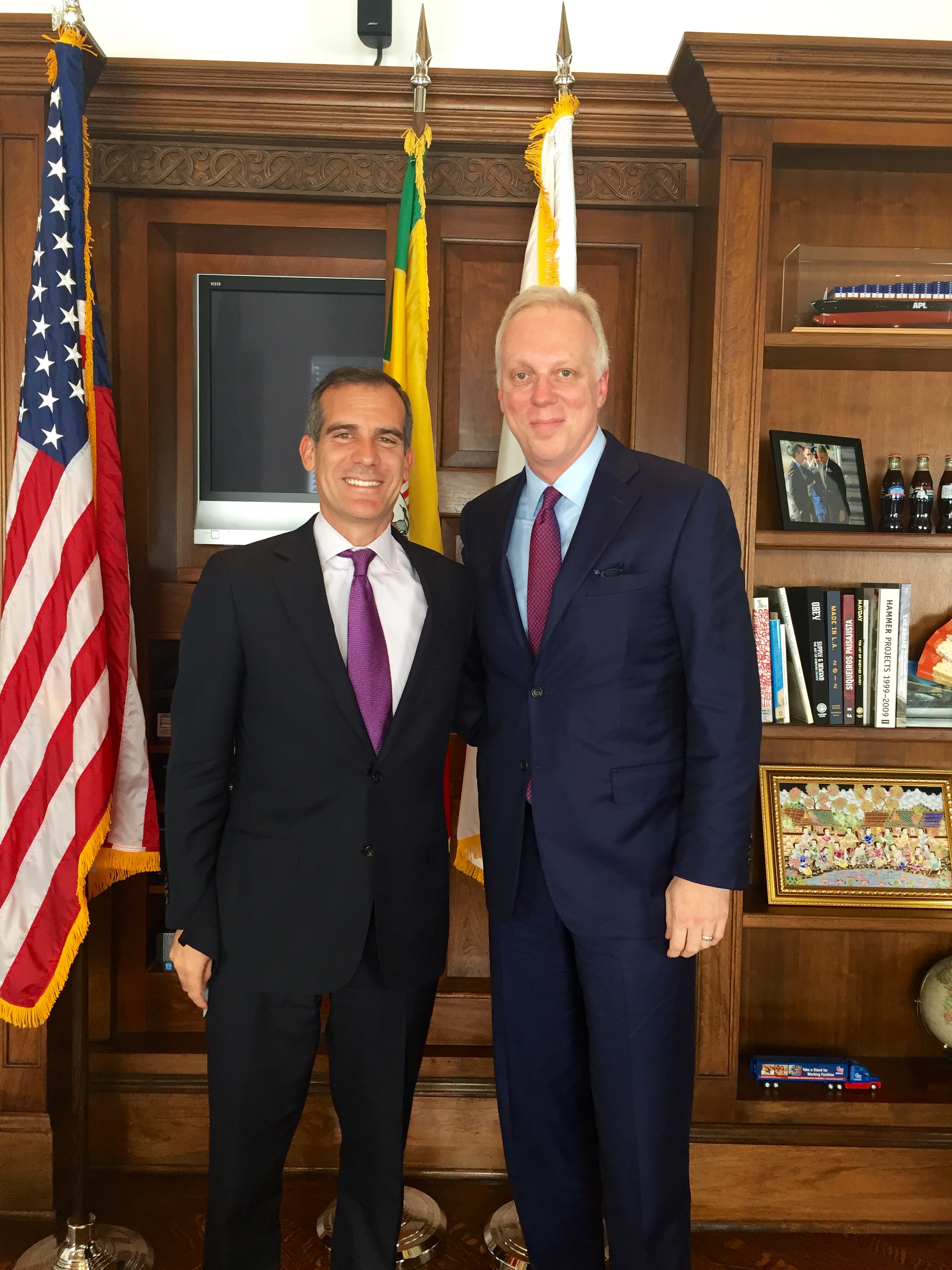
I’ve been around the Olympic Movement a long time. I’ve met with and worked with heads of state, politicians of every stripe, royalty, athletes, and celebrities. I’d never met a civil servant like Eric Garcetti. I used to say, “the brightest and best no longer go into public service in America.” Eric Garcetti proved me wrong; very wrong.
He was approachable, easy to work with, very generous with his time for everyone and a consummate professional at public speaking. He helped our speakers and me with guidance many times during the campaign. He and Casey cut a path of personality and charm (and ultimately friendship and trust) through the Olympic Movement like two hot knives through butter.
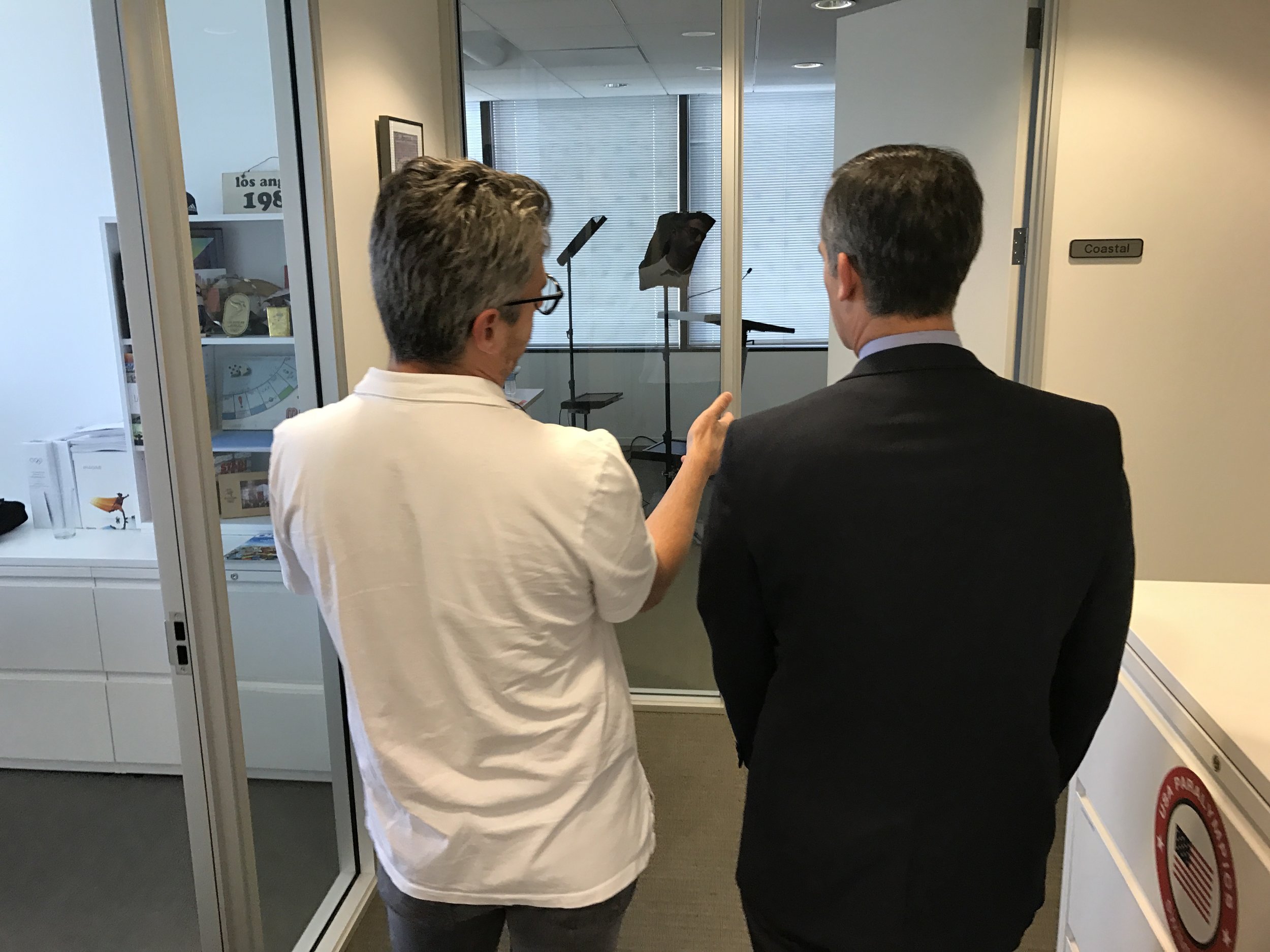
Allow me to stop here for a moment because I believe that this is important: The Olympic Movement and the USOC owe the city of LA and its team a tremendous amount of gratitude for what they did.
They not only picked up the utterly horrific mess left by the Boston 2024 debacle, but they also agreed to jump into a race where they were a year behind in planning, and clearly not a favorite by any stretch of the imagination. And they did it with grace and confidence, setting a new standard for an American bid committee.
That’s the LA I came to know and love. So, bravo and thank you Mayor Garcetti and Casey for saying “yes, not only are we still interested, but we also want to do what is best for the Olympic Movement.” And they meant it. It was bold. Bold wins, always.
I was on my annual off-road motorcycle trip, this time in Utah, and I missed the 1 September 2015 bid launch that featured Olympic legend Janet Evans as the MC. Of course, I knew who Janet was – I was at Opening Ceremony in Atlanta in 1996, when she passed the Olympic Flame to Muhammed Ali to light Atlanta’s caldron, opening those Games. And of course, I remembered Janet dominating her sport during her competition years. Janet Evans is Big Time. But I’d never met her or heard her speak professionally.
When I got home, I watched a video of the launch, and I was impressed by her confident style and easy grace. Casey and I had a chat, and I told him that every bid needed an “Athlete Commission” and that he should hire Janet to run it (selfishly, I could already see her as a principal speaker in future presentations – which she was).
Internally, Brock Park on our team and I worked on a job description, a mission statement and set of principles for the Athlete Commission. We shared it with Janet, and she agreed to come onboard. One of the best hires ever. Janet may be from the single athlete, lonely sport of long-distance swimming, but she’s one of the best team players I’ve ever worked with; and most importantly in the Olympic world, she isn’t a Diva, she’s a genuinely good person.

The Times, They Are a' Changing
It was a very different race from the start. I’d just endured a Winter Games race where only two cities were left standing in the end, Beijing and Almaty, neither of which generated much real enthusiasm. The Movement was reeling from the blinding-speed cultural, societal and economic changes taking place around the world. Suddenly, it seemed as if no one wanted the Games.
I won’t go into the myriad of reasons why, but I will say that much of the world seemed ambivalent at best, and cynical at worst to hosting a Games. This is a problem many years in the making and an issue that everyone in the Olympic Family – myself included – played a role in creating.
This race was different because even though there were five great cities vying for 2024, Olympic insiders could already sense a few of the bid’s fragility. We were all holding our collective breath over the two words that have become the new challenge of the Olympic Movement’s efforts to find Candidate Cities: public referendum. In fact, Hamburg 2024 and its great team of my friends was the first 2024 Candidate City to fall victim on 20 November 2015.
But, I’m getting ahead of myself.
Right about this time, Gene Sykes, Goldman banker and “technology deal-whisperer” was named as CEO of the bid. Gene brought an abundance of experience, managerial skills and a wealth of unique relationships that would help serve the bid. How unique? Well, it was the first time I ever proofed a new hire press release with quotes from both Tim Cook of Apple and Bob Iger of the Walt Disney Company - that’s how unique. Gene became a trusted colleague, and I always found him to be thoughtful, earnest, contemplative and a quick study in a new and very different world – the Olympic world.
One of my team’s first assignments for every bid is to help create its vision, its story, its brand, and the answer to the question, “why LA?”. It begins with research. Our team consisted of me, Mark Smith, Brock Park and my longtime friend, mentor, former business partner and Olympic aficionado, George Hirthler.

We conducted about 75 one-on-one interviews within the Olympic Family, asking about LA as a potential Host City. It’s mainly a SWOT (strengths, weaknesses, opportunities, and threats) analysis. We also conducted a comparative SWOT for the competing cities, then we mapped out the various findings in a matrix that began to compare and contrast the functional and emotional differences.
After two months, we had an initial call with Danny, and Matt Rohmer, the new Marketing Director for the bid to give them a preview of where we’d landed on the brand model and the tagline.

Basically, people around the world perceived LA (and California - the two were interlinked in foreigner’s minds, so we purposefully used them interchangeably at times) in finite terms. The most used words or phrases were: sunny, cool (meaning hip and trendy), creative, technology-savvy, Hollywood, innovative, traffic-clogged, smog-clogged, and full of shallow and superficial people.
So, we presented the good, the bad and the ugly, and then our recommended positioning, along with a tagline (or "slogan" in IOC speak) for the LA 2024 brand. This is difficult to do on a phone call, and the response was somewhat reserved on the brand work, and relative silence on the tagline; silence in a creative presentation is not a good thing, by the way.
We listened to their comments, worked on it a bit more and scheduled a meeting in LA to present to the entire team. Now, it wasn’t lost on me that I, a 57-year old man from the South was going to the most creative city on earth and tell everyone in the room – all younger than me – what their cool, new Olympic brand was all about. It was a bit intimidating. But I was confident that our work would resonate with the target audience – the Olympic Family - and I give Casey tremendous credit for allowing us to run with it.

Below is a one-page overview of the LA 2024 brand’s positioning, values, attributes and initial messaging (thanks to Matt (!) for suggesting this one-page format to summarize a 40-page deck). Happily, this work served us and the bid well over the course of the next two years. It was the bedrock of our competitive positioning, and it echoed in every speech, press release and external communication of the bid. It clearly differentiated LA 2024 from the pack.

The Tagline
Taglines are always tricky and extraordinarily subjective. We’ve had some winners over the years (PyeongChang’ 2018's “New Horizons”), some good ones that didn’t win (Almaty 2022’s “Keeping it Real”) and some forgettable ones such as Moscow 2012’s “Imagine it Now.” We had a beautiful one (and a beautiful brand) for Rome 2020, which never saw the light of day (they dropped out of the race at the last moment) called “A Time for History.”
So much of the research around LA 2024 was focused on the sun, sunshine, optimism, etc., that it was hard to ignore it. Even though some of the LA team felt it was kitsch and too predictable, it was the critical attribute that LA owned vis-à-vis the competitors and it was essential to the target audience. It was important not to take it literally, and this proved a hard thing at first for some of our team members.
Here is how we described the sun and its importance to the LA 2024 brand:
The Sun is a metaphor for progress, the future, for hope, for health, for optimism and ultimately for happiness.
The pioneers followed the Sun all across the North American Continent, finally to California – a state that has become synonymous with progress, innovation, imagination – and opportunity, the promise of tomorrow.
We knew that none of this sentiment resonated with our competitor cities of Paris, Hamburg, Rome, and Budapest. We believed that we could own it and make a great story and brand out of it.
In our quest to come up with an LA 2024 tagline, we scoured many sources for quotations or statements involving the word sun. Late one afternoon on the magical beach in Carmel, California, I stumbled upon this quote:
“Following the light of the sun, we left behind the Old World….”
The quote is by Christopher Columbus. Currently, not the most politically correct historical figure, yet his sentiment expressed precisely what I was trying to communicate – leaving the past behind to embrace the future. To get to the future, you have to get to tomorrow and to get to tomorrow you have to follow the sun. So, there it was. “Follow the Sun.”

I saw it both as an invitation and a challenge. Some of our LA team thought it was too passive. But, I could see the arc our brand message (and the campaign) would take over a two-year campaign, and I felt that “Follow the Sun” would eventually be seen for what it really was – a challenge to embrace the future. It worked. Our brand message was so on point that ultimately a few of our competitors started using some of our brand’s keywords and phrases – optimism, progress, and innovation – in their communications and speeches. We found that rewarding.
Interestingly, some Paris 2024 team members chose to portray our tagline literally. They launched a sardonic social media effort using hashtags such as #celebratethesun, and other statements such as “the sun belongs to everyone”. We didn’t engage them or respond with anything similar. We purposefully took the high road throughout the campaign, but we secretly celebrated every time someone on the Paris team used or referenced our tagline.
So, we had a brand model and a cool tagline. What’s next? A bid logo. And if you think selecting a tagline is a subjective circus, try coordinating collective agreement for a new logo.
LA 2024 hired one of LA’s hottest ad agencies, 72 and Sunny, to produce our films.
I remember giving the 72 team their first Olympic brand and LA 2024 Brand Model briefings at their very cool offices in Playa Vista (Howard Hughes’ old headquarters). Again, a bit intimidating with many of the youngest, most creative minds in LA in the room, but they were attentive and excited about the Olympics. They were very supportive of our brand model and direction for the LA 2024 brand. 72 would remain great partners and produce fantastic work throughout the campaign.
LA2024 then chose Bruce Mau Design to design our logo; we briefed them as well. After a few weeks with frustrating results, we asked one of 72 and Sunny’s founders, Robert Nakata, to take a swing at a logo because, before advertising, his first love was design.
After a relatively short amount of time, Robert came up with the LA 2024 Angel (for the City of Angels). As with all creative presentations, acceptance was not universal on our team. But with a few alterations, it evolved into a logo that everyone bought into, and over time, everyone came to love. What I loved about the logo is that it was a human form, an athlete, and a female; quite distinct from any previous bid logo I’ve ever seen. By the way, I loved the distinctive Paris 2024 logo, too.

During those first few months another crucial, all-encompassing process took place, the entire team worked feverishly on the first of three Candidature Files Submissions (bid books). These are very detailed, complex documents (in English and French) whose content is prescribed by the IOC to help them in their technical assessment of each bid.
Our bid book project was led by the competent Hilary Ash. In the “small world” department, Hilary’s father, Kevin, also worked on the Atlanta Games in 1996. Her first Olympic memory was at Atlanta’s Closing Ceremony as a five-year-old. Hilary remained a key player throughout the bid.

At a meeting in Lausanne in 2017, I joked that if LA did get the 2028 Games, by that time everyone would be working for her and another young lady named Cosette Chaput. Cosette was the lead consultant from LA’s exceptional partner agency handling social media, Laundry Service (more about Cosette and Laundry Service latter). Both of these young women were overachievers for the bid, and their contribution to LA’s victory was immense.
The first bid book was due on 17 February 2016, and it covered “Vision, Games Concept and Strategy.” The second volume was due on 2 October 2017, and it covered “Governance, Legal and Venue Funding.” The final volume was due on 3 February 2017 covering “Games Delivery, Experience and Venue Legacy.”
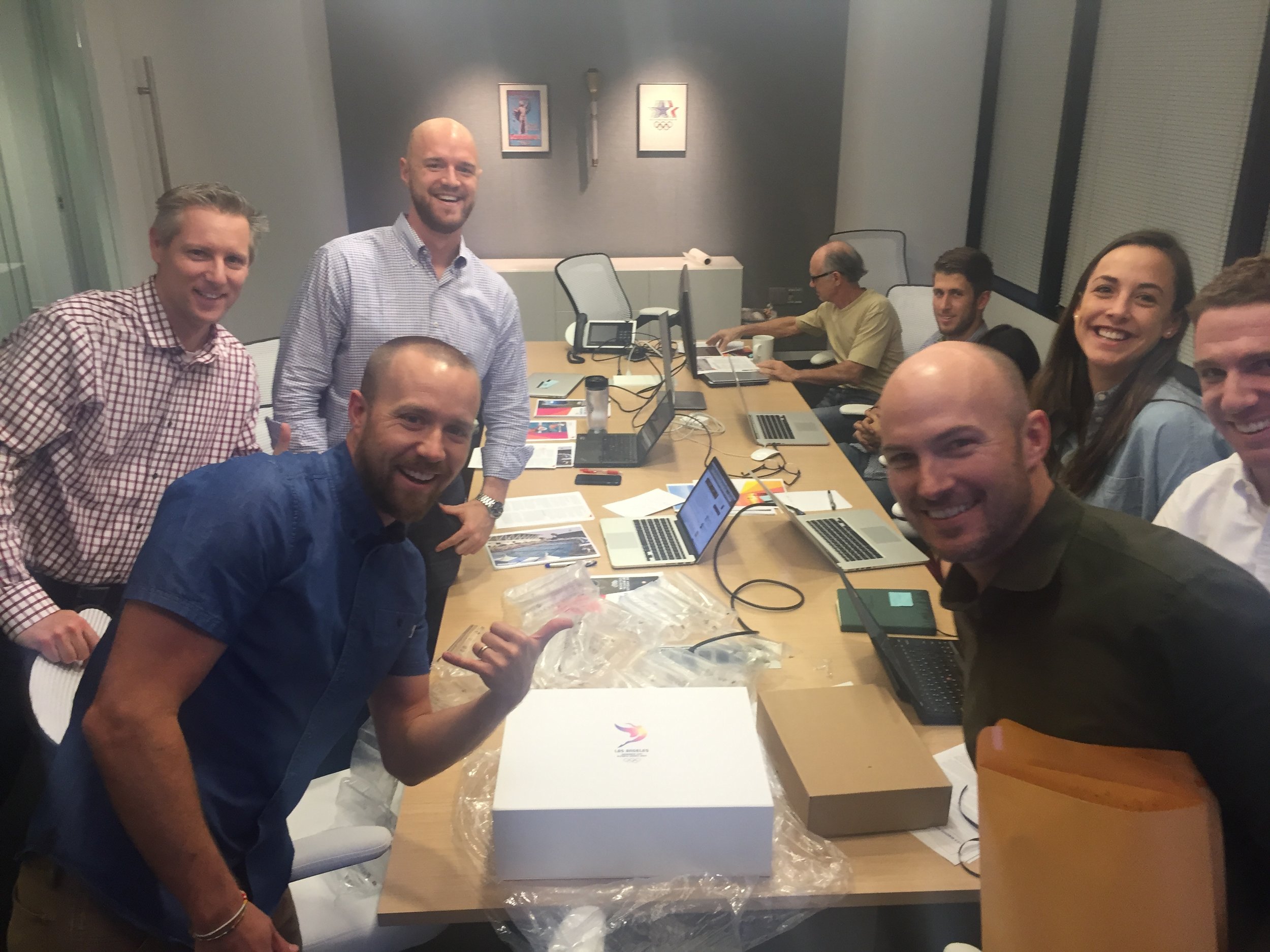
For each submission, we arranged for a member of our team to fly to Lausanne and hand deliver them to IOC headquarters to ensure they were there on time and intact. One of the most significant achievements of the IOC’s new bid process was that we did not have to print these books any longer.
In the old process, bid cities spent hundreds of thousands of dollars (I should know, I loaned Sochi 2014 the deposit money to get their bid books printed when the bid was short on cash) producing coffee-table quality books that hardly anyone read. The new electronic format made much more sense and saved a ton of money.
In February 2016, we had the unprecedented opportunity to test our brand and messaging on a very unique focus group of one: IOC president Thomas Bach. President Bach and his entourage came to visit LA on their way to Silicon Valley.
During his visit to our office, I was asked to share the LA 2024 Brand presentation with him. It was the first time I’d ever shown an IOC member an Olympic bid’s brand work, let alone the IOC president.

I’d know President Bach for many years, but it had been a very long time since I presented anything to him; almost two decades to be exact - back when I worked for the IOC's external marketing agency, Meridian Management. So, in our very crowded conference room, we began. It took about thirty minutes. I finished with the tagline. Silence. Then he said, “I’m not sure if I am allowed to do this but...” And then he started clapping his hands. Then his team started clapping their hands, albeit a bit nervously, then we all joined in.
He congratulated the team on the work and then he said, “you used two words there that really stuck out to me…optimism and progress…we at the IOC don’t speak enough about these…” In my business, that counted as a good day, and one I will remember for a long time. I was glad that he appreciated it, but I was even more happy and proud that the LA 2024 team had begun to embrace it as their own brand – not mine or my team’s.
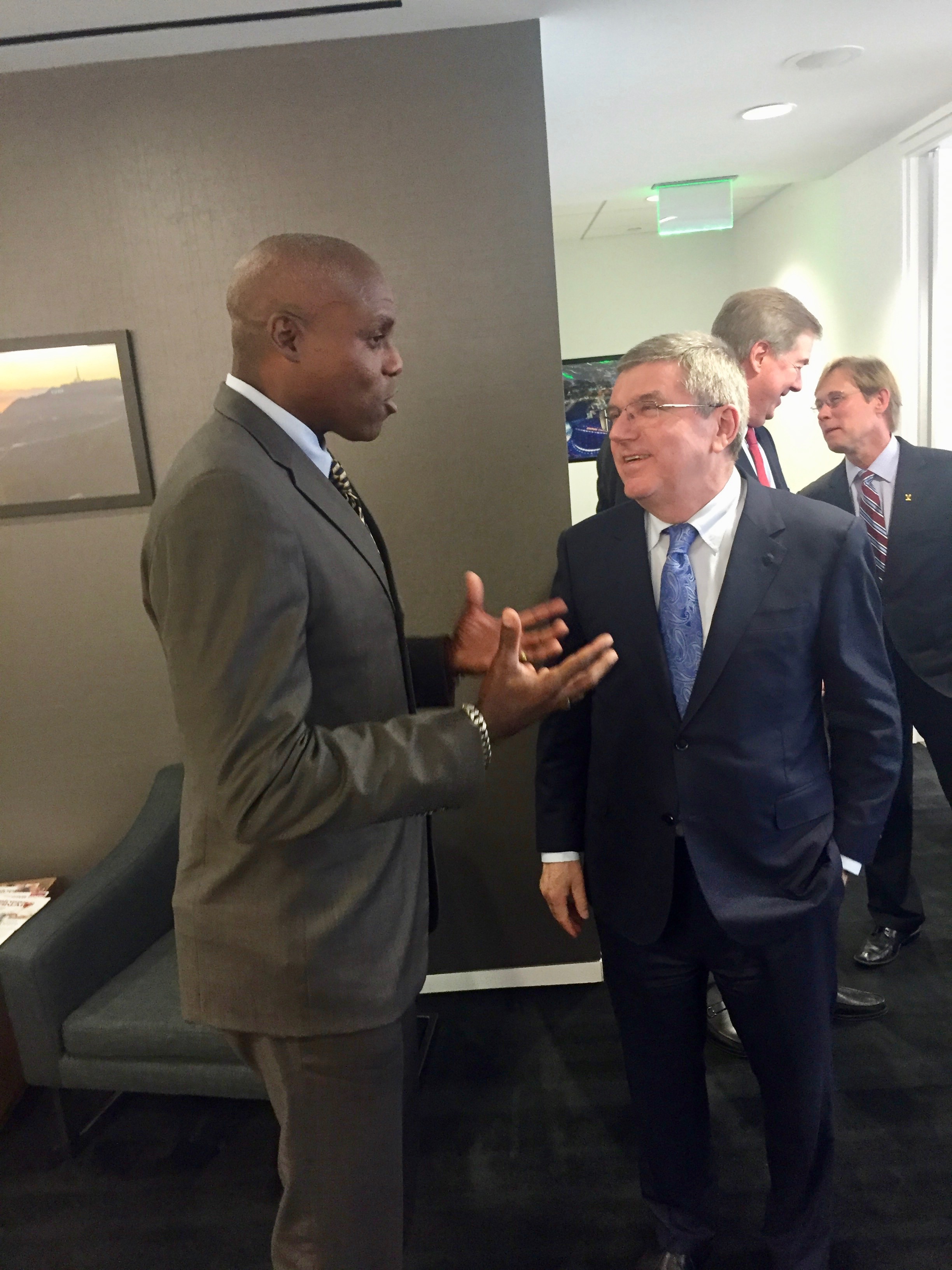
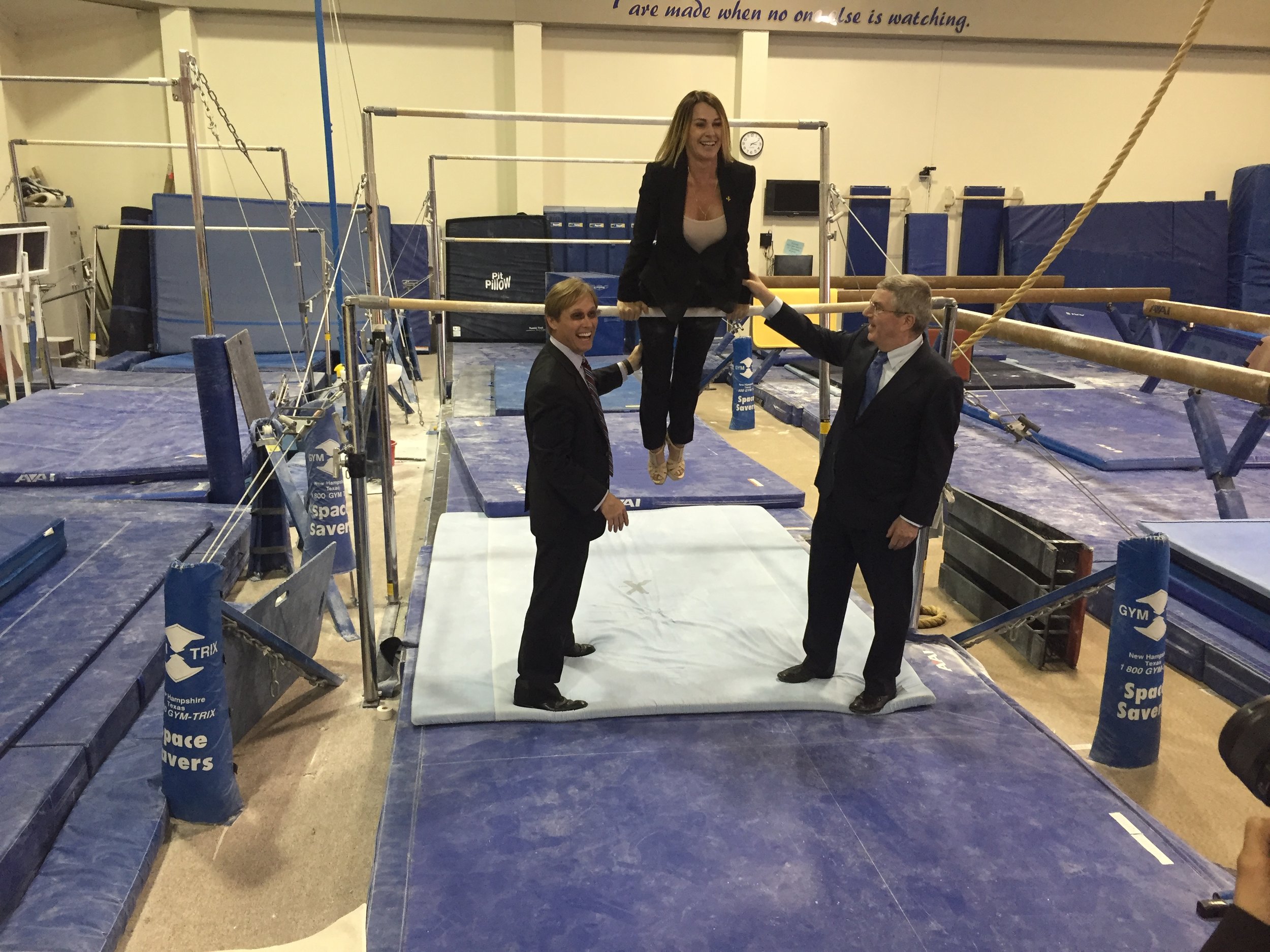
Stay tuned for LA Confidential, Part 2
What's Old is New, Again.
Terrence Burns ©2017
It's been a while; I've been busy with LA 2024 and our quest to host the 2024 Olympic and Paralympic Games. As the debate for the 2024/2028 Games heats up with two great potential Host Cities vying for the honor, the IOC continue to review and consider a new approach to bidding on and hosting the Games. I thought I'd share my thoughts and recommendations that I sent to the IOC back in 2014, for their then-new Olympic Agenda 2020 process. In light of recent events, it makes for interesting reading.
May 2014
Thank you for the opportunity to present my thoughts pertaining to the Agenda 2020 Committee on Bidding for the Olympic Games.
Background
I began my Olympic “life” as a sponsor, managing Delta Air Lines’ sponsorship program for the Atlanta Games. After the 1996 Games, I joined Meridian Management SA, the IOC’s then new marketing agency where I was responsible for managing the marketing relationships with the TOP Partners and helping to institute a first-ever brand management program.
After leaving Meridian in 2000, I’ve had the opportunity to work on many Olympic bids as an advisor, among them Beijing, Vancouver, Sochi, PeyongChang and the Russia 2018 FIFA World Cup. I also worked on many bids that were not successful such as Moscow 2012, Doha 2016, Rome/Baku/Madrid 2020 (that may be a record, by the way, for one campaign) and Lviv 2022. One often learns more by losing than by winning.
For bids, I have traditionally worked on the image, marketing, communications, and branding areas, which included the presentations to the Olympic Family and global sports community. Sometimes, although rarely, we work on the technical plans. For a variety of reasons both personal and professional, I have never engaged in lobbying IOC members on behalf of bid clients.
Rightly or wrongly, because of my background and experience, I tend to view virtually everything that happens in the Olympic Movement through the lens of “brand management”. Much has been said and written about the foundation of the Olympic Movement, which to me is the athlete.
There are, however many other important moving parts such as IOC Members, National Federations, International Federations and of course National Olympic Committees. I believe that there is one item often missing from the list: Bid Cities. Without bid cities, there would be no Host Cities. Thus, in my mind, Bid Cities also have a place at the heart of the Olympic brand; they are the seedlings of the Olympic forest.
Situation
Olympic bid cities are the “canaries in the coal mine” of the Olympic Movement. The number and “quality” of bid cities is a direct indicator of the future health of the Games. I say future because there seems to be a cycle (or two) delay in how the future bid cycle reacts to the current economic situation due to the seven-year timeframe between bidding and becoming an OCOG.
As economic pressure increases on cities, regions, and nations (as it has since 2008/2009), coupled with a seemingly never-ending escalation in size, scope, demands, amenities and costs of Games editions, we are finally seeing negative responses to the perceived cost/benefit analysis for hosting the Olympic Games.
Looking ahead
Bid Cities as Brand Ambassadors
First and foremost I firmly believe that Bid Cities competing to host the Olympic Games present a tremendous yet undervalued brand opportunity for the Movement. Bid City campaigns take place virtually every month of every year regardless of the timing of an Olympic cycle. The opportunity to “generate good news” (and what could be better than a city and its citizens yearning to host the Olympic Games?) year-round is self-evident.
Imagine the 2012 race, when the Movement had New York, Paris, London, Moscow and Madrid pursuing the Games. What a communications opportunity for the Olympic brand!
Unfortunately, the IOC’s highly constrictive rules on bid city promotion preclude virtually any brand benefit to the Movement from a bid cycle campaign.
I am not advocating letting the bid cities do as they please, what I am advocating is that the IOC use them and the race as branding and communications opportunities. A healthy field of bid city candidates with the proper promotion and communications activities helps to create positive news about the Olympic Games – and will encourage future bids.
Recommendations:
-The IOC team should craft a global communications and promotional framework that includes all bid cities’ activities aligned with the existing Olympic calendar
-The IOC brand and communications team should meet with bidding cities (potential and current) early in the process and explain the program their roles in it and what is trying to be achieved
-The Olympic Movement should look for creative opportunities for bid cities to promote themselves within a set of standard parameters that generates parity for all cities, yet creates the greatest opportunity for news and content for the Movement
-The IOC needs to take the lead on a true, unbiased economic study of past Games but it cannot only be economic; it should attempt to track and measure progress across a variety of measurements including, quality of life, health, brand image, education, etc. Too often opponents of bidding have an array of negative reports and studies purporting to illustrate the “waste” of hosting an Olympic Games. Some of the data is, unfortunately, accurate; however, the Movement needs to engage in this debate honestly and with data of its own.
Planning for Future Host Cities
Per my recent post, I believe that the IOC has entered a new era of brand stewardship and the bid process can no longer just be a “game of chance” around parameters that can be manipulated.
I am not advocating a systemic process whereby the IOC chooses a city ahead of time. I believe the Movement still needs the “thrill and excitement” of a real bid city campaign, but the cities should be chosen and prepared ahead of time, prior to bidding.
I believe the IOC should review and identify where and when they believe the Games should be held over the next four bid cycles based upon the needs of the IOC, the IFs and NOCs and global sport. This review should include:
- Where in the world the Games can help develop sport (such as emerging economies)
- Where do the Games have to be every ten years or so to keep the brand relevant in the first-world economies, and
- What is the true risk basis for each city and its bid (sophisticated financial and political risk analysis tools exist in the private sector that the IOC should use instead of asking bid city to provide what is most likely, inflated or exaggerated data)
The IOC should then make a list of the global regions where they desire to see the Games hosted. In these regions, they should then make a list of cities/nations “most likely and most desirable for the Olympic brand to succeed”, and implement a long-term plan to assist those cities and nations to be prepared to bid when the time comes.
Recommendations:
-This means fully engaging the public and private sectors early on in the process
-This means that teams of IOC experts, IOC members, and former OCOG executives should visit the potential bid cities with advice, encouragement and above all, facts about bidding for and hosting the Games
-This means laying the groundwork by helping create a rational, long-term venue development (use of existing facilities, more temporary facilities, only new facilities as a last resort) plan tied to their city’s long-term municipal or regional planning.
-This means setting criteria that must be met in order to bid for a Games, e.g., 70+% of the needed venues must exist or be in process with fully transparent funding models in place; the city/country must have hosted a certain amount of world championships/cups to illustrate operational competence ability; the potential host nation and NOC have a desirable record as it pertains to anti-doping; the public and private funding discussions and responsibilities should be fully agreed to in writing ahead of bidding; etc.
-This means asking the bid cities to address the “Fundamental Principles of Olympism” per the Olympic Charter in their bid applications, point by point
-This means implementing a communications plan foundation around the potential bid to illustrate the “what’s in it for me” rationale to the general population and local, regional and federal governments.
-This means engaging the National Olympic Committees to be part of this process and every National Federation
-This means utilizing former Host Cities and their leadership as case studies and, never allowing a member of the Movement to denigrate a former Host City (as is often done with Atlanta, for example). That is unprofessional and self-defeating – former Host Cities are also still part of the “franchise” and should be treated accordingly. It is also insulting to the thousands of Volunteers who gave the Movement months and months of their personal time for the Games, and to the citizens who supported the bid, the Games and welcomed the world with open arms.
-This means making International Federations a working partner in the process. To be honest, and I’ve been there, in the past many IFs placed inordinate demands and expectations on Bid Cities. And Bid Cities being Bid Cities have no choice but to try to comply in order to attempt to obtain votes. This process is upside down and it leads to ever-increasing and often illogical venue commitments. I understand that many IFs want gleaming new, state-of-the-art venues at every Games, but that is just not sustainable and in the end, it is not good for sport because it inevitably leads to White Elephants, which scares away future potential Bid Cities.
Whose Brand is it?
The IOC has to take control of the image and reputation of the Olympic brand. During and after the Slake Lake City Bid scandal, I worked on the IOC crisis team that helped made the decision that the OCOG or Games brand should be the “hero” brand in all Olympic communications activities because, essentially, the brand image of the IOC itself was in serious trouble. This made sense at the time, but no longer. The IOC’s image and reputation cannot be left up to others to define (Germans and Norwegians claim they like the Winter Games – just not the IOC!); the IOC must define its own image and reputation going forward.
The Games are too complex, too expensive and too subject to geopolitical machinations for the brand to be left in the hands of amateurs (Organizing Committees, and I use the world amateurs in the most respectful manner possible) every two years. The IOC cannot leave “success” up to a group of well-intentioned people who have never done it before – and only in seven short years. And, I mean “success” in a context that is far beyond the 17-day hosting of the Games.
If we want healthier bid cities in the future, we need to ensure that once chosen, Organizing Committees are great sources of news about progress and are a brand investment in the Movement. A thriving and healthy Organizing Committee preparing for the Games creates a positive media environment and helps stimulate interest in hosting the Games instead of fear of hosting the Games.
Is “Great Sport” Enough to define Success?
I think that the IOC can no longer afford to say “sport was great, so the Games were a success”. Because of costs and investment, it has become more complex than that in the eyes of those outside the Olympic Movement – the Olympic Movement is no longer the sole target market for appraisal of success or failure. Many more variables are now at play.
Look at Sochi and Rio, for examples. For Sochi, the venues were perfect and sport on the field of play was successful by virtually any measure. But in the end, what did the negative reports leading up to Sochi cost the Olympic brand? Well for starters, we know negative media reports around Sochi (again, real or imagined) have cost us two, possibly three European first-world capitals as bid cities in the 2022 race.
I would state unequivocally that this is NOT Russia or Sochi’s fault. They did what they said they were going to do. They built a city for the Winter Games. It is the IOC’s responsibility or should have been, to “manage the world’s expectations” about the Sochi Games. It would have been, and still is, easy to say “No single Games is a perfect example for future Games. The expenditures made by the Russian government to host the Sochi 2014 Winter Games made sense for Russia, and we thank them for a tremendous Winter Games. But we do not, by any means, expect similar investments by future bid cities going forward.”
We cannot hide behind the shield of sports success as the sole arbiter of an Olympic Games’ effectiveness. The Games have to make sense for local communities.
Recommendations:
-National brand building as the sole source of hosting an Olympic Games “isn’t good enough”. Potential bid cities must illustrate the value of their bids beyond their own borders – not just with words, but also with deeds years ahead of time from their bids.
-Rewarding desired behavior. As an example, look at the 2018 Winter Games race. When appraising the technical plans of Munich and PyeongChang, there was no “bonus weighting” applied to Munich’s creative use of existing venues or its world-class environmental plans. From the IOC’s members’ perspectives (the people who vote) it appeared as if the Munich and PyeongChang technical plans were both of equal value, when in fact, Munich’s was much more visionary and one could argue better for the Movement at the time. The IOC selection criteria must be more objective with quantitative metrics and it should be willing to give “credit” (enhanced value) to cities that put forth responsible, prudent plans instead of being impressed (or blinded) by expensive new building projects.
In closing, allow me to summarize:
- Bid Cities can and should be key pieces of the IOC’s overall global communications strategy – let them compete more openly, yet under control of a strategic IOC communications plan designed to achieve objectives
- The IOC should alter the Bid City selection process by 1) looking 20 years into the future to determine where and when the Movement would like to see the Games hosted, and 2) identifying potential cities far in advance and helping them “get prepared” to bid
- The IOC should consider more stringent criteria (such as existing venues, experience, etc.) that must be met before allowing a city to bid
- Allow the “bid city race” to continue (it generates media interest and excitement – or should), knowing that the Movement has prepared cities whose plans are predicated on the IOC and the Movement needs, rather than left to chance, or worse.
- The IOC needs to implement a communications program (not just PR) to take control of its own image and reputation. This can be done in concert with OCOG brands but the IOC has to control its own reputation destiny
- If the IOC doesn’t want bids that are based on theory and fiction, then stop rewarding them. Given credit and praise (openly) to cities who provide thoughtful, affordable, responsible plans to host the Games.
- The IOC needs to be more involved with the operational success of the OCOG. True functional matter experts in Games operations and planning, Sport, Sectary, Branding and marketing communications, Sponsorship, etc. should work alongside the OCOG
- As to member visits, I think that is up the IOC Members themselves to debate and discuss. But I do think it is unusual (and perhaps ill-advised) to ask one hundred-plus people to make a multi-billion dollar decision without ever having seen the city.
Thank you again for this remarkable opportunity to share some of my views with you and your colleagues in Lausanne; please know that all my observations and suggestions are my own, and they reflect my complete respect for the Olympic ideals. Every day I wake up and am so thankful that I have the chance to be a (small) part of the Olympic Movement. Thank you for all that you do to make that happen.
Sincerely,
Terrence Burns
So, that's was my point of view three years ago. It remains so, today. Time will tell if these ideas and concepts have any impact on the 2024/2028 decision, or beyond. I hope so. If so, you read it here first. Thanks as always.
When "Why" Matters
Terrence Burns ©2015 Hamburg 2024. Where to start?
Let me begin by offering my sincere condolences to the 48.4 percent of Hamburg citizens who wanted to host the 2024 Games and, to my many friends (e.g., Bernhard, Nikolas, Susanne, Claudia, Stefan, Carla, Michael, Alfons, Christian ...) who worked on the bid. They are actually more than friends; they are family – so is Germany to be exact. Germany is a great sporting nation full of welcoming people. I am hopeful that Germany's Olympic time will come again sooner rather than later.
What happened?
I should state up front that I believe the soul of the Olympic brand isn’t really about sport; sport is the path, but eternal human ideals and values are the destination of the Olympic brand.
Brands live in the emotional sphere, not the rational. BMW owners buy “driving excitement”. Mercedes owners buy “prestige” and Volvo owners buy “safety” – what they don’t buy are well-made, expensive, highly engineered automobiles. Consumers buy the brand promise in each of these products.
So, let’s think about that in the context of the Olympic brand; specifically, what are its core values? The IOC states that they are “Excellence”, “Respect” and “Friendship”. Those are indeed uplifting, admirable values. But alone do they truly differentiate the Olympic brand from other sporting events? I'm not so sure because I think sport at every level embodies these three values. And given the current events transpiring in global sport regarding bad governance, corruption, doping and worse, the Olympic brand desperately needs to differentiate itself - Hamburg's citizens just proved that.
Somehow, over the course of time these three core values have become a commodity. A shared positioning with others. A diluted promise. And what happens in this circumstance with any brand? It loses the meaning of its original purpose, its emotional payoff, its power to stand distinct and apart – it loses its power to inspire.
So what does this have to do with Hamburg 2024?
A lot, I think. Not enough people in Hamburg were sufficiently inspired by the Olympic brand.
To me, the Olympic brand is and has always been about hope. The stated vision of the Olympic Movement is “building a better world through sport". I’ll buy that. But what is the emotional pay off? What is the IOC’s singularly unique promise that no other brand can deliver?
Again, I think it is hope. Hope inspires human beings to dream with no limitations.
Hope is the emotional output of the Olympic brand. The Games, and more importantly the athletes, give us hope that something better resides deep inside of us, and, if only for 17 days every four years, we are capable of undeniable grace. Nothing other than perhaps theology offers humankind a similar promise through the demonstration of human achievement.
I am under no illusion that the IOC will suddenly revisit its core values in favor of the word "hope". What I am suggesting is that by ignoring the concept of hope, we are missing something powerful that is needed right now.
My friend Christian Winkler's recent Facebook post help put it in perspective for me: The world is not talking about the value of the Games, only its cost. Cost and value are two distinctly different, yet linked ideas.
The good people of Hamburg can be forgiven for missing that salient but subtle point because the Olympic message has been hijacked. It has been masked by supposedly tangible arguments. It has been too easily compared with lesser things.
I am a big fan of what Olympic Agenda 2020 is trying to achieve regarding the costs of bidding for and hosting the Games. Quite simply, hosting a Games must leave a sustainable and affordable legacy, not only during the 17 days of the Games but for generations that follow. This is the new reality, the new “given”. I applaud the IOC for trying to corral the excesses of the past into a responsible way forward into the future.
What does this have to do with hope or Hamburg?
A city and a community must be inspired to achieve Olympic dreams. Bid Cities and Host Cities come and go – with predictable regularity. What is permanent, what is eternal and what remains are the IOC and the Olympic Movement. They are and must remain the voice and the living expression of the Olympic brand.
If an astute and media savvy anti-Olympic Games minority are allowed to control the bidding dialogue with a discussion based simply on cost, yet without any consideration of value, what is the chance of a fair discussion? How does one quantify the value of a marriage, an education, a friendship or a belief?
The Olympic world must inject and include the concept of “value” for hosting an Olympic Games alongside the very necessary variable of “cost”. Either without the other is a false computation.
I don’t know the optimal relative weight of each, but I do know it is up to each bid city and its local community – not an exportable set of anti-Olympic arguments by outsiders – to define what does and does not make sense for that particular city’s future.
Hamburg 2024, as with every Olympic bid city before it, began with hope in the belief that the Games would be good for the city and its people’s future. That dream was eventually smothered by an atmosphere of confusion, distrust, alarm and perhaps fatigue.
This is precisely the moment when hope must triumph over doubt. And this is precisely the moment when we can surprise ourselves by adding just a little bit of hope to the equation.
When "No" means "I Don't Know".
Terrence Burns ©2015 Boston, the Great Hope of the USA for the 2024 Olympic and Paralympic Games ended in painful, dizzying demise this week. We worked for Boston as advisors, joining the team on April 1st of this year. Our role, as with all the bids we’ve worked on, was to focus on the international brand development and the presentations to the Olympic Family. We were looking forward to eventually helping Boston tell its unique Olympic story to the world – but that was not to be.
When we learned that the USOC selected Boston in January, our team was in Almaty, Kazakhstan helping prepare the Almaty 2022 bid for their presentation to the IOC Evaluation Commission. We got a call from the Boston team asking if we would join the bid. We were definitely interested, but wanted to know more about their bid, the team, etc., before deciding.
We scoured the Internet to find any materials we could on the bid – it wasn’t easy as the USOC’s 2024 bid process was closed. The four cities’ (San Francisco, Los Angeles, Boston and Washington DC) bid documents were not public.
But, we eventually found the Boston 2024 “Bid 1.0” documents and frankly, after reading them, we thought it looked like a spectacular bid in many ways.
The Games Concept was innovative and intimate for a Summer Games. Boston is of course, a jewel of a city. Boston is a tremendous sports town. Boston is endowed with the finest collection of universities and colleges in one place in the world. Boston is a powerhouse of financial stability and power. And, Boston has some of the smartest and most accomplished people in the United States; we thought, "imagine the energy and new thinking they could bring to hosting an Olympic Games". Boston is also one of if not the most progressive cities in America.
It seemed like a slam-dunk. I am sure the USOC thought the same.
I have been doing this type of work a long, long time. I’ve made great friends around the world that I will cherish forever. In my business, you get hired or re-hired for doing a good job, for keeping your word and telling the truth.
In Boston, I admit that I was taken aback by the sheer viciousness of the public debate about the bid, the petty, personal social media attacks - which others and I continue to endure - and the stunning lack of civil dialog from a city full of very bright people. I was told “this is how we do it in Boston…”
I’m not so sure.
The people with whom I worked at Boston 2024 were, without exception, exceedingly nice, hard-working and fair; it was the same with our USOC colleagues. I enjoyed them as people; and to be honest, that is not always the case.
But, the people of Boston said “no thanks” to the Games. And guess what? That is their prerogative. That is how it works in a democracy.
I am sure pundits will argue, some gleefully, “what happened to Boston 2024?” for years to come. As best I can tell from living through the past four months, opponents of the bid felt as if they were not consulted at best, or mislead at worse. Either is a no-go for a bid.
Did the USOC make a mistake? Did Boston? Whose fault was it? Who knows...? And that is not the point, anyway. The important point is what does this mean for the future, and what can the Olympic Movement – or any of us - learn from it?
I have a few thoughts.
First, I don't think that the Olympic Movement can distance itself from local politics any longer. Too many great cities have opted out of the great Olympic experience for the wrong reasons. These are not stupid or ill-willed people. They are people who were and are rightly concerned with the cost/benefit analysis of hosting an Olympic Games. Future bid cities needs facts, not spin, to make decisions that will affect generations to come.
Second, I think that the "Boston 2024 experience" is not only a USOC or Boston problem. It is everyone’s problem in the Olympic Movement. The new Olympic Agenda 2020 reforms are designed to force fiscal responsibility and true sustainability into the bidding and hosting process. Let’s pray it works. The alternative is what just happened in Oslo, Stockholm, Krakow and now Boston.
Third, and this is one that will not be popular with some of my friends in Lausanne (apologies in advance), is this: the IOC has to lead on the issue of why hosting an Olympic Games is a good idea.
They own the franchise.
They own the long-term knowledge and history of the Games.
And, I truly believe the IOC can no longer leave it up to NOCs (even sophisticated ones like the USOC) or new bid cities to understand the complexity of how to express the long-term benefits of hosting an Olympic Games in today’s challenging economic times, and instantaneous and often hostile social media environment. The entire Movement has to work together to tell the world why hosting the Games makes sense.
The paradigm is a simple one: the more real and viable information that cities have about the long-term benefits of hosting an Olympic Games, the more cities will (perhaps) bid on hosting an Olympic Games. The question is where does this information come from, who disseminates it to the world and how? Maybe the Olympic Channel, for a start?
Initially, my colleagues around the world watched the Boston 2024 drama unfold with surprise, and then with growing alarm because they knew, “There go I but for the Grace of God…”.
Olympic Agenda 2020 is based on change; let’s help the IOC make sure it is change for the better. That has to start with encouraging more cities to bid for the Games by providing them with the right information and motivation.
Finally I leave you with this - my dear friend and mentor George Hirthler, telling it like it is on why the Olympic Movement really matters. God Bless you, George for refocusing, or trying to, the conversation with the good professor.
This is what the IOC should be saying, every day, in addition to all the great (but as George points out, unknown and unappreciated) work the IOC does every day on behalf of sport and kids around the world. It is a shame Boston didn't have a chance to add their very special character and legacy to this incredible force for good in the world.
https://www.youtube.com/watch?v=ODnULW-18zI
"You Know Nothing, Jon Snow..."
 Terrence Burns ©2015
This is a post about Almaty. I know what you are thinking. Why no picture of the mountains? Why a picture of a breakfast buffet?
Bear with me.
Pride. Dignity. How does one measure these with a spreadsheet tracking the costs and benefits of "Olympic Legacy?"
I'm sitting here at breakfast in my Almaty, Kazakhstan hotel. The staff, mostly new it appears (from my many times here before) are bustling around. There is a new breakfast buffet set up. It all seems new to them. Some struggle a bit with new roles and responsibilities.
But they smile.
They straighten table arrangements. They try, hard, to get it all right. They are happy to see me. They are appreciative.
They are young (40% of this city is under the age of 24). This is a young nation, too. And it is not perfect. Is yours or mine?
This could be my last day here after so many. Tonight we fly to Kuala Lumpur to help this city prepare for its presentation to the IOC in that city on July 31. Almaty wants to host the 2022 Winter Games. We are competing against a very formidable Beijing.
To be honest, we're considered a long shot. An underdog. A year ago, we weren't even considered at all - for anything. Things change. Why? Because you can learn to love anyone, if you are willing to listen to their story.
If we win, I may be back; if we lose, who knows? What will I miss about this place? The people. I've seen every mountain you can see. Every perfect sunset and sunrise. Every beautiful forest and fresh mountain lake. What is unique here is the people.
Thousands of years of a genetic melange thanks to the Ancient Silk road. These people embrace "others" - they do not push them away. They are not and have never been "closed". They welcome guests and make them feel at home. The people are warm and lovely. They are everything an Olympic Host City should be. They even think Borat is funny because it's premise is so absurd. They don't hold grudges.
I will miss them terribly if I never return.
Honestly, Almaty (unlike some bids I've worked on before) is actually ready. There is a free and open internet here, by the way. It is a secular society that is 70% Muslim. Great nightlife. Hotels. Restaurants. Bars. It's all here. Did I mention mountains right in the city full of fresh natural snow? 70% of the needed venues exist and already are in use in this beautiful winter city.
The city is full of educated young people with bright eyes for their future.
Some in the West, in fact some friends on this very post no doubt, will react predictably about the government here. I ask that you come see it; then judge if you must judge. They don't judge you and all your/our imperfections. In fact, they want to meet you and learn from you, from us.
As I post this, reading the NYT on my iPad, I must say the omelet is perfect and the cook is nodding at me, beaming with pride.
These people see the potential in hosting an Olympic Games. They understand the premise of that word, "potential". Maybe the Games aren't for everyone and it is fair to debate it, for sure. Debate away. But some things can't be measured and often those things are invaluable.
But until you experience this place and its people, "You know nothing, Jon Snow..."
Keeping it Real.
Agenda 2020 Course # 101
Terrence Burns ©2015
In my most recent post, I referred to an esteemed American Professor of Economics’ podcast comments regarding the IOC Agenda 2020 reforms.
Essentially, he asserted that Agenda 2020 “lacked substance”. I politely disagreed and still do, even more so now.
Here are a few more points to consider, which I believe bolster my contention that the professor is off the mark – by a mile or so.
I recently sat through the IOC Evaluation Commission’s visit to Almaty, Kazakhstan, where a team of IOC experts and IOC members reviewed that city’s bid for the 2022 Olympic and Paralympic Winter Games.
I will state for the record that I am a paid consultant to the Almaty 2022 bid, and that this was not the first IOC Evaluation Commission visit in which I participated as a consultant to a bid city.
I will also state for the record that this was the first IOC Evaluation Commission visit where an unprecedented, extraordinary spirit of cooperation and open exchange took place, and where words gave way to actual deeds.
Agenda 2020 works.
What do I mean by that?
Item 1. After five full days of consultation and review, the Almaty 2022 bid committee revised its already excellent Games Concept - on the spot. Almaty optimized its Concept in real-time, making it even more affordable, even more efficient and even more sustainable. The changes were possible because of the new “flexibility” of Agenda 2020.
In the clearest terms, the Almaty 2022 bid is the first tangible example that represents the power and impact of Agenda 2020’s true potential.
Let me be even clearer. The IOC Evaluation Commission did not instruct or dictate any changes to Almaty’s plans; they simply listened, engaged in honest conversation and let the Almaty 2022 bid team draw its own conclusions as to how or if it should improve its bid concept. Prior to President Bach’s Agenda 2020 reforms, this would have not happened in this manner, if at all.
What was the result? Now, Almaty 2022 has a revised plan that saves over half a billion US dollars from its original plan; and, it has an even better operational plan for the most important stakeholders of the Games: the Athletes. It’s not just about money.
Agenda 2020 - 1 Economics Professor – 0
Item 2. The Tokyo 2020 Organizing Committee just announced sweeping changes to its Games Concept, also guided by the Agenda 2020 reforms. These changes will generate one billion US dollars in savings from the Organizing Committee’s original plan.
Again, prior to Agenda 2020, this would not have happened in this manner, if at all. I would call one billion US dollars in savings very "substantive" in any economics discussion.
Agenda 2020 – 2 Economics Professor – 0
Item 3. Remember all the angst about Rio’s preparations for the 2016 Olympic Games? Well, apparently our friends in PyeongChang are experiencing similar problems as they prepare for the 2018 Olympic and Paralympic Winter Games. But rather than simply criticize and wring their hands, or wait until the last possible moment to offer support, the IOC just created a dedicated team of Olympic Games experts to work alongside the PyeongChang team in order to get the 2018 Winter Games back on track.
That is called “putting your money where your mouth is”, or, “having skin in the game”. This approach definitely would not have happened prior to Agenda 2020. In economic terms, professor, this is a case of the franchisor intervening to protect its master brand by assisting a struggling franchisee.
Agenda 2020 – 3 Economics Professor – 0
For those of us who work in this Movement and have dedicated our professional lives to its health and welfare, Agenda 2020 is an idea (a set of ideas, actually) that came along at the perfect time/just in time with the prefect leadership.
I only provided three recent examples (one very personal) of Agenda 2020’s impact on the Olympic Movement in the past few weeks. Two of these three examples saved Olympic Organizers (and their cities) over 1.5 billion US dollars. How's that for "substance"? I am certain that there are many, if not dozens of other examples taking place all around the world right now.
If you love the Olympic Games, then you should educate yourself about what Agenda 2020 is doing for sport, and don’t be shy about telling the world about it. Without facts, even well-educated, esteemed professors can make up their own versions of reality; we all do, it's human to doubt what you do not understand - or trust.
It is easy to pontificate, but it is hard to actually make things happen.
The IOC is actually making things happen.
The score is 3:0, and counting.
All Things Must Pass
Terrence Burns ©2015 I heard a podcast the other day by an esteemed economics professor in the US, stating that the President Bach’s Agenda 2020 reforms seem to “lack substance”. Perhaps his views are skewed towards the launch of his new book, but I will give him the benefit of doubt and assume his comments are his true perspective. He certainly did his homework, and then some, and a healthy debate benefits everyone.
I’d like to offer, however, another, more personal perspective.
The first time I set foot in the IOC headquarters in Lausanne, Switzerland was in early September, 1996. I’d just joined a new company, Meridian Management SA, which was the then new marketing agency for the IOC, charged with managing the global TOP Sponsorship Program. It was a heady moment and a heady time.
I stayed with Meridian for almost five years, and I must say, it was probably the best job I ever had. Why did I leave? I get asked that a lot. At the time, I felt that the organization (the IOC) was structured in such a way that I could not be as effective as I wanted to be – or needed to be – in order to really make a positive difference assisting the IOC’s TOP Partners in their Olympic marketing efforts. In those days, the speed of decision making at the IOC was as slow as the Rhone Glacier that feeds the magnificent Lac Léman.
Fast-forward fifteen years. This week I attended two days of client meetings at the very same IOC headquarters. Nostalgia is a funny thing: it’s often well-intentioned but usually disappointing. This time, it did not disappoint – it blew me away.
The IOC headquarters and offices I visited were literally bursting with energy, momentum and a zeal for change that frankly, astonished me. Everyone looked under 30. Everyone was focused. Everyone was doing something else I’d never seen at the IOC headquarters – they were having fun. And, everyone was quoting president Bach and how telling us how each of their roles and responsibilities specifically tied to the Agenda 2020 reforms. I can assure the good professor, there is form AND substance going on at Chateau Vidy.
I left the meetings with my head spinning for a few reasons. One, it appears I was about 19 years too early when I first joined the IOC marketing team; timing, as they say, is everything (yes, I miss it). Second, if desire, activity and action are progress, then Agenda 2020 is well on its way. And lastly, I really, really envy those smiling, earnest, happy young faces working for the greatest brand in the world. I know how you feel, still.
I have no doubt they will get it right. Godspeed.
In Defense of the IOC (Really)
Terrence Burns ©2014
The 2022 Winter Games Bid Campaign is not exactly what everyone wanted – or intended. But, like a slightly ugly baby it’s here, and we have to love it.
What happened?
Here are some facts:
Lviv pulled out of the race due to the instability of the Ukrainian government during a time of national crisis.
Krakow pulled out the race due to a national referendum, the citizens citing Games size and cost versus legacy as a concern.
Stockholm pulled out of the race, it citizens citing Games size and cost versus legacy. Our Swedish friends are now having second thoughts. Personally, I think the IOC should put the Winter Games brand - which by any metric is hurting - before the IOC's process in terms of priority and consider letting Stockholm back in.
Oslo pulled out of the race due to a national referendum, the citizens citing Games size and cost versus legacy and the IOC’s image and reputation as concerns.
Munich chose to not even bid (unfortunately) citing Games size and cost and the IOC’s image and reputation as concerns.
What is interesting, even fascinating, is that not one of these cities cited “the cost of bidding” as a reason to withdraw or not bid.
Not one.
Zero.
Cities choose to spend whatever they wish to spend in order to bid on the Games. The figures range from the incredible $US150 million that Tokyo 2020 supposedly spent to the relatively responsible $US43 million attributed to the Munich 2018 bid.
Why the wide gap?
Because cities want to host the Olympic Games, badly, and there is no universal standard for fiscal sobriety. It is up to the cities to determine how much they want to invest - or waste. The IOC does not dictate it; in fact they try to minimize it.
For the 2020 Games campaign the IOC wisely reduced the number of continental presentations Bid Cities had to attend and present their bids.
For the 2018 Winter Games race there were ten or so such presentations, ranging from traveling to French Polynesia to present to a hand full of people for fifteen minutes (I got some great pictures, though), to Togo, to Belgrade, to London, to Acapulco, to Seoul, to Guangzhou, to Lausanne and finally to Durban. That wasn’t cheap and frankly, it wasn’t necessary.
So the IOC changed it. No one seemed to notice and no one said, “Thanks IOC, that makes sense”. (You know, like Madrid Made Sense – fiscally responsible)
The real concern for potential bid cities is the size, scope and cost of hosting the Games versus the associated legacy. Period.
The Olympic Movement’s inclination (and exasperation in that no one seems to understand this) is to explain that there are really two costs involved with hosting the Games – the operational budget to host the Games for 17 days, and the budget necessary to build out the needed infrastructure which will serve the Host City and region for generations to come. I gave up on the “OCOG versus Non-OCOG” nomenclature for civilians a long time ago.
Here is an analogy that might help. The total four year tuition costs to attend university, a good one in the United States, are about $US160,000 – 200,000+. That is what it takes to “be there” for four years. The return on that investment however is calculated over the student’s lifetime – not during the four years of attendance. It’s an investment in the future.
Similarly, the infrastructure costs required to host a Games, normally $US5 – 10 billion (a guess), are for things such as airports, facilities, power plants, water treatment plants, roads, etc., that will improve the quality of life for the Host City for generations. The government and the citizens of the Host City and nation pay for these costs.
The point here is that these cities and nations would eventually incur these type costs, regardless of the Games. I call it the “3:1 ratio rule”; i.e., in 7 years cities build 21 years worth of (hopefully) needed infrastructure.
The total 17 days operating costs for the Games – ranging from $US2.2 for winter to over $3 billion for summer - are meant to be offset by revenues generated by the Games. Most Host Cities claim to break even or make a small profit (what else would they say – it’s like grading yourself on a final exam). The local Olympic Organizing Committee manages and pays for the costs associated with this budget from revenues raised through sponsorship, television rights fees, licensing, etc.
Ok – so we all know that Russia spent a reported $US51 billion to build a new city for the Sochi 2014 Winter Games. Here’s the thing: it was their choice to do so and it was their money that was spent.
The $US51 billion figure may prove to be the most maligned number in sports history. It is a figure thrown about to illustrate the supposed pomposity of the IOC, the absurdity of hosting an Olympic Games and a oblique criticism of “everything Russia.” Including Putin.
Did anyone ever consider that Russia chose to use the Olympic Games as a catalyst to improve and upgrade Sochi and the surrounding region – this is no different from say, London 2012’s aspirations, though admittedly the scale was different. The Russians just had the ability – and the cash – to build a new city from scratch in an area that was neglected for, well, forever. So they did it.
But guess what? Sochi’s $US51 billion has nothing whatsoever to do with any city that desires to host a future Olympic Winter Games. Nothing. Zero.
Why is that so hard to understand?
It is hard to understand because 1) no one bothered to explain it properly, and 2) various and numerous entities have used it, very adroitly, and to demonstrate opposition, resentment and disdain for the Olympic Games and the IOC. It was almost too easy not to.
Before you leap, no, I am not blaming the media or the citizens of any of the cities or nations who decided “no thanks, IOC”. I am not. But what I am saying is that because someone did not explain the facts, someone did the world a disservice. And maybe that “someone” is us – those of us who live and work in and alongside this special thing called “The Olympic Movement.”
Did the IOC have a role in this debacle? Sure, but what's the point of playing the blame game now? It’s easy to criticize after the fact.
At the end of the day the IOC is a private club and the Games is their event. “It’s their rodeo” as we say here in the US. And if one takes the time to review the IOC’s history over the long arc of the Olympic Movement, I strongly believe that the IOC get it right more often than not, in fact a lot more often. If the IOC were a Major League Baseball player with that batting average, he would be in the Hall of Fame.
The real challenge for the IOC is that they sell “perfection” as embodied in the Olympic brand. People expect more from the Olympics, and therefore the IOC’s margin for error is the size of a pinhead versus the football pitch that other entities – such as FIFA - get to stumble around on and make mistakes.
Can the IOC do better? Of course they can. Can you? Look in the mirror. Let's stop complaining and let's start believing again. The Olympics are worth it.
I’m looking forward to the session in Monaco to see what changes Agenda 2020 will bring; although, it was recently pointed out to me that only the IOC would hold a meeting in Monaco to discuss cost cutting - but that’s for another post.
I’m betting they will get it right – or most of it, and shouldn't we all want that to happen?
The Heart of the Matter
Terrence Burns ©2014
Last weekend in beautiful Lake Placid, New York (Host City of the 1932 and 1980 Olympic Winter Games) I attended my first USA Luge Association Board Meeting as a newly minted volunteer Independent Board Member.
I’ve had the pleasure and honor to work within virtually every level of the Olympic Movement these past 20-plus years. So when offered, I leapt at the chance to work at the National Governing Body (National Federations for my non-USA friends) level of sport, as this is the one area in which I have little-to-no experience. I realized quite quickly that this is where I should have started my Olympic journey many years ago.
Here is the most important lesson reinforced from the weekend: the Olympic Movement is a fragile, elegant and eternal dream knitted together by thousands of people who will never see the limelight, whose names will never be mentioned in a press release and who may never even attend a Games, who toil countless hours with very little resources, who will never sit in a T-3 car or complain about "important things" such receiving the desired Games Accreditation or gaining access to the IOC hotel (or lounge). No, these are the people who constantly wage an exhausting, invisible, seemingly never-ending battle to keep the lights on and train the athletes at the local level.
This is the real Olympic Movement.
The Olympic mantra states that “Athletes are the heart of the Games”; that is correct, they truly are, and forever will be. But it is the organizations and the people working within them at the bottom rung of the Olympic pyramid, the National Federation level, who are the Olympic Movement’s soul.
As I sat through a day of meetings focused on the long-term survival of Luge in the United States (remember, Olympic sport in the USA receives no government funding), I was surrounded by no fewer than four Olympic medalists and World Cup champions.
Each of these people were giving their time, energy and yes their hearts and souls to the cause of the sport they loved and that changed their lives. Was there a “prima donna" among them? No. Were they living or relying on past accomplishments or success? No. Was anyone taking credit for anyone else's work or accomplishments, deluding themselves or others of their own importance, exaggerating their experience or skills? No. Was I moved? Yes - beyond words, actually.
Admittedly, my own Olympic experience has been a charmed one and I am very thankful for it. But this past weekend in tiny, humble yet magnificent Lake Placid did more to open my eyes to the beauty and magnificence of the Olympic ideal than any gold medal finish or Opening or Closing Ceremony I’ve ever witnessed. Why? Because I saw sacrifice, desire, honor, persistence and that grandest English verb of all – hope – manifest right before my eyes.
I have no idea where my volunteer Luge odyssey will end or what it will accomplish, but I can tell you this: working alongside these good, honest people who view their sport through the lens of love instead of personal gain is exactly what I needed to see, hear and feel.
So, the next time you receive that inevitable call or email request to donate a few dollars to grass-roots sports, dig deep my friends, dig very deep; for without a solid financial foundation at its core (and you would be very surprised at how much impact just a few dollars can make), future Olympic podiums will be absent of the young men and women who inspire us with wonder, who make us cry with pride and who challenge us all to be better than we really are.
Words Matter Now More Than Ever.
Terrence Burns ©2014 Fascinating.
On my Facebook page, as well as other social media (and probably yours as well) I am honored, even blessed to have friends from all over the world; Europe, Russia, Canada, Australia, Middle East, Asia, Africa and South America. This is thanks largely to working within the Olympic Movement for over twenty years.
We all read each other's posts about our families, likes, dislikes and issues profound and mundane. We even read (where possible) each other's media's perspective on world affairs. But in spite of our instantaneous access to each other, unprecedented in the history of human presence on earth, it seems we have never been farther apart.
But this isn’t only based on nationality. Foreign friends, when you read the upcoming deluge of Facebook post diatribes from us Americans "debating" our 2016 US presidential election, you'd be forgiven for wondering if we Americans are indeed all from the same country given the vitriol.
Open debate and disagreement are fine, and they are part of our system here in the US; many people before us died to give us this right. But when anyone is vilified simply for having a differing political preference, I feel dispirited. I don't always agree with everyone's religious or political views nor do they mine, but we are allowed to have them and voice them without being called names or being generalized as rubes, fools or traitors to a cause. Just because we have the right - and the ability - to say anything at any time doesn't always mean that we should.
Words carry weight, perhaps more so than ever because we now have the ability to praise or offend with impunity on a global, instantaneous scale from one simple screen. Everyone is their own media outlet.
And often it seems (to me) that the people who perceive themselves as the most pious among us are the very people who seem the most intolerant and judgmental. Not that I'm generalizing...much.
It's Frustrating.
Terrence Burns ©2014
With only 30% voter turnout, 70% of the Polish voters say “no” to the 2022 Winter Games. Krakow 2022 withdraws from the race.
Frantisek Chmelar, chair of the Slovak Olympic Committee blamed the costs involved in staging this year’s Games in Sochi and problems with preparations to host the 2016 Games in Rio de Janeiro, saying: “In people's minds, there probably was the negative role of the widely broadcast huge expenditures in Sochi, as well as the known difficulties accompanying the preparations for the 2016 Olympic Games in Rio.”
“Probably?”
Why is this “news” to anyone? In my blog post from January of this year, “The Olympic Brand Challenge”, written before the Sochi Games I (along with many, many others) cautioned that the ongoing problems (both real and perceived) surrounding the build up to Sochi and Rio were spreading rock salt on the Olympic bidding landscape, killing the seedlings of the Olympic forest.
President Bach’s new “Agenda 2020” has a working group pertaining to Olympic bidding. For sure, one item that will be discussed is the cost of bidding. I understand that and it seems an obvious place to begin, but the cost of bidding is not what is keeping cities away; it is the perceived cost of the Games, dubious legacy planning and the image of the IOC itself.
Recently (while in Norway), President Bach started to punch back with a few key messages about Sochi’s actual cost as it pertains to the Games budget, not the overall cost for everything else. It was a good start to begin framing the argument, but the problem is that opponents of the Games have years of examples of waste (again, some real, some not) to use as fodder, whereas the Movement has very little solid data on the positive impact, economic or otherwise, of hosting an Olympic Games.
As we think about “fixing” the problem we need to understand exactly what it is we are trying to “fix”. I would humbly suggest the following as starting points for the Bidding Study Group:
1. “Where do we want the Games to be and why?” I believe that the IOC has entered a new era of brand stewardship and the bid process can no longer just be a “game of chance.” In the past prior to the global economic meltdown, there were plenty of potential Bid Cities; now, not so much (in the 2022 campaign alone, Munich, Stockholm, Krakow have backed out –possibly Oslo soon and Lviv, Ukraine is a non-starter for obvious reasons).
I think the IOC should revise the bid process but not only on cost parameters. I believe that they must review and identify where and when they believe the Games should be held over the next four bid cycles. They should be reviewing a) where in the world the Games can help develop sport (such as emerging economies), b) where do the Games have to be every ten years or so to keep the brand relevant in the first-world economies and c) what is the true risk basis for each city and its bid.
They should then make a list of the cities/nations “most likely and most desirable for the Olympic brand to succeed”, and implement a long-term plan to assist those cities and nations to be prepared to bid when the time comes.
- This means fully engaging the public and private sectors early on in the process
- Teams of IOC experts, IOC members and former OCOG executives should visit the potential bid cities with advice, encouragement and above all, facts about bidding for and hosting the Games
- This means laying the groundwork by helping create a rational, long-term venue development (use of existing facilities, more temporary facilities, only new facilities as a last resort) plan tied to their city’s long-term municipal or regional planning.
- This means implementing a communications plan foundation around the potential bid to illustrate the “what’s in it for me” rationale to the general population and local, regional and federal governments.
- This means engaging the National Olympic Committees to be part of this process and every National Federation.
- This means making International Federations a working partner in the process. To be honest, and I’ve been there, in the past many IFs placed inordinate demands and expectations on Bid Cities. And Bid Cities being Bid Cities have no choice but to try and comply in order to attempt to obtain votes. This process is upside down and it leads to ever-increasing and often illogical venue commitments. I understand that many IFs want gleaming new, state-of-the-art venues at every Games, but that is just not sustainable and in the end, it is not good for sport because it inevitably leads to White Elephants, which scares away future potential Bid Cities.
2. The IOC has to take control of the image and reputation of the Olympic brand. The Games are too complex, too expensive and too subject to geo-political machinations for the brand to be left in the hands of amateurs (Organizing Committees) every two years. As a current example, PyeongChang 2018 won the Winter Games in Durban three years ago this coming July – since that time, they’ve all but disappeared.
To-date, they have no discernable international communications plan; they have a logo that appeals more to the domestic – not the international – audience; they have no new brand positioning platform (Bid Cities and Organizing Committees have two distinct and different missions, and each entity needs distinct and different messages to the world yet PyeongChang is still clinging to the “New Horizons” positioning of the bid) and most importantly, they have no sponsors yet. If PyeongChang had sponsors, this would send a clear and positive financial message to future potential bid cities. Everything communicates. Someone should help them, and it should be the IOC because it is their franchise that is at stake.
The IOC should consider sending in an emergency response team of experts in Games Operations, Communications and Sponsorship to help resuscitate the PyeongChang 2018 Games and brand (not the Coordination Commission; they need a real Olympic Games SWAT team on the ground 24/7 until it is working). The IOC cannot leave “success” up to a group of people who have never done it before – and only in seven short years. And, I mean “success” in a context that is far beyond the 17-day hosting of the Games.
3. The IOC can no longer afford to say “sport was great, so the Games were a success”. It’s more complex than that. Many more variables are now at play. Look at Sochi, for example. The venues were perfect and sport on the field of play was successful by virtually any measure. But in the end, what did the negative reports cost the Olympic brand? Well for starters, we know negative media reports around Sochi & Rio (again, real or imagined) have cost us two, possibly three European first-world capitals as bid cities. We cannot hide behind the shield of sports success as the sole arbiter of an Olympic Games’ effectiveness. The Games have to make sense for local communities.
A thriving and healthy Organizing Committee preparing for the Games creates a positive media environment and help stimulate interest in hosting the Games instead of fear of hosting the Games.
Today I read that there are seven potential US cities now ”interested” in bidding on the 2024 Olympic Games. If that is true, it is great news. But I am mindful of President Bach’s statements from November 2013, only six months ago – he was "delighted" that twice as many cities submitted initial bids for 2022 than the 2018 Winter Games – and he was correct to be delighted. He stated, "These cities and their supporters clearly understand the benefits that hosting the Games can have and the long lasting legacy that a Games can bring to a region”.
Well, apparently a few changed their minds about the benefits but they sure understood the perceived risks.
What difference six months can make.
The PyeongChang 2018 Backstage Story
PyeongChang 2018's Path To Victory From a "Consultant's" Point of View
Winning Isn't Everything...But Wanting To, Is.

We are a little less than four-years away from the PyeongChang 2018 Olympic and Paralympic Winter Games. This is a story, just one of many, of their bid's path, culminating in victory almost three years ago in Durban, South Africa.
Much is being written and read in the current media about prospective bid cities for the Olympic Games. A lot of the commentary pertains to "consultants". Much of the commentary is ill-informed, or naive at best, or wrong, spiteful and even defensive at worst.
I have been asked by a lot of people to pull together my four-part series on the PyeongChang 2018 bid into one piece; so here it is.
A lot of people also asked me about my comments concerning the Munich 2018 bid. It is simple: they had a great bid team, a great message for the Movement and they were consistently excellent in their presentations, from their first one in Acapulco to their last in Durban.
Munich's message was perhaps one bid cycle ahead of its time: the bid extolled environmental awareness, fiscal responsibility using legacy venues dating back to 1972, a commitment to expanding Germany's experience of winter sport to other nations in need and a new model for bids going forward.
Had the city of Munich bid again for 2022, there is no doubt in my mind that the legacy from their great 2018 bid would have carried forward, and Munich could have easily won the right to host the 2022 Winter Games. But that was not to be and I am honestly sad about that. I think the Winter Games needed Munich more than Munich needed the Winter Games.
Below are all four posts linked together into a single piece. Let me warn you again, it is long. Please note my disclaimer about consultants in the first paragraph that starts the series.
It takes a team, not a person, to win a bid.
Thanks for reading, I know it is a commitment.
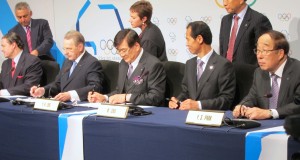
- IOC President Jacques Rogge and PyeongChang 2018 Chairman YH Cho sign the 2018 Winter Games Host City Contract, 6 July 2011 Durban, South Africa
PyeongChang’s 2018 Path to Victory
Part I: Autumn 2009 – SportAccord Dubai 2010
Terrence Burns ©2014
As I have written many, many times - consultants and advisors do not win Olympic bids; Bid Committees win bids. To do so they must have a great team, great leadership, great relationships throughout the Olympic Movement, a great technical plan, a great message and the ability to communicate that message to the Olympic Family in a myriad of effective ways throughout the course of the campaign.
This series of four articles is about the PyeongChang 2018 Winter Games bid's journey to victory from my perspective as an external advisor consulting on the bid's brand messaging strategy (helping the bid define the answer to "Why PyeongChang?"). I was also responsible for the development and preparation of PyeongChang 2018's presentations to the Olympic Family.
Many other crucial moving parts of the bid were working hard as well, simultaneous with our team's efforts during the course of our almost two years together. The bid's administration, technical planning, communications, international relations, and sport and venues teams to name a few worked equally hard in their respective areas to ensure the final, victorious result in Durban.
Can we be friends?
Our first meeting with the PyeongChang 2018 bid was a brief one. The meeting took place in an almost springtime snowstorm, with Governor Jin Sun Kim at the Denver SportAccord during March 2009. Governor Kim (Governor of Gangwon Province, where PyeongChang is located) was the instigator, driving force and leader of PyeongChang’s two previous bids, 2010 and 2014 respectively - both of those bids almost won, by the way. I worked for Vancouver 2010 and Sochi 2014, both of whom eventually defeated PyeongChang. Given those facts I wasn’t really sure how the meeting would go.
During the discussion, Governor Kim listened politely and nodded periodically. He spoke to us through his interpreter, though without committing to anything. I remember thinking that he seemed very tired - time zones are a killer. At the end of the meeting I wasn’t really sure what, if anything had been accomplished.
Only later did I learn that Governor Kim was listening acutely, very well indeed. Although I'd worked closely with Koreans many years before (I worked for Meridian Management, the IOC’s marketing agency in 1997 when Samsung joined the TOP Program), this meeting with Governor Kim reminded me again about the particulars of Korean business meeting etiquette. Today, by the way, Governor Kim is President & CEO of the PyeongChang 2018 Organizing Committee.
Over the course of the next few months we began a dual dialogue with both PyeongChang and Munich. Truth be told, my heart was with Munich because of my German wife, my love for the country (I worked there in 1991 with Delta Air Lines) and the city of Munich. Munich’s young bid was, as are most bids at that stage, somewhat chaotic with two initial leaders, Mr. Bernard Schwank and Mr. Richard Adams. PyeongChang’s team was no less confusing with various powerful entities jostling for internal influence and control of the bid.
In September of 2009, we flew to Seoul to present for the first time. The initial PyeongChang bid team now included personnel from Korean Air because Korean Air’s Chairman, Y H Cho, was selected to co-Chair the 2018 bid with Governor Kim. I particularly recall meeting Mr. Jiyoung Jung for the first time who would become a true friend as well as a colleague. The scope of requested work changed a few times – first PyeongChang wanted us to include a PR and Communications partner, and then they asked us to compete against a PR and Communications partner.
This is not unusual. Young bids generally have little understanding of the bid process, the work ahead, the skills they will need, the roles of advisors and the work that they could/should perform. And, consultants who claim credit for and/or exaggerate their work performed on previous bids often exacerbate this confusion. CV inflation is the most reckless, profuse and hidden Olympic "sport". Lesson for future bid cities: extensively check references with former Bid CEOs.
Pitching a new bid committee is an exhaustive and often expensive exercise. For example, we made three trips and presentations to the Tokyo 2016 bid and believed, based on our final meeting, that we were hired. We were so certain that we bought Japanese mobile phones for our team (Japan had a proprietary telecommunications platform at the time). We weren’t hired, and I heard about buying those phones from my colleagues for years.
Pitching a bid can be exhausting as well because not only are you trying to explain what you do, what you have done and what you can do for a bid, you are often walking a thin line explaining (because bids always ask) what a competitor did or did not do on a previous bid.
For the record: when asked, I shoot straight; never denigrate, but always educate.
A logo for dessert
We were having dinner in Seoul at a Korean barbeque restaurant during the period we were still negotiating with PyeongChang. Earlier that day, the bid committee told us they were ready to select a logo. More often than not, new bids tend get this process wrong. To get to a serviceable logo, one should begin with a brand assessment and positioning exercise. This work then “informs” the designers so that their visual interpretation of the brand is consistent with its mission, vision and values.
But as I said, this rarely happens.
Usually someone decides that a friend or colleague can create a logo cheaply, or, they farm it out to a few designers with virtually no real briefing for the design. The designers are left to their own devices and we get bid logos that sometimes defy logic.
But I digress; back to the PyeongChang 2018 bid logo.
We expressed our “concerns” that they plowed ahead with logo development before the bid's brand assessment and positioning work. We asked, “What is the logo trying to express? What part of the PyeongChang 2018 vision is it trying to articulate?” They listened politely and seemed to understand our points.
Later, at the aforementioned dinner (again, before we were hired) three gentlemen entered the crowded restaurant with 3 large advertising boards. Each board had a single, different version of a potential PyeongChang 2018 logo.
They cleared the table in front of me and said, “Mr. Burns, would you please tell us which logo you think is best?” No set up, no explanation of each designer’s intent – just a cold presentation to a jet-lagged foreigner with several Korean beers in him. I chose one, admittedly purely subjectively, and it eventually became the PyeongChang logo - whether or not my choice had anything to do with it, I do not know. By the way, the logo worked out just fine.
PyeongChang 2018 did eventually win, so I guess we can save the debate about the efficacy of brand positioning work for logo development for a later post – or, maybe even the efficacy of bid logos in general.
As an aside, I remember asking why are you spelling “PyeongChang” with a capital “C” in the middle of the name?
“We don’t want to be confused with Pyongyang…in North Korea,”someone answered.
“Ah”, I said; and the capital “C” stuck.
Finally Official
In late 2009, we had a final meeting/presentation with bid Co-Chairman Cho in the Korean Air headquarters in downtown Seoul. His daughter, Emily, a Korean Air marketing executive attended as well, and although not part of the bid committee she was extremely helpful to us throughout the campaign. We also had our final meeting with the Korean NOC.
In early January of 2010, we went on a venue tour in PyeongChang. I was on crutches from a little motorcycle mishap, and I remember standing on the icy ledge at the top of the ski jump. I think the Koreans were nervous that I would fall off. Perhaps that is why PyeongChang 2018 finally hired us - maybe they thought we were just as desperate as they were for PyeongChang to finally win. Time to go to work.
The Bid Committee had already written the Application File (they had two solid, previous versions as a foundation). Their technical plan was very good, not as attractive as Munich’s due to Germany's existing winter sports infrastructure, but certainly very good.
What they lacked was a story and an answer to the question “Why PyeongChang?”
The first real challenge I recall was the IOC Teleconference after the submission of the Applicant File. The bid team already had sectional heads for each functional area, virtually all of whom were academics with excellent knowledge of their subject areas, but with minimal Games or Olympic Movement experience.
This short teleconference presentation to the IOC is designed to give the IOC a better understanding of the bid’s motivation and vision as well as its general technical and operational plans in as an efficient and affordable manner as possible.
- PyeongChang 2018 IOC Teleconference
Some of the speakers had taken part in previous PyeongChang bids and a lot of the technical material was simply updated and refreshed from PyeongChang 2014’s bid – which was fine, they were able to show progress with each successive bid.
- PyeongChang 2018 IOC Teleconference
As I read the drafts, again what was missing for me was the answer to “Why PyeongChang?”
Message Matters - A lot
As background, the 2010 and 2014 PyeongChang bids relied heavily on the message of the Winter Games as a peaceful means to unify the Korean peninsula. Now, there is no doubt that this is a vital geo-political issue, and it is a very personal and passionate issue for the Korean people. But there’s just one problem: the message had no real relevance to the Olympic Movement or for the Winter Games.
While working for Vancouver and Sochi, we knew this – and we were able to exploit it with clear, powerful value propositions that illustrated what each of these two cities could provide to the Olympic Movement and to winter sport.
I tried to adapt the presentation remarks (they were already written) around a concept that was taking shape in my mind, but was by no means a formal brand or communications platform, yet. At this point we could only adjust the texts, not re-write them (it’s easier to re-write than “fix by editing”, by the way, if one has the time).
I flew to Seoul to be in the room with them (off camera) for a few hours of presentation training, and the Q&A. The presentation went fine.

Then we got serious about creating the answer to the question, “Why PyeongChang?”
Initially, I received a great deal – a great deal – of pushback from some members of PyeongChang 2018 regarding the bid’s positioning and its brand platform.
It was difficult to make them understand that this brand work would serve as the very foundation for every single piece of PyeongChang 2018 communication over the course of the bid (speeches, brochures, press releases, presentations, advertising, direct mail, website, Bid Books, etc.). It is important to undergo a rigorous process to get it right because in the end, a clear and singular message is a bid’s only true point of differentiation from competitor bids.
We were competing against one of the greatest cities in the world, Munich, (the perceived “front runner” in the race up until a few months before the selection was made in July 2011) and a country, Germany, with a winter sports heritage and facilities second to none.

Munich 2018 also had a sophisticated bid committee, led by the extraordinarily competent Bernard Schwank, the extraordinarily popular Olympic Champion, Katarina Witt – and, for good measure, extraordinarily well-known and highly experienced German IOC member and IOC Vice President (then rumored to be the next IOC president) Thomas Bach. And, they had the Alps. It just didn’t seem fair.
We were also competing with another alpine gem, Annecy, France. Led initially by Olympic champion Edgar Grospiron, and then Charles Beigbeder, Annecy's bid also offered bonafide winter sport credentials that PyeongChang could not compete with on a head to head basis. Annecy was also a stunning site for the Winter Games: picture postcard perfect.

But the Annecy bid suffered from a venue plan that many considered "too spread out" to be efficient. Nevertheless, we knew that the French could host a magnificent Winter Games and, they knew their way around the Olympic Family and the world of Winter Sport.
We considered both cities real competitors for the crown up until the last moments in Durban.
But I knew that we helped Sochi defeat Salzburg under similar “image” constraints – we just needed our own story.
One evening at home in Atlanta I spent hours on the phone, literally, arguing with a few members of the bid committee on the other side of the world about a suggested tagline for the bid. Someone wanted a tagline called “A Bigger Winter”. Even after accounting for translation and transliteration, I tried to gently explain why I thought "A Bigger Winter" was not a good idea in the context of this bid campaign.
If you have conducted business in Korea, gentle doesn’t always work. Koreans are passionate – which is why I enjoy working with them. You always know where you stand. So, I gave up on being gentle. We all agreed that we would wait until I delivered a new PyeongChang 2018 brand model before we addressed the “tagline” issue again.
The Journey to New Horizons
We all met for the first time as “the PyeongChang 2018 team” in Vancouver for the Games. Vancouver was Chairman Cho’s first major Olympic experience as head of the bid committee and we were all getting used to each other. Bid Cities at Olympic Games are a bit like new kids on the first day of school. They know they are supposed to be there, but aren’t sure what it is they are supposed to be doing (or what the IOC will allow them to do).
In Vancouver I was also introduced to a young woman named Theresa Rah. Theresa, I was told, was the new Communications Director. Little did I know that Theresa would become my creative muse for the bid’s story, and the anchor for PyeongChang presentations over the next 17 months.
In Vancouver I gave a presentation on Olympic branding and PyeongChang, and we agreed that I would present the final PyeongChang 2018 brand model to the entire team at SportAccord in Dubai in April.
By Dubai, the bid committee included representation from the Korean NOC, Gangwon Province personnel, members of previous bids and new bid members from Korean Air; it was a heady, complex mix of factions.
Y S Park, then head of the Korean NOC and a strong and consistent advocate of our work, was present as well with his excellent team lead by John Moon and Seihwa “Bonnie” Kim. Governor Kim was also in the room with his team, led by Byungnam Lee and Zoo-Whang Kim.
By this time PyeongChang had hired other consultants such as Vero, Stratos Safioleas (Stratos was onboard from the beginning and had in fact worked on the 2014 bid), Charlie Battle, Young-Sook Lee, and Laszlo Vajda to name a few. Cheil Communications also had a team led by Jooho Kim, Jace Oh and Alexis Choo.
The brand presentation I shared that day was a 110-page PowerPoint deck. That’s a lot of pages for anyone to sit through, especially listening to what may be one’s second or third language (or via a translator).
But it had to be done to prove why the old messaging would not work and why new messaging was required to win. It also had to be done with painstaking detail and metrics.
It had to be done precisely and with supporting documentation because that is what Korean people respect and expect, and it is how they conduct their own work.
And it is why the muddy fields of emptiness, death and destruction, in which my father toiled for three years as a young soldier in the Korean War, now comprise one of the most modern, dynamic and exciting cities in the world – Seoul.
- Seoul, Korea 2010
Measuring Opinions Qualitatively and Quantitatively
I took the team through the PyeongChang 2018 brand research.
The words most highly associated and relevant to the words Korea/Korean people:
Family, Corruption, Precise, Hopeful, Hard working, Insular and Aggressive
I showed them what foreigners thought about Koreans, and we talked about how to build this research into a "story" for PyeongChang 2018.
Hard working = making and keeping promises
Precise (intelligent) = best plan for 2018
Dynamic = fast growing economy, new markets for winter sport
I showed them purposefully simplistic images of old thinking and perceptions of Korea versus the new Korea today.
For example, many non-Asians think of this when they think about Korean Culture...
or this...
But not about this...

or this...
I showed them how foreigners around the world and people within the Movement perceived them and their country - including the previous bids. And while it is true that cars, mobile phones, refrigerators, ships and all manner of manufactured goods are made in Korea...she, the girl pictured below, is also "Made in Korea" along with millions of other young, hip, Koreans just like her.

This was not an easy discussion.
We had many veterans of those previous bids in the room.
There were a few uncomfortable moments of silence.
The Road Ahead
But we had only one chance of defeating Munich and it had to be predicated on creating our own story and evaluation set. If left to comparisons with Munich’s architectural beauty, cultural attractions, leisure options, dining and shopping opportunities – let alone the sporting venues – PyeongChang would lose again. We had to create something new, something imaginative that could nullify or at least blunt Munich’s many strengths.
We had to look outward instead of inward. This meant we would not be mentioning reunification of the Korean peninsula as a key message for the bid. Again, that was not an easy or popular message to deliver, but it's what we get paid to do.
I watched the reactions and tried to read the room. I was keenly interested in Chairman Cho's perception of the message I was delivering, especially given that he was pictured in one photo example of the "old" Korea! Thankfully, he was in total support. He understood branding and marketing very well as head of a global airline, and he understood that we had to be modern and international in our image going forward.
There was also plenty of words of agreement and support, both from many Koreans in the room and from my fellow foreign colleagues, all of whom knew this was exactly the path that we had to take.
At the end of the presentation, we conducted an exploration in “taglines” and key messages. We recommended about 5-6 taglines, and I remember specifically leaning towards the concept of “Dream Big.” I liked the connotation of it; how it related to the people of Korea and the miracle that they have created in the last 60 or so years.
I liked the way it spoke to “persistence” – this was their third bid and they were not giving up. And I liked the unexpected nature of this bold, modern, international message for a PyeongChang bid because I thought it would surprise the Olympic Movement. (Spoiler Alert: "Dream Big" did not make the cut, it was in use already commercially)
As the presentation drew to a close I felt a general sense of relief in the room – certainly I was glad to have it over. I felt a lot of “buy-in” from the team. They understood the call for a new energy, a new dynamic and a new way of thinking about a PyeongChang Olympic bid.
I admit that the one person I was most concerned about offending was Governor Kim; after all, he led the two previous bids. Much of my presentation was a comparison of the old versus the new messages. I was afraid he might take it personally.
Nothing could have been further from the truth; he was a gentleman.
At the end of the presentation he thanked me and said, in English, “…well done, good job – I liked it…” He also liked “Dream Big” as a tagline – I think he and I, alone in the room, liked that option.
As a footnote, Governor Kim was the only person in the bid who sent me a thank you letter after PyeongChang’s victory in Durban. I received many emails and calls from my friends in the bid, but Governor Kim’s was the only “official” letter of thanks that I ever received– from anyone, in Korea. It was a gracious gesture. I still have it.
At the end of SportAccord, the bid team had very good understanding of PyeongChang 2018’s new brand positioning, its new key messages and the answer to “Why PyeongChang?”
We had our story.
We had our answer to "Why PyeongChang?"
And we had our new tagline.
We called it "New Horizons"
Now we just had to put it into practice, which is always harder than it appears.
Next: Part II - 2010 - The Year of Patience and Humility
- Theresa Rah and Chairman Y H Cho rehearsing in Belgrade, Serbia November 2010. Photo courtesy of Stratos Safioleas
PyeongChang’s 2018 Path to Victory
Part II: April – December 2010
Terrence Burns ©2014
This is part two of four in a series about PyeongChang 2018's road to winning the 2018 Olympic and Paralympic Winter Games.
After the SportAccord meetings in April, we all had our “marching orders”. The PyeongChang Technical team was busy preparing the initial drafts of the PeyongChang 2018 Candidature Files. Our team was poised to review and edit the drafts for brand messaging consistency to ensure the bid’s new message, “New Horizons”, was reflected as much as possible and where appropriate in the texts.
Our team also began mapping the outlines and strategies for the ten (10) presentations that PyeongChang 2018 (and Munich and Annecy) would be making over the next 16 months. It was a daunting task, but in retrospect, having 10 opportunities to practice our message and presentation skills was a Godsend, as we shall later see. For edification, the ten presentations for the 2018 campaign were as follows:
The 2010 presentations:
- 21 October – 17th Association of National Olympic Committees (ANOC) General Assembly - Acapulco, Mexico
- 13 November – 29th Olympic Council of Asia (OCA) General Assembly - Guangzhou, China
- 26 November – 39th European Olympic Committees General Assembly - Belgrade, Serbia
The 2011 presentations:
- 16-19 February - IOC Evaluation Commission Visit – PyeongChang, Korea
- 23 March – 74th Association Internationale De La Press Sportive Congress (APIS) – Seoul, Korea
- 26 March – Association of Oceania National Olympic Committees (ONOC) – Noumea, New Caledonia
- 7 April – SportAccord – London, England
- 18 May – IOC Technical Presentation – Lausanne, Switzerland
- 28 June – Association of African Olympic Committees (ANOCA) – Lome, Togo
- 6 July – IOC Final Presentation – Durban, South Africa
For each of these presentations, we created a unique communications objective and strategy, given that each presentation had a different target audience and varying message to deliver. This entailed first creating the showflow, meaning:
- Defining how many speakers
- Identifying the speakers
- Defining how many films, helping write film briefs
- Drafting every speech
- Speech training raining every speaker
- Directing a design team on the “speaker support” (Keynote or PowerPoint) in both French and English
- Where applicable, Q&A definitions and practice sessions.
Each presentation took anywhere from four weeks to three months to prepare. It is a lot of work.
My two favorite activities were drafting the speeches and training the speakers. In total, we spent literally hundreds and hundreds of hours writing and re-writing drafts, and training speakers.
For PyeongChang I was insistent that everyone spoke English in his or her presentations. Why? It has nothing to do with language snobbery – it is purely pragmatic. English is the language in which the Olympic Movement does business. Speaking English to an international audience indicates that you and your team will be easy to communicate with – which means easy to work with – and it means less time fumbling with the simultaneous translation headsets during the presentation.
- Terrence Burns with Spanish Prime Minister Mariano Rajoy, Buenos Aries, September 7, 2013 - Madrid 2020 Final Presentation
Often, senior officials or politicians simply cannot – or do not wish to – deliver a speech in English. I understand this – as a head of state or senior politician, one does not wish to appear less than perfect.
In this case I have a protocol. If they are the head of state, or a very senior minister, we let them give a (shortened) speech in their own language. Prime Minister Rajoy of Spain is the most recent client of ours (Madrid 2020) who spoke in his native language.
But unless the speaker has ample (and I mean a boatload) time to practice, this is a high-risk solution because we are trying to adapt a speech written in English to another language, and often the prose, syntax, alliteration and emotional flow do not transfer easily – or at all. So generally, I hate doing it. But the usual rule is that most Heads of State get a pass from the audience as long as they are brief; I repeat, as long as they are brief.
Sometimes, we teach the speaker an entire speech in English phonetically. This means the speaker may have no real idea what the words mean, but that he or she has memorized them.
 If the speaker understands English well, but has trouble with pronunciation, we adapt the written speech or the teleprompter with various spellings and visual clues as to pronunciation and intonation.
Chairman Cho’s first speech notes (at right) in Acapulco are a good example of this technique; we refined and used it in every presentation and it worked for him, and many others in recent bid presentations.
So, back to PyeongChang.
I felt that PyeongChang had to break out of the stereotype of boring presentations; sorry, there, I said it. And I knew for example, from watching the Tokyo 2016 presentations that it is folly to try to “force” people to be what they are not. But it is also folly to proceed as if it is a (insert major multinational here) board of directors meeting.
For PyeongChang we began with five objectives for the presentations: 1) English language, 2) young speakers, 3) female speakers, 4) emotion and 5) humor, where possible (humor is very tricky in foreign languages). I also knew that with ten presentations, we had to pace ourselves and slowly perfect our messaging and delivery.
We could not peak too soon (as you will read below, after our first presentation in Acapulco, I realized that we were in no danger of peaking too soon). It took us until SportAccord in London in April 2011 to even get close to meeting our presentation objectives. By the Lausanne IOC Technical presentation in May, we were peaking and by Durban in July, we reached our crescendo.
For the 12 October ANOC meeting in Acapulco, we delivered the first set of speeches to the team on August 24th. The standard procedure was for me to send the speeches to the presenters and ask for any written feedback (you learn quickly that only about 10% of the presenters give you written feedback). The bid committee team however, did not like my first round of speeches and made substantive changes, or tried to, throughout. We went back and forth, heatedly, via email and phone calls.
Finally I flew to Seoul to address the issue of who controls the presentation content and speeches. It was typical bid committee meeting; me on one side of a long table and about 15 bid committee members on the other side. Chairman Cho was there (at the head of the table). We began the discussion on who was or was not writing the drafts. There was a lot of frustration - on all sides. I was ready to go home, to be honest.
I am sure they got tired of my refrain "if you want to do what you did twice before you will lose again - be my guest...". It was tense. Finally Chairman Cho called a break. He and I talked. He gave me advice on how to deal with Koreans, as well as my "style" dealing with them, which he found too aggressive and too blunt; it was a fair assessment. I listened. He listened. We went back in the room and he said to the team, "too many cooks in the kitchen, from now on Terrence writes all the speeches."
Then, we began an intensive seven to ten days of one-on-one and full rehearsal training sessions, and then we would continue with one-on-one and full rehearsal sessions on-site.
- Theresa Rah - PyeongChang 2018 Communications Director
After our first set of practice sessions in Seoul it was clear to everyone in the room that Theresa Rah was going to “carry our water” for the presentations going forward. Theresa, a former television presenter in Korea, grew up in various locales around the world and her English accent was impeccably Canadian-esque.
Her delivery was flawless and she always had excellent feedback and input on her drafts. Moreover, she also worked tirelessly to help other PyeongChang presenters with their presentation skills and English.
Our international relations team utilized Theresa’s skills as well. She was a true team player.
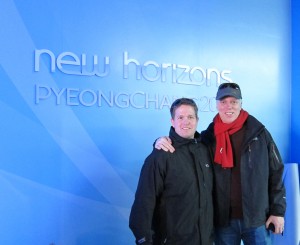
- Terrence Burns and David Woodward Photo T. Burns
By this time North Design joined us to help with the presentations’ graphics. I have worked with David Woodward (Woody) and his design team on Olympic and World Cup presentations since 2003. Woody knew how to deal with the complexity – and pressure – of live presentations. There are always changes or adjustments to speeches up until the last-minute – which means the accompanying speaker slides must be changed as well, real-time – in two languages. It was a high wire act – Woody and his team handled it flawlessly.
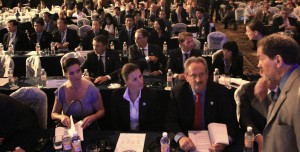
- Munich 2018 preparing for Acapulco presentation - bid advisor George Hirthler at far right. Photo courtesy of Stratos Safioleas
I recall Munich taking the stage with their superstars (and they were superstars) – Thomas Bach, Katarina Witt and Bernard Schwank leading the way. The scripts prepared by my friend, mentor and former business partner George Hirthler, were crisp and on target.
They even had a video of Angela Merkel, the Chancellor of Germany supporting the bid (remember, this was the first presentation to the Olympic Family and they already had the Chancellor of Germany on film…that is called being prepared). They were upbeat and looked fabulous – they seemed happy and confident, and it showed. At that moment, I felt that they were everything that we were not.
Munich 2018 had an incredible technical video that “flew” the viewer through and around the mountain venues, accompanied by a live voice-over by Bernhard onstage. At that point our technical “film” was only maps and still images.
![Mex-1292[3]](http://static1.squarespace.com/static/5a0d00b1a803bb9d2ea4b4e4/5a38517e005559637eaf5c6e/5a385190005559637eaf5ea5/1513640336273/Mex-12923-300x225.jpg?format=original)
- Terrence Burns, David Woodward and Jace Oh. Acapulco Presentation rehearsal room
Munich also had a series of creative, atmospheric films capturing the beauty of the city and its people. Reto Lamm, a former snowboarding champion from Switzerland, and the epitome of cool, produced the films. We were still “struggling” with our own films at that stage. I remember having a dry mouth while watching them present. As presenters, they were amazingly good on their first shot out of the gate.
- Y H Cho - Acapulco presentation - photo courtesy of Stratos Safioleas
Finally, it was our turn. This first presentation was our “shake out cruise”. It was my opportunity to see how well our “New Horizons” message resonated and judge our speaking team live, in front of an audience.
For that presentation we had Y H Cho, Theresa Rah, Y S Park, Dae-Sung Moon (Korean IOC member and Olympic Champion) and Governor Lee (the new governor of Gangwon Province).
After our first presentation in Acapulco in October 2010, “improbable” was my first impression of our chances having watched Munich’s presentation to ANOC.
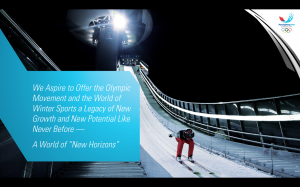
- First description of "New Horizons" to an Olympic audience, ANOC Acapulco October 2010
Acapulco is where we first introduced the tagline and theme that would carry us nine long months, thousands of miles and ten presentations around the globe - New Horizons. Here is the slide we used to describe "our vision" to the ANOC audience. The focus was on "new growth and new potential like never before."
- Y H Cho and Olympic Champion and Korean IOC member Dae-Sung Moon relaxing after the Acapulco presentation. Photo Stratos Safioleas
- Theresa Rah "prepping" Y S Park for the Acapulco presentation.
My notes from that day read:
- New Horizons seemed to be the only recognizable “theme” by any city – we need to double down on it and provide new proof points going forward
- Ch. Cho needs a lot of work on his pronunciation and delivery…not used to speaking to an international audience…I gave him too much content
- Theresa – fantastic – will use her more
- Y S Park – has certain charm – used to speaking to the OF (Olympic Family) – can make him funny but I gave him too much content
- DS Moon – looks great, hard to understand – needs a lot more work
- Governor Lee – the new Governor of PyeongChang – not needed again until SportAccord, earliest (he didn't last long enough in office to joint us in SportAccord)
- Films: more (lots) work to do – MUST HAVE A TECHNICAL FILM
- Speaker slides design – I think Woody’s design looked the best
- Overall, we have a long way to go – NEXT STEPS:
1) Intensive language and presentation training with Chairman Cho and others
2) Produce a new technical film, brief new film company, New Moon, on new films
3) Find young, athlete presenter(s)
3) Increase Theresa’s role in presentations
4) Blow out “New Horizons” because no one else seems to have a clear and concise message
- Korean NOC President Y S Park - Acapulco presentation - photo courtesy of Stratos Safioleas
In Acapulco, we had lots of internal drama – politics, factions, consultants leaving (then not leaving), clashing egos and the great battle of two styles of doing business – east and west, hard versus soft, discussions versus decisions, straight-forward versus obtuse...progress or procrastination.
From my perspective, here is the single most important thing to know in an Olympic bid: it has a beginning and an end; meaning, every single day matters.
That is it.
If a bid vacillates on making decisions, then it is sitting still; and if it is sitting still then it is either sinking to the bottom or falling behind.
This may sound dramatic or crazy, but I think no other “Olympic activity” comes as close to what the athletes on the field of play experience as does bidding for the Olympic Games for the bid committee team. It is high drama with no second chances. There is a start and a stop. Each competitor brings his or her own strengths and weaknesses. The "players" endure tremendous personal and professional pressure (how would you like to give a speech in front of the entire world in a foreign language?). It is pure competition and by the way, there is only one medal – gold.
After the presentations we had our debrief meeting. At these meetings all of the PyeongChang team would show up – many of whom I had never seen. One of the “critiques” I shared with PyeongChang 2018 about their previous bids was that Korean bids always brought too many people who seemed to do nothing but stand around in groups (amongst themselves) and not mingle with anyone else. At this point, PyeongChang 2018 seemed to be carrying on the tradition, as a phalanx of expectant faces looked at our team for answers.
I led off the meeting with my critique of our performance – I held nothing back and luckily all of the other external advisors agreed. Like me, everyone recognized the high quality of Munich 2018’s presentation.
There is always "that moment" in a bid campaign, when hope must triumph over fear.
This was that moment for PyeongChang 2018.
The team was quiet. They were confused and close to being dispirited. It was up to us external advisors in the room to address the situation honestly, but also in a way that provided a path forward. Following a summation of the points from my notes and others on how and where we needed to improve, I felt I needed a closing that would help them understand that all was not lost; in fact, we'd only just begun. We had all the ingredients of a great bid. Here is what I said, to the best of my memory:
“Munich 2018 just gave the best presentation that they will ever give in this campaign. It was brilliantly done, it was tremendous…but I believe that they will never give another one that good again. I don’t think they have a message yet that compares to “New Horizons”, and honestly they were so good today that I don’t know how they can top it. On the other hand, I believe that our team will only get better and better, and we will give our best presentation on the stage in Durban next July.”
I don’t know how many people in the room believed me, but I believed it. I just hoped that it was true.
Our next presentation took place on 13 November, to the Olympic Councils of Asia in Guangzhou, China. The presentation time was shorter, so we only had three speakers – Y H Cho, Theresa Rah and Y S Park - and one film.
The team was much more comfortable being in Asia, and I think that helped them onstage. I know one thing that made them relax, and that was a city full of Chinese food. Wherever we went in the world, no matter what city or cuisine, the PyeongChang team always found the local Chinese restaurant for our first or second meal.
Two of the more exciting moments in Guangzhou were 1) the Chinese apparently changed my middle name from "Hugh" to "Huge", and 2) I worked up the nerve to ask Katarina Witt to have her photo taken with me.
- Katarina Witt and Terrence Burns, Guangzhou, China November 2010
Throughout the 2018 campaign, PyeongChang was fortunate to always be the last to present – this was good for a whole host of reasons. Very often bids are at the mercy of the technical abilities – or lack thereof – of the venue team that is managing technology.
In Guangzhou, both Munich and Annecy had technical problems in their presentations, which were fortunately solved by the time PyeongChang took the stage. Our team’s presentation was tighter in Guangzhou, but we still lacked any emotional cohesion with each other onstage. I thought we made improvement from Acapulco, but we still had issues with everyone’s (except Theresa’s) English delivery and pronunciation. We had to work harder; the good news was that Koreans work very hard.
The last presentation of 2010 was to the EOC in Belgrade, just 13 days after Guangzhou. A “perk” on this trip was that a few of us were able to hitch a ride from Seoul to Belgrade with Chairman Cho on his own plane from the Korean Air Boeing Business Jet fleet. It was a beautiful plane with four bedrooms, eight luxurious seats and a couch.


I dubbed the plane “Elvis-1” because someone asked me “how did you like flying on Chairman Cho’s plane?” I said, “I feel like Elvis.” So, it stuck. We had our own Korean Air attendant and the food and the wine were exquisite. It sure beat standing in line at the airport.
Given both Munich and Annecy were from European NOCs, we felt as if we were going into the proverbial “Lion’s Den”. I felt that this presentation, on European soil, would be tremendously important for our bid, but perhaps that is also how they felt in Guangzhou. I put a lot of pressure on the presentation team and in retrospect, maybe too much for some.
- Kwang-Bae Kang, 4-time Olympian relaxing in a Korean restaurant in Atlanta - photo T. Burns
We were still experimenting with the speaker line up, e.g., who would open, and who would close.
For Belgrade we decided on the following order: begin with Chairman Cho again as the opener but with less content followed by a film, then Theresa, then Korean Olympian Kwang-Bae Kang, then Y S Park and close with a another film.
- Chairman Cho, EOC Presentation, Belgrade November 2010 - photo courtesy of Stratos Safioleas
One incredibly valuable new asset in Belgrade was the use of teleprompters. Other team members had suggested it for earlier presentations, and I resisted. That was a mistake and I should have realized it earlier. Now we were using a teleprompter (as were both Munich and Annecy) and it helped all of the speakers a great deal.
- Katarina Witt, 2-time Olympic champion; Munich 2018 presentation to EOC, Belgrade, November 2010 - photo courtesy of Stratos Safioleas
Belgrade taught us a few more things. After the presentation, we were told by many of the Olympic media in the room that “PyeongChang wins on the words and the message…Munich wins on style and video…”. I appreciated the compliment, but I knew that words and message were only half the battle. In a forty-five minute presentation in a giant room, (as in Durban) style points will matter, I thought.
We simply had to get better at presenting. Both Theresa and Kwang-bae were very well received as speakers – young, enthusiastic and easy to understand; there was a lesson in that.
Our post-presentation meeting the next morning was not an easy one. We had a lot of ground to cover with little time.
I was departing Belgrade that morning on my way to Zürich to meet our team and prepare our other bid client, the Russia 2018 FIFA World Cup Bid, for their Final Presentation to FIFA on 2 December, but that's another story. I was working hard to keep the two different bid’s films and speeches straight in my mind.
![Beograd-1193[7]](http://static1.squarespace.com/static/5a0d00b1a803bb9d2ea4b4e4/5a38517e005559637eaf5c6e/5a385190005559637eaf5ed7/1513640336450/Beograd-11937-300x168.jpg?format=original)
- Post presentation meeting, Belgrade. Terrence Burns with Governor Jin-sun Kim at right
After the Belgrade re-cap meeting, I had one of the most extraordinary conversations I’ve ever had with a bid client. Chairman Cho cleared the room to speak to me alone. This is the gist of the conversation.
Chairman Cho: “I know I did not do well yesterday…”
Me: “No, you didn’t and it may have cost us a couple of votes…what happened…you were good in rehearsal…”
Chairman Cho: “I got nervous. Even though I am fluent, presenting in English is still very difficult. Listen - I do not need to speak. In fact if I am not good enough, please tell me. I don’t need the recognition – I am a busy, successful person. I am doing this bid because the president of my country asked me to, and he said to me “we cannot lose again”. I want us to win too, but I will NOT be a reason that we lose. If you want me to just sit on the stage and smile, I will be happy to do so…”
I was taken aback.
In most bids there is no small amount of infighting amongst the bid leadership as to who gets the most “air time” during a presentation. Some people even keep track of the length of other speakers’ speeches - really. I have even felt that some bid leaders were more interested in their own personal agenda than the bid’s. That is why this conversation was so refreshing – and invigorating. Chairman Cho meant it. He had no ego in this – he simply wanted to win for his country.
Whatever differences Chairman Cho and I had up until then, and there were a few, simply vanished in my mind. I really respected what he said. I committed to him, and to myself, to help him work harder. And he did work harder – he was tireless. Once, he called me at home and asked if I had seen the new film" The King's Speech". I said "yes". He said, "good...that's you and me" and then he hung up. Y H didn't waste words.
We hired a London-based English language elocution firm to assist, but in the end it was simply Chairman Cho and I, or even more so, Chairman Cho and Theresa Rah practicing hours on end to improve his English pronunciation and presentation skills. The progress he made from Acapulco to Durban was extraordinary. When someone wants to succeed that badly, it is an inspiration to everyone else on the team.
 2010 was drawing to a close and we set our sights on what we had to accomplish in 2011.
After three presentations in 2010, we knew we had a strong central message that so far, no other bid was able to counter effectively.
“New Horizons" was turning out to be something powerful and differentiating, but we still had not been able to communicate it fully, yet. We would, in time.
We knew our strengths and weaknesses. And most importantly, the intangible feeling of settling into a real “team” was beginning to take place. Often it takes the “heat of battle” to draw people together, to get them to assemble and follow one true banner of leadership and direction.
We had been humbled; yet thanks to the unique Korean culture, we persevered with great patience. That culture, and working with our Korean colleagues for almost two years, proved a powerful lesson for me, personally.
As we prepared for the last year of the campaign, it was evident that we were well on our way to being “competitive” in the race. And for the first time we were gaining a little momentum – and more importantly, confidence.
But I still did not know if we could really win; that would not come until later.
Next: Presentation Overdrive
- PyeongChang 2018 Presentation Team, IOC Evaluation Commission Visit
PyeongChang’s 2018 Path to Victory
Part III: January - April 2011
Terrence Burns ©2014
The year 2011 ushered in a string of staggered (and staggering) presentations to the Olympic Family and the IOC, beginning with the IOC Evaluation Commission Visit to PyeongChang, 16-19 February. For any Bid Committee this is probably the longest sustained period of stress (and more than a little fear) in the entire bid process.
During the EC Visit, a team of eleven Olympic Movement and Games subject matter experts visited the Alpensia resort in PyeongChang for four days of non-stop presentations on all themes of the bid book, venue and site visits/presentations and meetings with government officials. All presentations included thorough and specific Question & Answer sessions as well.
The 2018 Winter Games IOC Evaluation Commission:
Gunilla Lindberg SWE IOC Member Chairwoman
Angela Ruggiero USA IOC Member
Barry Maister NZL IOC Member
Dwight Bell USA US Luge Federation President
Tsunekazu Takeda JPN Japanese NOC President
Ann Cody USA Paralympic Games athlete and administrator
Gilbert Felli SUI IOC Olympic Games Executive Director
Simon Balderstone AUS IOC Environmental Advisor
Philippe Bovy SUI IOC Transport Advisor
John McLaughlin CAN IOC Advisor (finance)
Grant Thomas USA IOC Infrastructure Advisor
![Seoul-086[3]](http://static1.squarespace.com/static/5a0d00b1a803bb9d2ea4b4e4/5a38517e005559637eaf5c6e/5a385190005559637eaf5ee3/1513640336491/Seoul-0863-300x225.jpg?format=original)
- Theresa Rah & Terrence Burns, Seoul December 2010 - photo Stratos Safioleas
To begin the story of PyeongChang 2018’s EC visit, one must go back to November and December 2010. During those months, the external consultants team including myself, Charlie Battle, Erskine McCullough Luciano Barra, Mike Lee, Stratos Safioleas, Laszlo Vajda and others met the proposed Evaluation Commission Visit speaker team.
We worked very closely with Bid Team member Byungnam Lee, a great colleague, friend and a key player in PyeongChang’s eventual victory.
- Byungnam Lee
On December 15, 2010, the candidates were led one by one into a large room and asked to read a portion of a draft speech in order for us to ascertain each person’s English language speaking ability. Virtually every speaker was an academic, and had also participated in the drafting of the Bid Book in his or her functional area.
Imagine walking into a room of bid leaders and foreign Olympic “experts”, and being asked to read aloud with conviction and passion a technical speech in another language. Not easy. Fortunately, as academics many of the speakers were experienced presenters in front of groups – albeit students.
- Notes on potential PyeongChang IOC EC presenters
None of the speakers had a problem with content knowledge, but more than a few required extensive presentation and language training; but that is what we were there for. We took notes on the good, the bad and the “bridge-too-far” aspects of each speaker’s presentation, an example of my notes are to the right.
Our team, working with the first round of drafts (mostly) supplied by the speakers and bid committee, finished reviewing and editing (sometimes re-writing entirely) the seventeen (17) EC theme speeches by mid-December.
The second round of drafts was delivered mid January. We then refined each version many times over until the day – or in some instances, the moment – of the actual presentations.
In late January, we first traveled to Seoul for rehearsals and presentation prep, then we went onto PyeongChang. Here is our core external presentation development team: from left: Sara Blease, Terrence Burns, Ansley O'Neal, Lou Lauria, Randy Phipps and David Woodward.
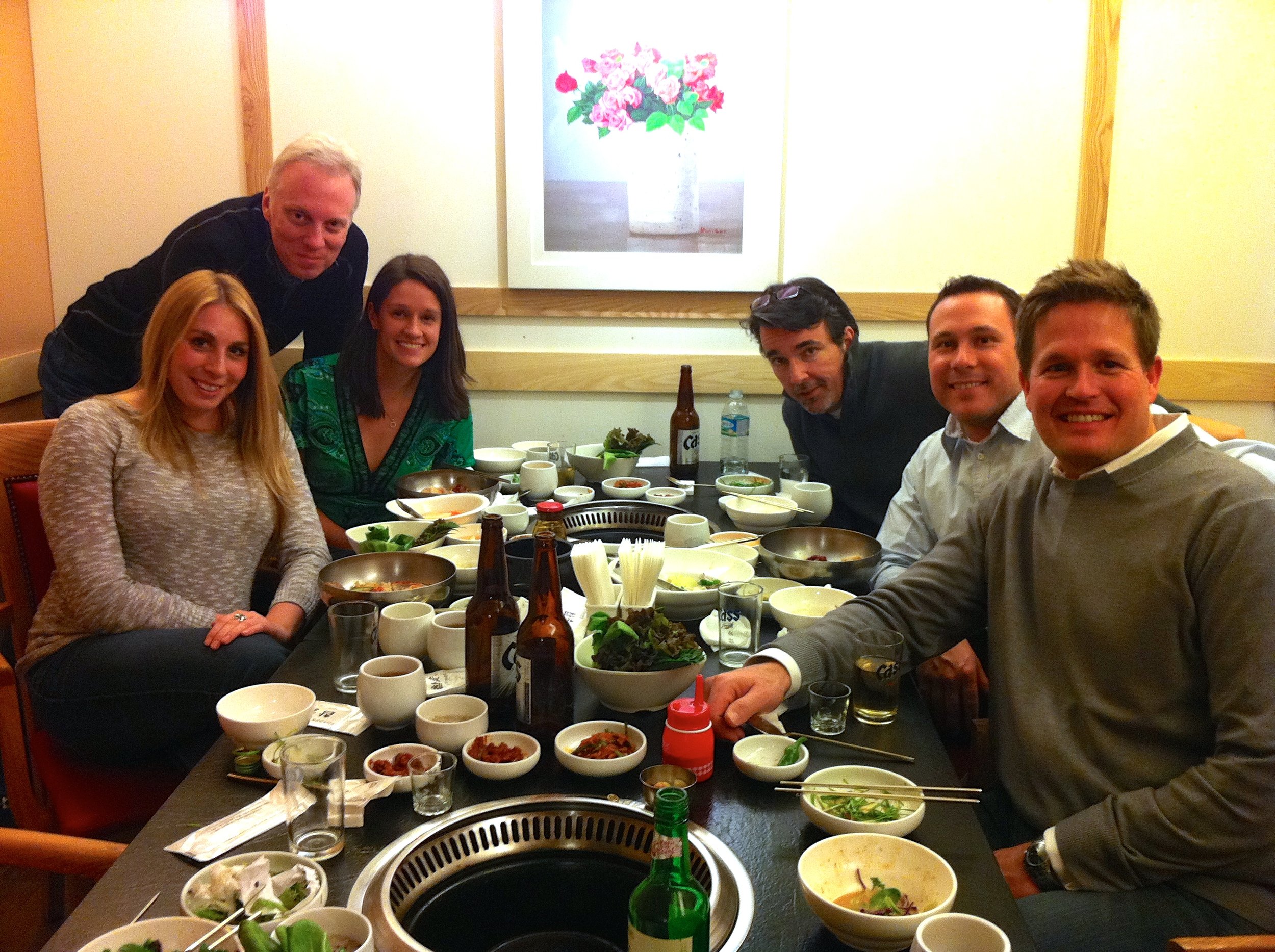
By now Caroline Roland and Barnaby Logan of New Moon films were onboard working alongside our Cheil colleagues, and our films were improving greatly. We were trying to counter the points that Munich 2018 were making in their presentations about the beauty and variety of fun shopping, dining and entertainment options in the city of Munich (the implication: those amenities were not available in PyeongChang).
It was a good strategy because the IOC members and the Olympic Family often spend two or more weeks at the Games, and they must have something to do when not at an Olympic event. Obviously, Munich offered a lot more entertainment value to the Olympic family than did the closest “big” city to PyeongChang, Gangneung - population 230,000.
- Best of Korea brands from Seoul
To answer this challenge, our team created a concept called “The Best of Seoul”, later changed to “The Best of Korea”. The idea was simple: given that we were at least 90 minutes away from Seoul, a large, thriving world-city with many great restaurants, shopping malls and entertainment options, why not bring those amenities to PyeongChang for the period of the Games?
It was agreed to build a Best of Korea Pavilion in and around the Alpensia Resort (heart of the Winter Games). In this space we would have temporary versions of Seoul’s most popular restaurants, shopping experiences and nightclubs. Voila – Seoul in PyeongChang.
- Lou Lauria
One of the best things about Korea is the food, and our team had ample time to sample just about every type of Korean food – and alcohol – imaginable.
Nothing breaks down barriers such as sitting on the floor, serving each other food and drink (we learned to always pour your fellow diners’ drinks first, before one’s own) and cooking meat on a Korean Barbeque Grill.
The beef that originates in the PyeongChang region is said to be the best in Korea; by the way, I concur.
Here are three of our presenters, Young-hee Lee, Minjung Sung & Won-ho Park at one of our many dinners in PyeongChang.

Korean Drinking Games - not sure what else I can say about this picture other than it was a solo performance by our Games Security expert.
- YS Park, Dong Young Lee and Benedict Song.
- Aplensia Resort, PyeongChang
Over the course of the EC preparations it began to snow… a lot. Frankly it was what we were hoping for because it added to the winter ambience of the countryside and surroundings. The day the EC Commission arrived, the city of Gangneung received over three feet of new snowfall – a blessing, as everything looks better in a fresh coat of white snow and it proved we would have plenty of snow for the Winter Games.
- Chairman Cho and the bid leadership await the EC's arrival - photo - Stratos Safioleas
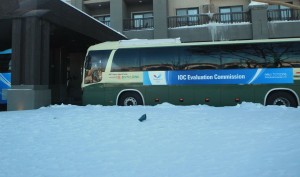
- IOC Evaluation Commission arrival, Alpensia Resort - photo Stratos Safioleas
To be honest those days all tend to run together in my memory. We were up early every morning for hours of speaker training and rehearsals, and then long evenings for Question and Answer preparation. Each slide’s content, spelling (both French and English) had to be checked, re-checked and then checked again because we were still adjusting speeches throughout the rehearsals. They were easily one hundred-hour weeks for everyone on the PyeongChang team.
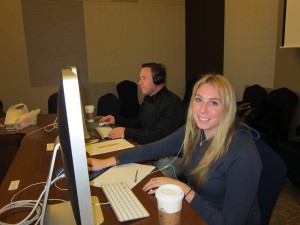
- Sara Blease & Randy Phipps, North Design
- Ansley O'Neal and Minjung Sung
Lou Lauria and Ansley O'Neal led the venue presentation preparations for our team. Lou and Ansley prepared the presentations and prepped the speakers at every venue for the EC’s visit. A lot of these presenters were Olympians and athletes. One of the best parts of our job is when we get the opportunity to work with athletes. Athletes are comfortable taking direction, which means they are "coachable". They are also competitive, which makes them want to excel.
One of the most emotional stops for the EC during the tour was a stop at the Gangneung Skating Rink - the proposed curling venue for the Games. A choir of 2,018 residents serenaded the EC team, and media, with Abba’s classic “I Have A Dream”.
Their beautiful voices filled the arena with a warmth beyond mere temperature. Many of the Evaluation Commission members as well as the PyeongChang 2018 team (and media) were touched with the simple emotion of the moment; eyes welled and tissues appeared.
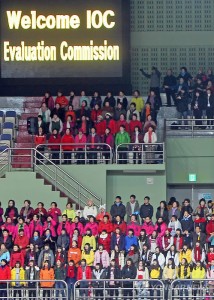
- photo - fanwonder.com
The performance illustrated the gentle, almost innocent nature in certain aspects of Korean culture. It was a genuine, heartfelt moment that was classically Korean in its conception and implementation. It was a beautiful gesture, and one learns to appreciate those in a long bid campaign.
After a long and stressful week with hours of presentations, hours of answering questions and hours of worrying, it was suddenly over. There is nothing quite like the sense of relief and release at the end of an IOC Evaluation Commission visit. It is difficult to describe the commingled emotions of anxiety and anticipation that precede the visit. At first, the week seems like it will go on forever – then suddenly all the scripts, drafts and urgent notes from the previous few days are lying on the ground, spent. It is very much like an Olympic Games.
Each day is an exercise of the Bid Committee holding its collective breath, praying nothing goes wrong. It is our job, as external advisors who have experienced this many times, to assure the Bid Committee that the Evaluation Commission visit is not an attempt to trip up or trick anyone into making a mistake; quite the contrary.
- Helen Stewart (IOC), Theresa Rah, Jacqueline Barrett (IOC)
The EC want to be informed and they want to help. Many times during the presentations EC members such as Gilbert Felli would offer incredible, experienced guidance on many issues. Moreover, the Bid City Relations team, led by Jacqueline Barrett, was also there to lend support and guidance, which they always did with patience and grace.
- Jace Oh
The post-EC visit recap meeting at the Alpensia resort was slightly euphoric for the team; the alcohol helped. Frankly, the team did a spectacular job. The presentation room looked great thanks to our Cheil colleagues, especially Jace Oh.
Chairman Cho was the consummate host, both inside the room and at the social functions. Theresa shined as always, but even brighter (although there were many PyeongChang team members in the room who had participated in previous PyeongChang bids’ EC visits, neither Chairman Cho nor Theresa had any idea of what to expect – and they handled it flawlessly). Everyone executed well with his or her speech. The slides and films looked great – no technical glitches. And due to exhaustive preparation and rehearsal, the dreaded Question & Answer sessions went very well.
- Q&A Prep; Lou Lauria, Laszlo Vajda, Charlie Battle, Erskine McCullough, Rocky Yoon
The EC visit was also the first time we, as external consultants had the opportunity to witness the abilities and professionalism of the entire PyeongChang bid team on a grand scale. Everything was extraordinarily well organized and prepared.
The internal team worked magically with us and the presenters on content changes and adjustments. And it was the first real opportunity for us to interact with the broader team on a large project.
I left the EC visit tremendously impressed by the entire Bid Committee. I could see the benefits of experience from the two previous bids. I thought, “These guys will host a perfectly organized Winter Games…”
- Media dinner - Alan Abrahamson, 3WireSports; photo Stratos Safioleas
I also thought the international media present were both surprised and charmed by what they saw and heard. I believed that these veterans of many bids began to realize that Pyeongchang 2018 was something entirely different from what they expected or had seen before. Their feedback was very positive and encouraging for our team.
And we had a few glitches. At the Ski Jump venue presentation, no one seemed to be managing the Asian media crush and they descended into the presentation itself, obscuring the EC members’ ability to listen and learn. The EC team were visibly agitated and decided to descend to the ski jump landing field and walk to the next presentation at the Cross Country venue, rather than fight their way back through the media group to the bus. But that was just one small issue in an otherwise flawless week.
- PyeongChang 2018 Bid and IOC Evaluation Commission Members
Unfortunately we had little time to relax or revel in the accomplishemnt because we had to prepare for two quick presentations in March:
- 23 March – 74th Association Internationale De La Press Sportive Congress (AIPS) – Seoul, Korea
- 26 March – Association of Oceania National Olympic Committees (ONOC) – Noumea, New Caledonia
- AIPS, March 2011. Byungnam Lee, Kwang-Bae Kang, Theresa Rah and Chairman Cho
The AIPS presentation, in Seoul was the easiest of all the presentations we did because it was on home ground. The presentation team was a bit tired after the marathon EC Visit. It took a little coaxing to get them focused on the AIPS; they were simply exhausted.
I can only imagine how tired the Munich and Annecy teams were as they had to fly half-way around the world for AIPS. Because this presentation was to media professionals, the content was a general overview of the bid, without a particular focus on any particular Olympic stakeholder - other than the media professionals. We felt it was crucial for them to understand our key differentiator - New Horizons - perhaps more than issues such as the venue plan, for example
- Theresa Rah, AIPS presentation
True to Olympic practice, we too had a "map" similar to the one Rio used with great effect at the IOC Session in Copenhagen in 2009. Our map showed where all of the Winter Games had been held through the years, with an obvious gap in Asia. In the end I am not sure how effective this was, but I do think it made a subtle point - but that is only if geographic rotation still mattered in the Host City selection process.
Next stop was both a challenge (to get to) and thrilling (to see); we went to Noumea, New Caledonia to present to ONOC. Once again we were fortunate to fly on Elvis 1, Chairman Cho's plane. This made the trip quiet relaxing.
- Noumea, New Caledonia
Theresa catching up on the news, on the way to Noumea on Elvis 1.

The presentations were very short, and French Polynesia was a long way to go to speak to a few NOCs for just a few minutes. Still, every presentation made us a little bit better. Again, I think PyeongChang had an advantage here because of geography. Once again, Munich and Annecy had to fly half-way around the world and to the Southern Hemisphere.
- ONOC Presentation Room - Noumea, New Caledonia
One very nice thing about the ONOC presentations was the intimacy of it. We were presenting in a smallish boardroom. We practically sat next to and on top of each other, and we were all in the same hotel. It broke down barriers and we actually had to time talk, drink and eat with the other bid teams.
Munich sat next to us in rehearsals and we were watching each other furiously write and re-write our scripts.
- George Hirthler, Bernhard Schwank and Thomas Bach
As I wrote, the presentation room was small but adequate.
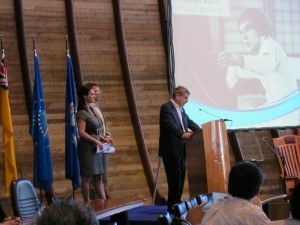
- Thomas Bach, Noumea.
George Hirthler and I had a great time at the piano bar one evening.
- George Hirthler - the man who got me into this crazy world.
After we took off from Noumea headed back to Seoul, Chairman Cho casually asked us if we would like "fly over" and see Australia's Great Barrier Reef as if it were a normal question to ask. No kidding. So, we did. The flight crew radioed Australian Air Traffic Control and off we went. When we got there, we were able to descend to around 5,000 feet and fly circles over one of the most beautiful sights in the world. It was incredible. I am adding some of those photos here. The pictures may not add much to the story of the bid, but it was an amazing moment most of us will most likely never experience again.


- Chairman Cho scrambling for a good shot. He is an expert photographer by the way
- Turning north and headed back to Seoul
SportAccord, London
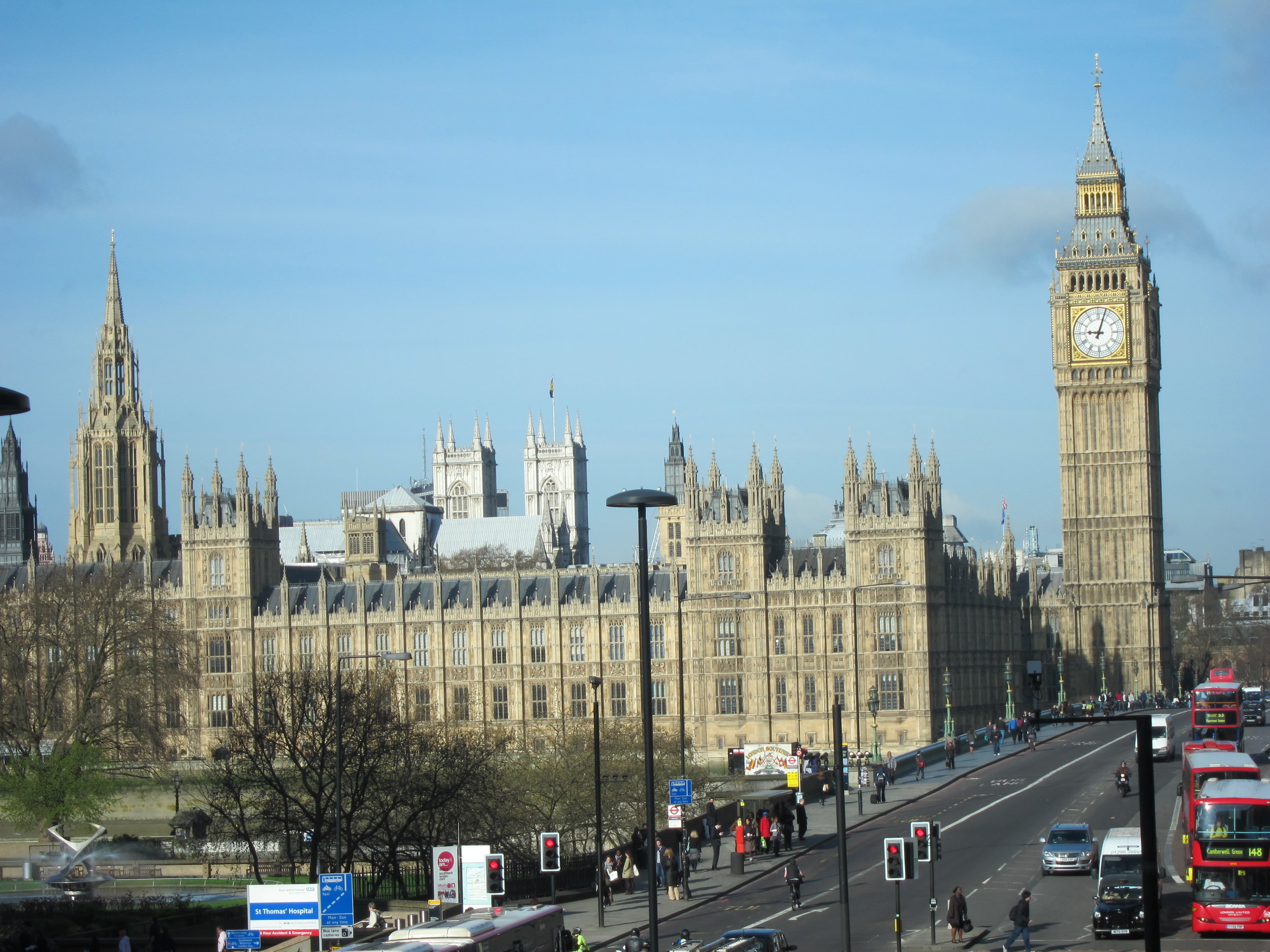 Our next target was the SportAccord presentation in London on 7 April. SportAccord is the first official ”next step up” from the preceding presentations. This convention is actually the bid cities’ first official time onstage in front of a truly international media set, as well as sports and sports business professionals from around the world. It is, and should be, a warm up to the final two presentations – the IOC Technical Presentation and the IOC Final Presentation - albeit in a shorter format. SportAccord’s twenty-minute presentation seemed an incredible amount of time compared to the team’s previous presentations, which were limited to ten or fifteen minutes in length.
We began work on the SportAccord presentation almost as soon as we returned home from the EC visit. The first thing we did was review the scripts and “performances” from the previous presentations. Looking at the scripts, I noted how we had gradually refined and clarified our central message of New Horizons within the presentations and communications channels. We noted the continual progression of films with our partners at New Moon and Cheil. And, we decided to introduce one new speaker to our SportAccord presentation, Mr. Byoung-gug Choung, Korea’s Minister for Culture and Sports.
Given Katarina Witt’s extraordinary popularity in the previous Munich 2018 presentations, we were getting a significant amount of pressure to bring Olympic Champion Yuna Kim onto the PyeongChang 2018 presentation team. My personal opinion was that Munich 2018 was relying too much on Katarina, and that over time this would fatigue the Munich 2018 message. Many friends in the Olympic media privately concurred. I had the same concerns about Theresa as we were leaning very heavily on her up to SportAccord. But the more the media saw Theresa, the more they wanted to see her speak. She was our secret weapon, but suddenly she was not so secret any more.
- Yuna Kim
Yuna's eventual participation in the bids presentations, an appearance in our technical film at SportAccord and then speaking roles at the IOC Technical Presentation and the Final Presentation, was driven both by logistics and strategy.
First, up to SportAccord, her training schedule simply would not allow time to practice for multiple presentations.
Second, and more importantly, we wanted to “hold” her until the Lausanne presentation to the IOC Members. We had not seen Yuna speak publicly yet, and the IOC Technical Presentation would give us the opportunity to allow her to speak in front of the IOC members alone, without hundreds of other people (and pressures) in the room.
And third, we needed more athletes, female athletes and younger athletes (no offense, Dae-Sung and Kwang-bae) in the speaker set. And, it helped that she was the reigning Olympic Champion and a superstar in her own right after her stunning Vancouver 2010 Gold Medal performance. What I was unprepared for was just how powerful a combination that she and Theresa would make onstage together – but more on that later.
Munich was already experimenting with its positioning against “New Horizons” with language such as “new territories are fine, but the Olympic Movement must also replenish its roots from time to time…”, or words to that effect. I interpreted this to mean that our New Horizons message was hitting home – hard. Anytime a bid city changes its key messages to react to a competitor’s key messages is a good sign the competitor is making progress.
We delivered the first set of drafts on 3 March, and thirty (30) revisions later we were ready on 7 April. For SportAccord, we opened with a new film “The Best of Both Worlds (the Best of Korea concept) at 1:40 in length, Chairman Cho (2:45), Minister Choung (1:30), Theresa Rah (6:30), Kwang-Bae Kang (1:45), Venue plan film with Yuna Kim at 3:45), Dae Sung Moon at 1:00 and a new, New Moon film to close.
The timing on paper was about 21:00, one minute over the 20:00 maximum. It is my practice to attempt to follow the IOC’s stated timing guidelines to the letter. You can tell when a bid city accidentally exceeds its time limit by a minute, or even two – often the audience reactions and applause slow down a well-timed presentation. But you can also tell when a bid city is deliberately taking advantage of the rules. My view is that it is difficult enough to win while reacting to things beyond your control, so why risk a warning letter from the IOC over something that you can control, such as presentation time limits? Bottom line: follow the rules.
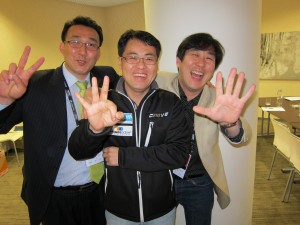
- Kwang-Bae Kang, Byungnam Lee & Jace Oh - London rehearsals
Our rehearsals both in Seoul and London were markedly different from the year prior. The EC visit really gave our team a boost and new confidence. It is an understatement to say that the PyeongChang bid team was under extreme pressure from all levels of Korean society and government to win 2018, its third attempt at the Winter Games. I honestly believed that bidding for the third straight time would be appreciated by the membership, but I also believed that if we were not good enough we would not win – regardless of the number of attempts. But the team never panicked, never broke ranks and never let the stress show. I was truly humbled at their work ethic and commitment. They did not get rattled, ever; they were tough, focused people.
During the SportAccord rehearsals I noticed the birth of something new. The presentation team was having a good time. There was a lightness and air of humble confidence about them for the first time. They made fun of each other (in a Korean kind of way). They let me (gently) make fun of them (I liked calling Chairman Cho “cowboy” in order to get him to laugh a little and relax). There was much laughter. I think they really began to respect each other and understand the most important thing in the race: that they could only win by being a team. This is what I had been waiting for; sometimes it happens, sometimes it doesn’t, but when it does happen it is magical to watch.
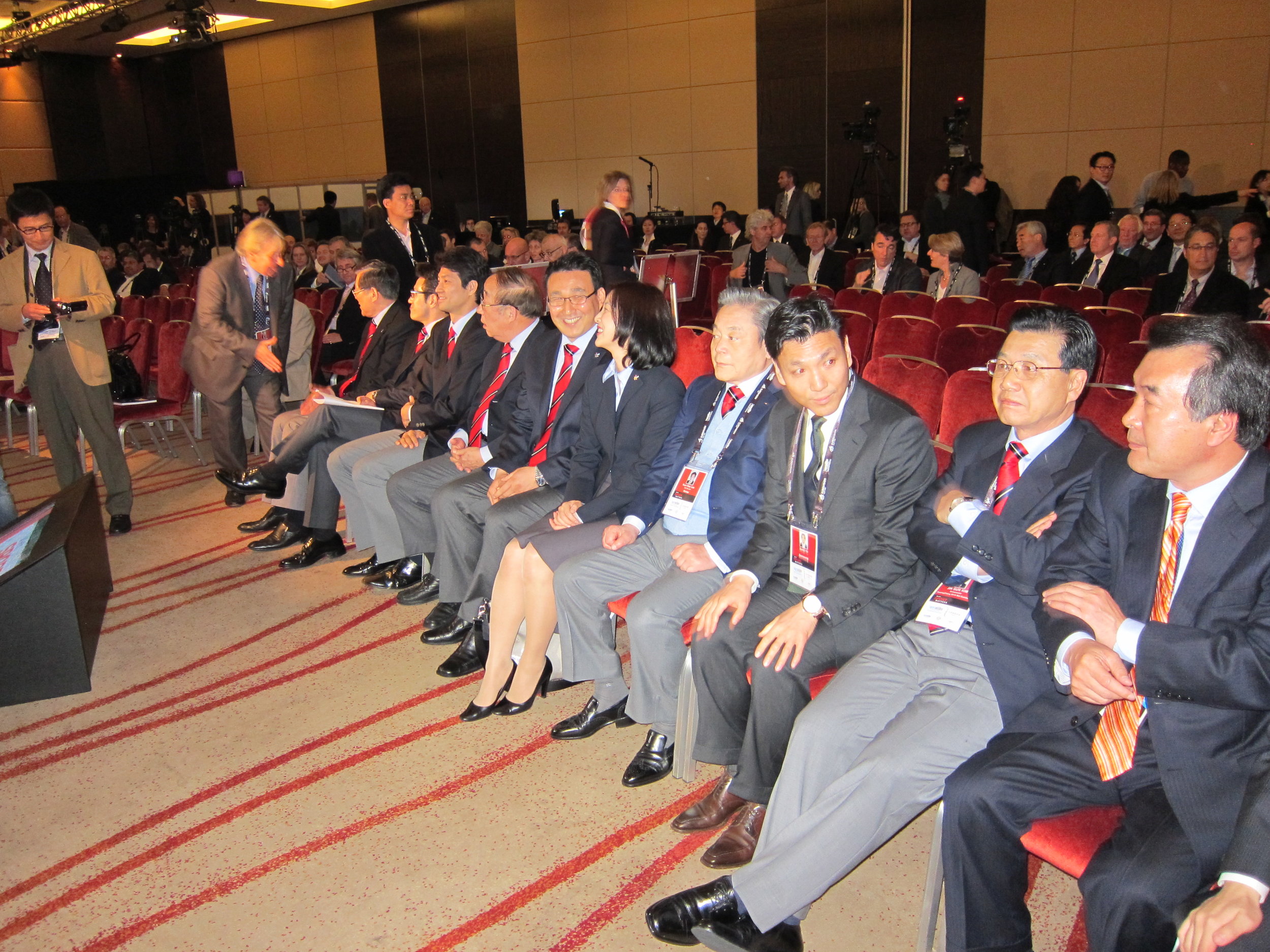 The SportAccord presentation room in London was packed, and with more media than we’d ever seen. The ceiling was lower than a normal auditorium and I felt that the audience was very close to the stage, almost in the laps of the presentation teams. I thought this was good for us because up close, the audience could see our team’s newfound camaraderie and confidence, and understand that this was a NEW PyeongChang bid. We had a new energy at SportAccord and I was glad the audience could see it up front. We were not afraid of Munich anymore.
- Theresa editing Chairman Cho's speech
Leading up to SportAccord, Theresa and I (mostly Theresa) spent intensive time and effort working with Chairman Cho on his English and presentation delivery at his office in Seoul. He was becoming much more comfortable with the teleprompter, and he was learning to add emotion and passion to some of the key phrases.
My number one objective with Chairman Cho was to try to humanize him onstage; it wasn’t that he seemed inhuman; he just needed to relax and be himself. By that, I mean make him less “Chairman-esque” and more like the personable, kind person that he actually was.
His culture and his role as head of a multi-national conglomerate and other associated entities formed his public speaking persona, and his interaction with team members. Business presentations in Korean culture of a certain age, and in Asian culture in general, tend to be straight forward, humorless and, well…often bland. I recall asking the bid team to smile more onstage, and was told that Koreans considered people who smiled a lot to be idiots. That of course, may have explained my initial communications challenges with the team the year prior…
In the end, I realized that there was only so much we could accomplish with Chairman Cho’s presentation skills in such a short period, so we had to focus on what was most relevant and possible. With Chairman Cho’s encouragement and consent, we agreed that I would give Theresa many of the lines and phrases I would traditionally give to a bid leader in a presentation. In retrospect, they made a great team because we had to be creative in their respective roles and I think it made them more interesting onstage.
By SportAccord, Chairman Cho was effective in delivering his number one message:
Our vision, called “New Horizons”, is simple: we want to help promote the Olympic Movement, and to grow winter sport to new regions of the world…
To leave a legacy of new potential like never before.
- We want to give 650 million young people in new markets the opportunity and the access to enjoy winter sport
- We want to plant the seeds to grow new roots for winter sports; and
- We want to diversify the financial support for winter IFs and sport through new investment from new regions.
Direct. Clear. Simple.
And most of all, very difficult to attack by our competitors.
One of the reasons we were able to distill the concept of New Horizons down to a few simple messages was because we had to do so for the speakers (other than Theresa) and for the Korean domestic audience. It was a good lesson for me.
Both Annecy and Munich gave their usual excellent presentations, but for the first time I felt a bit of the spark had gone out of Munich’s routine. I am not sure why, maybe it was the room, but they appeared to be constrained. Having seen them present several times, I thought they were almost struggling to get their points across. Maybe I was seeing what I wanted to see but I also sensed, rightly or wrongly, that they were beginning to take us seriously; that we were emerging as a real threat. They could, perhaps for the first time, hear PyeongChang’s footsteps behind them.
When our team finished, there was a rush of media (a new experience for us) for interviews and comments that rivaled that of Munich. The team was proud, slightly surprised and very relieved. I recall standing aside, out of (always, as advisors should be) the photographers’ shot lines, watching them congratulate each other.
They were emotional and they were smiling, and no one looked the least bit like an idiot.
That is when I knew in my heart that we could actually win this race.
NEXT: The last three presentations of the 2018 campaign
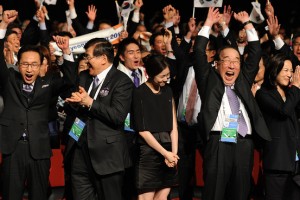
- Photo - IOC
PyeongChang’s 2018 Path to Victory
Part IV, Final Chapter: May - July 2011
Terrence Burns ©2014
With SportAccord behind us, we could now focus on our final three presentations, ANOCA in Togo, the IOC Technical Presentation in Lausanne (hereafter referred to as “Lausanne”), and the Final Presentation in Durban (hereafter referred to as “Durban”). As with every presentation we made, I told the team it was irrelevant how well we did or did not do in the last presentation, what mattered was the next presentation.
- The Olympic Museum, Lausanne Switzerland
The Lausanne Presentation was added during the 2016 Olympic Games campaign in order to provide the IOC Members with a forty-five minute presentation on the technical aspects of the bids. Given IOC Members were still not allowed to visit the bid cities, many felt this new presentation would give them an opportunity to delve more deeply into the technical aspects of each bid given the IOC Final Presentations tend to be more emotional than technical.
Much mystery and myth surround the IOC Technical Presentations because each team bid can only have six presenters (plus their IOC Members if they have any), and the presentation is a closed-door session to the IOC Members only. Although the IOC does not publish absolute guidelines, it is generally felt, or imagined, that they would like each presentation to be about seventy percent technical and about thirty percent emotional.
The prevailing Olympic legend is that in the 2016 race, Rio was behind at this late stage of the campaign. Realizing this, Rio decided to do three bold things for Lausanne: they attacked the economic question by bringing in the president of Brazil's Central Bank, Henrique Meirelles, to assure the IOC members of the country’s solvency and long-term economic outlook. They focused on the more emotive and festive aspects of their bid, instead of the technical ones. And, that is when they also introduced "The Map." Perhaps that strategy helps to explain the current, ongoing drama with the technical preparations for Rio 2016.
Each successive bid since that time has attempted, in one way or another, to emulate some of the Rio strategy for the Lausanne presentation; e.g., more emotion. We certainly did.
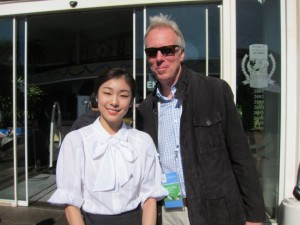
- Yuna Kim & Terrence Burns, Durban, South Africa
Over the course of the previous presentations, Theresa Rah established herself amongst the Olympic Family as the “must see” portion of each PyeongChang performance. Now it was time to launch our second secret weapon, Yuna Kim.
Prior to Lausanne, we received intense inquiries from the media and from friends around the Movement as to when we would “unveil” Yuna. Given what we believed at the time (and what we were hearing from our Olympic Family friends), Rio really did alter the 2016 race with their Lausanne presentation. Rio not only made up ground on its competitors, but also emerged as the perceived front-runner in many people’s minds.
Based on this, it made sense to introduce Yuna to the IOC during the Lausanne presentation. We did not want to “save” her for Durban for two reasons: 1) we felt we were getting closer to Munich, so a strong Lausanne presentation with her presence might help us be perceived as “equals”, and 2) we had another “surprise” for Durban (more on that later).
Preparations for the Lausanne presentations took place again first in Seoul and then in Lausanne. We made the decision early to place more emotional emphasis than expected in Lausanne. Part of this was of course ensuring we had memorable films to support the overall message. I envy filmmakers, I really do because I lack any talent whatsoever to be one and I think they do interesting work. But I am also glad that I am not a filmmaker in bids. Films, or any design or art, are extremely subjective – especially across cultures.
- Barnaby Logan & Jace Oh - Montreux, Switzerland
For Lausanne, we had scheduled two “emotive” films and one technical film. As I said, emotive films are often a challenge across cultures and this presentation proved no exception.
The bid committee wanted changes to the two New Moon films.
Barnaby Logan, Jace Oh and I spent many hours in our Montreux hotel (where we were holding the Lausanne rehearsals) refining the films to the bid committee’s satisfaction. It happens with virtually every bid.
As I said, I do not envy filmmakers, but Caroline Roland and Barnaby Logan of New Moon came through with great films for Lausanne.
- From right, Theresa Rah, Yuna Kim, Hyejin Choi ,Seihwa Kim and David Woodward
The evening before our presentation we all had a traditional Swiss dinner of meat and cheese fondue at Le Chalet Swiss.
This authentic Swiss chalet is located in the Sauvabelin woods, overlooking the city of Lausanne and Lake Geneva.
- More of the PyeongChang team at the Fondue Dinner
In addition to Yuna, we had two new “speakers” for the Lausanne presentation. I use quotation marks for the word “speakers” as one was live and one appeared via video.
Below left, the president of Korea, Mr. Myung Bak Lee, appeared on video, and below right, Mr. Sung-Hwan Kim, Minister of Foreign Affairs and Trade, Republic of Korea had an onstage speaking role.


These two gentlemen focused on Korea’s commitment to sport and affirmed Korea’s commitments to the guarantees that are required by the IOC. Minister Kim’s English was impeccable and he was an excellent speaker.
Presidents of countries have gravitas that always manifests better live than on video. President Lee's video was good in that he followed the script we created (that is not always the case with some heads of state), but we had no control over the set up or filming. In the film, I thought President Lee was difficult to understand, and it was shot at a curious angle. But I also knew we would have him “live” in Durban. The point for Lausanne was to illustrate complete government commitment to the bid. President Lee and Minister Kim did that in spades.
- Yuna Kim, Terrence Burns rehearsing
At first I struggled with exactly how and where to use Yuna in the presentation. What message would she be most effective in delivering? What area of the bid narrative best fit her personality and experience?
The most obvious section of the presentation to use an athlete pertains to the venue plan or the Village. So, we made the decision to let Yuna and Dae-Sung Moon (Olympian and IOC Member) handle these two areas.
Initially this seemed like a “waste”, using a vivacious personality like Yuna to discuss the technical plan. But we were able to use her unique personality and fame in a humble way. She began by telling the IOC Members that she was more nervous speaking English in front of them than she had been in front of billions of television viewers watching her perform live in Vancouver – and she was nervous, but it came across as charming and sweet.
She also told them that her purpose there that day was much more important than a Gold Medal. She told them about the often-lonely nature of her sport, and she told them that her success as an athlete was directly attributed to Korea’s “Drive the Dream” program; a program that supports young winter sports athletes in Korea.
 Her performance was touching and very personal. She managed to inject emotion and honest personal feelings into the technical portion of our presentation. And, she looked great onstage with Dae-Sung and Theresa.
Lausanne also held another surprise. For the first time, PyeongChang used the French language in a portion of our presentation. By this point in the campaign, the messaging from Munich shifted to something like “this is not a race about geography” in an attempt to counter the New Horizons platform for a Winter Games in Asia.
Theresa’s opening remarks were calculated to counter attack that notion head on by using the same precise words, and she did so in flawless, emotional French. This is the gist (the original English text) of how she began her presentation:
Geography refers to a place, to a space that we can feel, touch and see.
But the Olympic spirit is not attached to one geographical location: it is universal.
The Olympic Spirit lives in the dreams, expectations and the hearts of all people, young or old, wherever they are.
That is why this is not a competition about geography.
This is a competition about dreams.
It was a beautiful sentiment delivered beyond description. It used Munich’s own argument – “this is not a race about geography” – to great effect for PyeongChang’s cause. And it illustrated that PyeongChang was capable of delivering a sophisticated, international, and cosmopolitan image to the world.
Theresa often protested (politely) that her French was not perfect, and she was self-conscious about it – but who would not be, speaking in not one but two non-native languages in front of the IOC. But no one in the room expected perfection. What they did expect was determination, heart, passion and a desire to host the 2018 Winter Games. I believe they got all of that, and even more.
- Yuna Kim, Lausanne presentation, photo - www.sportsfeatures.com
As the team left the presentation room the media surrounded them. The presenters were beaming. They went into the “Lion’s Den” and came out not only alive, but certain in their hearts that they did a superb job.
I have worked with a lot of bids but I have never seen a team of people work as hard as did the Koreans – not just the presenters, but everyone on the PyeongChang bid committee.
They were relentless in their preparations and it finally paid off.
 It was a brilliant day full of Swiss sunshine and Swiss blue sky; hard to describe if you have not seen it. It looked like an advertising poster.
The PyeongChang team gathered on the steps of the Olympic Museum to savor the moment.
Everyone was smiling and taking pictures of the Museum, the lake, the sky and each other.
 The non-presentation team members of the PyeongChang bid committee were there too, interacting with, well…with everyone. It was, as they say, a “moment”.
The post-presentation meeting held in a tiny bar of the bid committee’s Lausanne hotel was crisp and upbeat, as everyone was leaving. The team was still buoyant, perhaps buoyed by many large glasses of Swiss beer. Everyone realized that we made tremendous progress for the bid in Lausanne. We had time for one large breath of relief, but we also knew that I was delivering a new showflow and round of speeches to the team within seven days to start rehearsing for Durban.
I got on a train for Zürich to catch a flight, and immediately received a call from an IOC Member who not only stated that he thought PyeongChang had the best presentation, but that it was surprisingly good.
His call and other immediate, similar feedback made me realize that we had finally broken through the “star power” of the excellent Munich 2018 bid team. Munich’s presentation was still extraordinary both in style and in substance, but I now felt we at least had a fighting chance. But we still had a very long way to go.
The Final Lap
But before we got to Durban, we had one more stop to make in Africa. Late in 2010, the bid committees all elected to move the presentation to the African National Olympic Committees (ANOCA) on 29 June of 2011; just one week prior to our Final Presentation in Durban. Bad timing. Had we known how exhausted we would all be by June of 2011, I believe that we would have voted to keep the ANOCA presentation in 2010.
- Elvis 1
We combined our ANOCA and Durban presentations rehearsals in Seoul because the presentations were only 8 days apart.
We would fly (again on Elvis 1) from Seoul, then a fuel stop in Austria, then over the Sahara Desert to Lomé, Togo; all of this for a fifteen-minute presentation.
The ANOCA presentation was to a smaller audience so we decided to give Yuna another speaking role along with YH Cho, Theresa and YS Park. The content was essentially the same as the other continental NOC presentations, but with extra key messages aimed at the African NOCs.
- The Sahara Desert
The flight to Lomé was spectacular. We flew directly over the Saharan Desert. It was an incredibly clear day and we could easily see the details of the massive, red desert below. It looked like the pictures from the Mars Rover. Again, those of us in the plane were dashing from window to window, from side to side to take pictures of the stunning landscape below.
- Yuna somewhere over the Sahara Desert
At over 9,400,000 square kilometers (3,600,000 square miles), the Sahara (Arabic: الصحراء الكبرى, aṣ-Ṣaḥrāʾ al-Kubrā , 'the Great Desert') is the world's hottest dessert. It is also the world’s third largest after Antarctica and the Arctic. The Sahara covers most of North Africa, making it almost as large as China or the United States.
And here is something I did not know until I researched it for this post (thank you Wikipedia). “The climate of the Sahara has undergone enormous variations between wet and dry over the last few hundred thousand years. This is due to a 41,000-year cycle in which the tilt of the earth changes between 22° and 24.5°. At present (2,000 CE), we are in a dry period, but it is expected that the Sahara will become green again in 15,000 years (17,000 CE)."
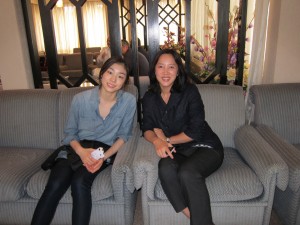
- Yuna Kim, Theresa Rah - Lome, Togo
Upon arrival in Lomé we were led to a VIP lounge while our passports and visas were examined. The lounge, though basic, was comfortable, had air-conditioning and they offered us cold drinks.
As we made our way to the hotel, we looked intensely at the city around us. It was a whirling menagerie of color and sound.
And when we arrived at the hotel, dozens of people were there, cheering and singing for us and the other bid teams. We all felt like rock stars.


Again, the intimacy of this presentation brought the three bid teams closer together. Maybe it was the realization that this was our last time together before Durban, but we all seemed a bit melancholy. Below left, Gunilla Lindberg, YS Park, Thomas Bach and Young-Sook Lee. Below right, Bernhard Schwank, Theresa Rah and YH Cho.
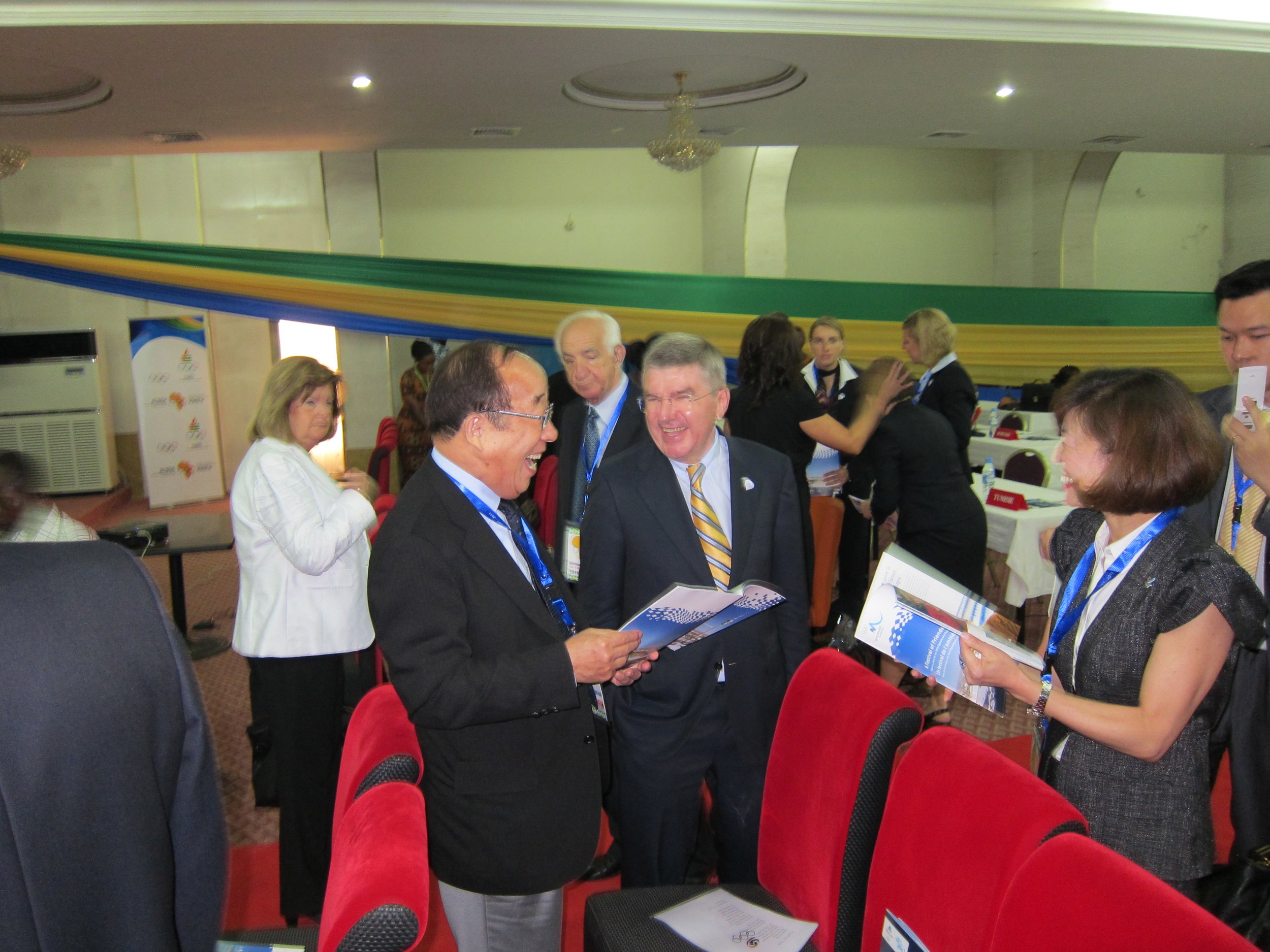
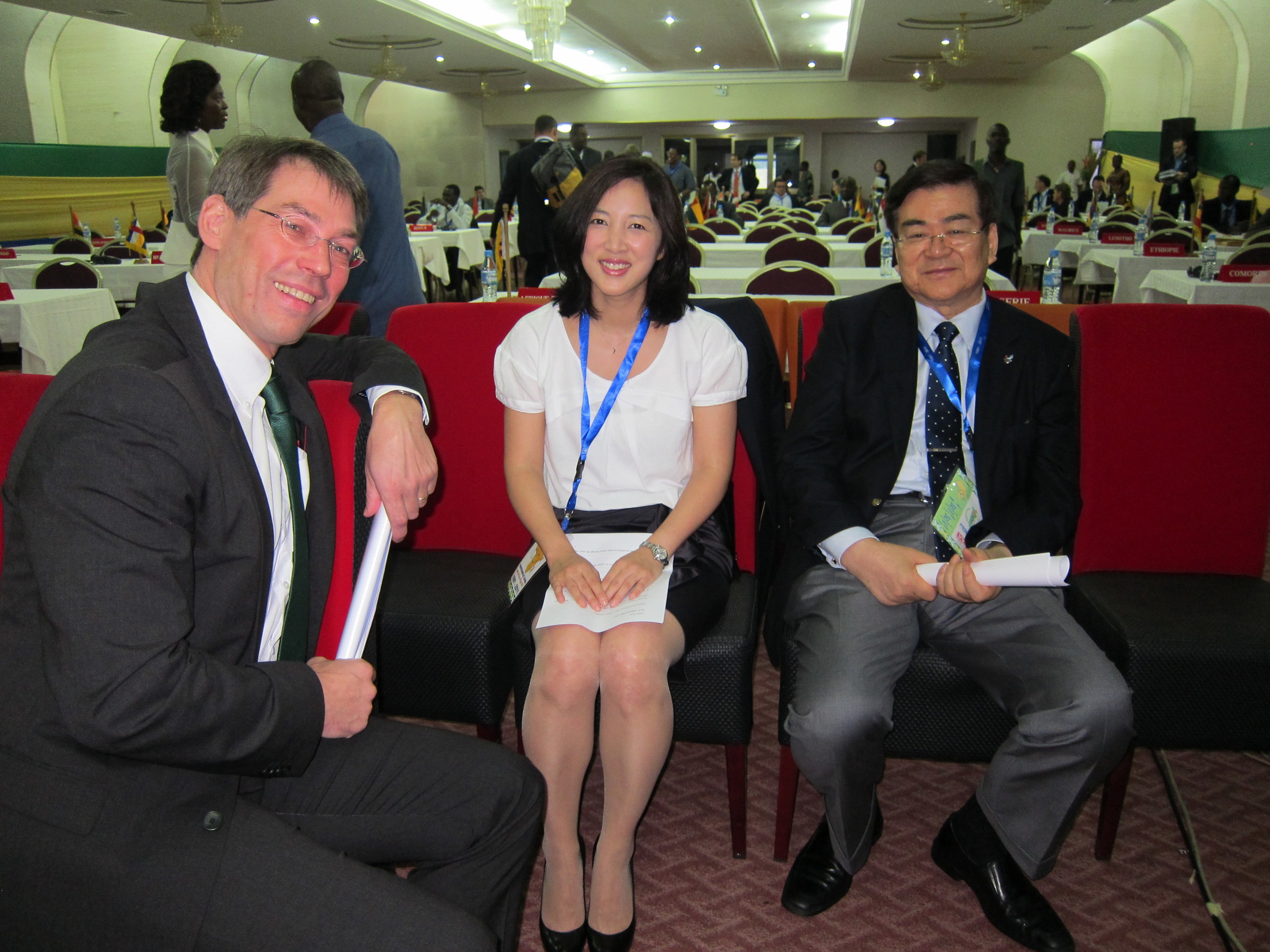
YS Park was always the life of the party, even in Togo. Below, Here he is with Yuna and Theresa, both of whom I am sure have this photo proudly displayed on their walls.

The hotel had new mattresses for every room – mine still wrapped in plastic. The hotel wireless network worked better outside on the balcony than in the cement walled rooms, so we often stood out on our balconies to do our email and get online. John Moon’s room was next to mine.


After the presentation, we had an afternoon of free time. Chairman Cho took the team sightseeing and to a great lunch.
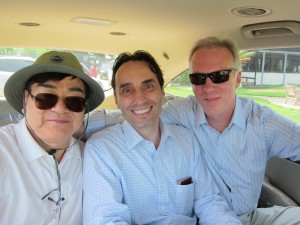
- YH Cho, Laszlo Vajda, Terrence Burns, Lome, Togo
Lome lunch with the team.


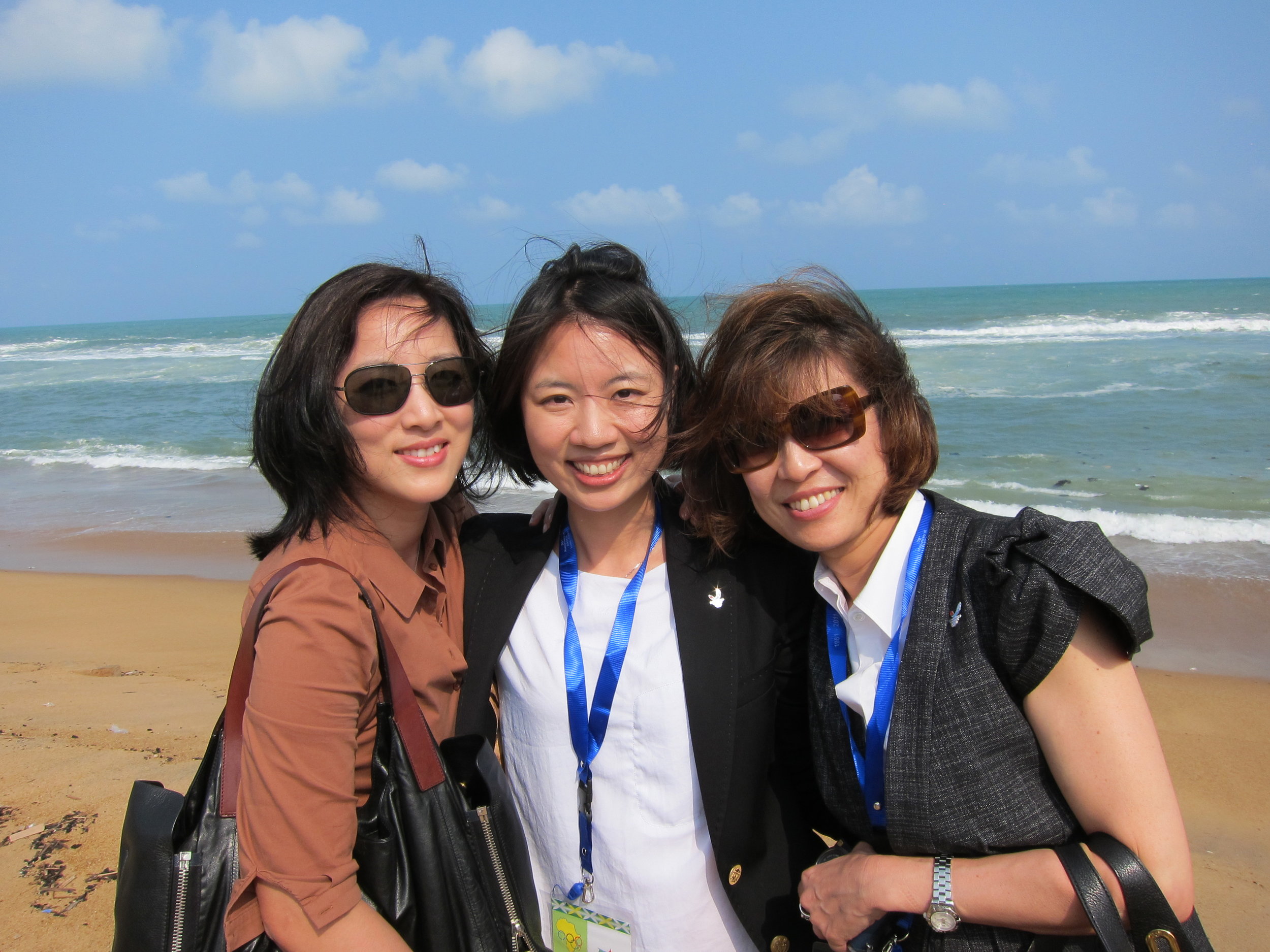

Above Left: Theresa Rah, Seungwon Chung and Young-Sook Lee
Above Right: Laszlo Vajda, Yong-Soon Kim, Jiyoung Jung
The journey to Durban from Lomé was a bit complicated. Chairman Cho had a few things to do in France first, so we flew overnight, arriving very early in the morning in Nice, France. After a quick morning nap, we had a nice day walking around Nice. Later that evening, most of us took a flight to Doha for an overnight connection, and then onto Durban the next day.
Below is our group photo on our last Elvis 1 trip, arrival in Nice.

Below left, Yuna and her team upon arrival in Nice early in the morning; below right, the gang later that afternoon for lunch.
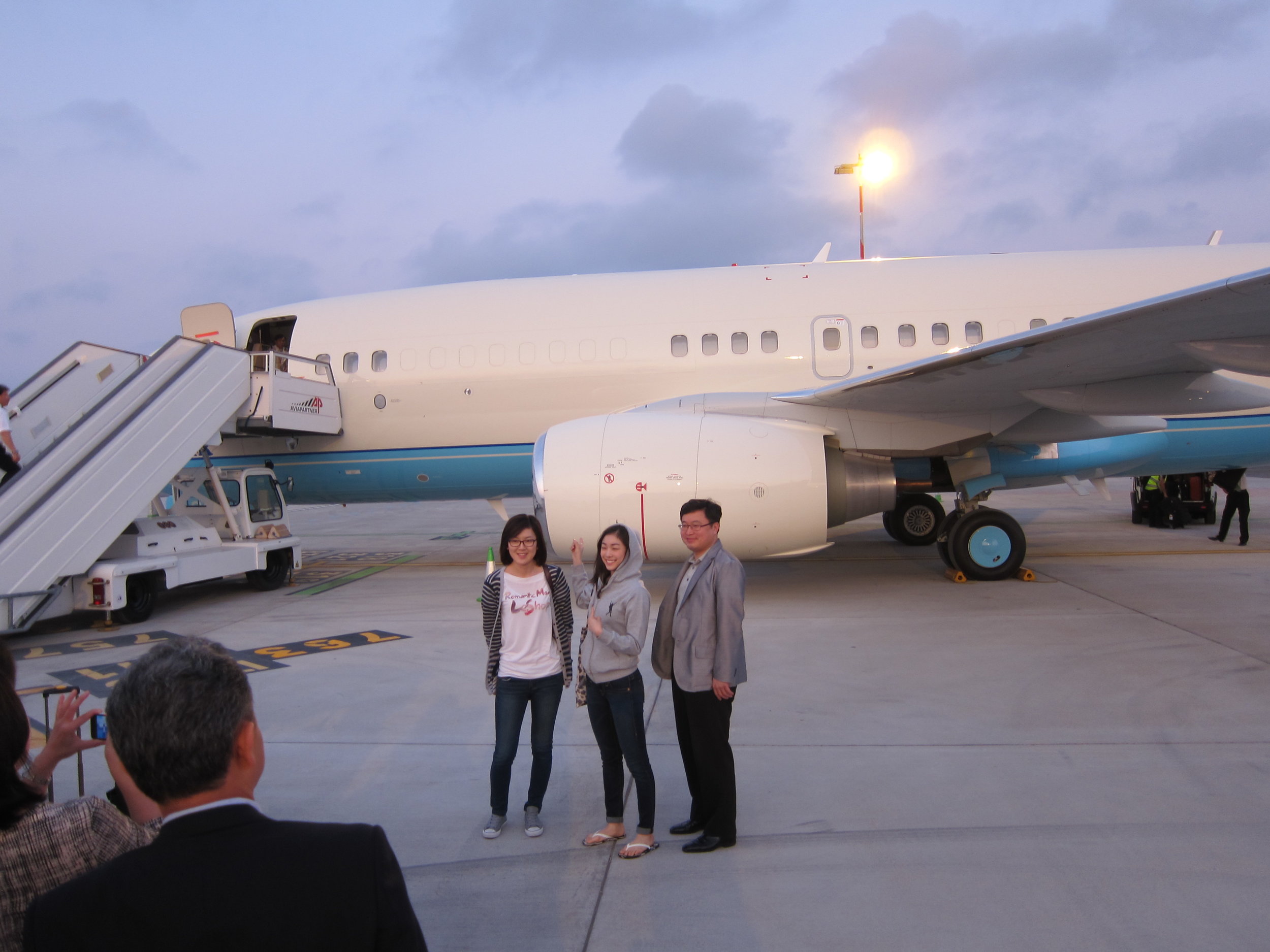
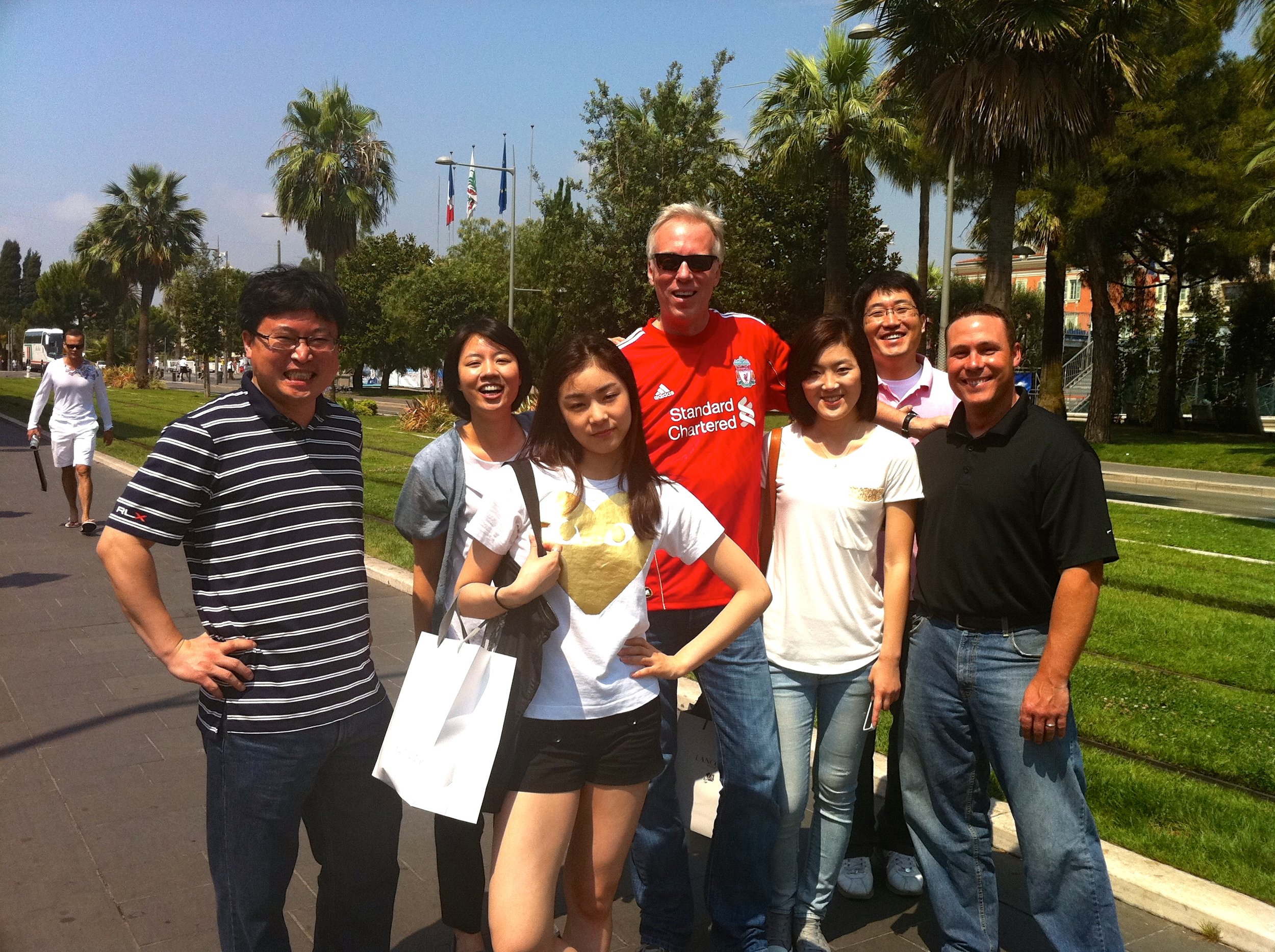
Durban Town, Finish Line
- Durban, South Africa July 2011
Durban is a surfer’s town on the east coast of South Africa. It is also the city that would break the hearts of two 2018 Candidate Cities and send one Candidate City home with the Olympic prize.
In April, Mr. Sangil Woo of the PyeongChang bid committee sent me a video about a young Korean-American skier, Toby Dawson. The documentary, “Lost and Found” chronicled Toby’s remarkable story and life. Toby was born in Korea and was “lost” at a supermarket when he was just three years old. A couple from Vail, Colorado in the United States adopted him. Toby learned how to ski and eventually won a Bronze Medal in Moguls at the 2006 Turin Winter Games.
A light went off in my head. Toby was the ultimate “proof point” for New Horizons. His story and his life were precisely why Asia needed the 2018 Winter Games. Toby could put a face and a real story behind our New Horizons strategy. It was perfect. There was just one catch. Many in the bid committee had misgivings about Toby presenting - here is why.
- Toby Dawson, Torino 2006 - photo Durango Herald
First, Toby self identified as an “American”. He may have been born in Korea, was ethnically Korean and looked Korean, but in many Korean’s eyes he was an American – he was even an American Olympic medalist. Why do we need an American in our presentation?, I was asked.
Second, and perhaps more importantly, around the time of Toby’s disappearance and adoption, there was an accusation that some Korean families were selling their infant and toddler children for money to adoption agencies in other countries, such as the United States. Whether this was true or not, it understandably upset enough of my Korean colleagues that they did not want any hint of this terrible accusation linked to the bid.
I understood all of this – but I knew Toby and his story would be crucial to our narrative in Durban. I needed an ally.
- An initial draft of Toby Dawson's Durban speech, in progress
The first thing I knew I had to do was to get Theresa onboard with the idea because she too had misgivings about Toby’s participation. I remember the email exchange.
She was nervous about upsetting me, so as usual she was very diplomatic and precise. She simply was not sure how his story would add credence to the bid.
Toby was also an “unknown” to the speaking team and its chemistry, and yes, his kidnapping and adoption story was also a cause of concern.
I said, "Theresa, before you make up your mind, will you please read the first draft of his speech?"
She said, “Yes, I will read it.”
I sent her the speech.
I waited for the reply.
She replied and the email read, “I had tears in my eyes reading it…yes, yes, yes, I am onboard with Toby.”
The Final Presentation to the IOC in Durban, on 6 July 2011 was either going to be the end of a ten-year Olympic odyssey for the PyeongChang bid and the people of Korea, or the beginning of a new chapter in the country’s Olympic dream. This was high stakes at its most visible and tense. After three bids, millions of dollars, investments in new winter sports venues and unbelievable persistence, the people of the PyeongChang 2018 bid committee were either going to have a very long plane ride home with a lot of explaining to do once they arrived, or, go home as heroes. It was that simple. Our job was to help them achieve the latter. That part, is never that simple.
Thinking back to those early days of internal conflict, warring factions and resistance to outside influence, I found it hard to believe how far the bid had come. Acapulco seemed like years ago, even though it was only a brief eight months past. But during those eight months, mountains were moved.
The bid had a new brand and a new message that was clear and powerful. The entire bid committee, the people behind the scenes and not on stage, was executing as a finely tuned unit on all aspects. And as predicted in Acapulco, the bid presentation team had improved each and every time, to the point of being considered an “equal” of Munich and Annecy.
Chairman Cho found his voice and role in the bid as its quiet but effective leader. Theresa Rah emerged as our muse, our spokesperson and our star. As we began the long march to Durban, I was very pleased at our progress and positioning in the race as of May of 2011.
- Theresa Rah
As I began working with the showflow I came up with an idea that I knew I would have to “sell” hard to the bid committee – because it was unconventional. Heretofore, Theresa had proven to be our most persuasive and effective speaker. In bid presentations you must begin and end with your strongest two speakers. For PyeongChang’s final presentation, I suggested (strongly) that we do something unique: although Theresa was not the bid leader, I argued that after the opening “mood setting” film, we let Theresa both open, and then close the presentation.
The opening of these presentations always starts with a long list of salutations, expressions of gratitude as well as team introductions. It takes away valuable time from the forty-five minute time limit. I knew that Theresa could quickly move through the necessary Olympic protocol and still deliver our opening key messages. There was of course some strenuous debate, but Chairman Cho listened to my argument and agreed immediately; again, no ego, what a wonderful thing.
Here was the showflow of the PyeongChang 2018 Final Presentation in Durban.
Film 1 – Korea Loves Winter Sport 2:30
Theresa Rah 4:00
YH Cho 3:00
President Lee 3:30
Governor Kim 3:00
Yuna Kim 3:30
Technical Film 4:00
Dae-Sung Moon 3:00
YS Park and film 2 5:00
Toby Dawson 4:00
Theresa Rah 4:45
Film 3 3:00
- Theresa Rah, President Lee & Terrence Burns; rehearsing in Durban
For Durban we also had Korean President Lee as a presenter. He and I did not have an opportunity to rehearse in Seoul, but he had received his speech prior to leaving for Durban. He arrived in Durban hoarse from rehearsing his speech over and over on the plane. That did not stop him however, and we immediately began intense rehearsals onsite. Dedicated people.
In Durban he was affable and easy going. I have worked with heads of state that raised the tension (or fear) in a room the second they walked in; not so with President Lee.
He was likable, approachable, coachable and willing to work as hard as everyone else. I told him if he moved to the US I would vote for him, but he could not run for the office of the US presidency, as he was not native born. He laughed.
- Governor Jin-Sun Kim, rehearsing in Durban
Durban also marked the first and only time that Governor Kim, leader of the two former bids, presented onstage with PyeongChang 2018. He and I worked a lot on his speech.
As a veteran of the two previous bids, he had a great deal of personal insight and a lot of emotion to share. I think he also sensed that this was it – this was the last attempt for PyeongChang.
He put a tremendous amount of effort into his rehearsals. His presence onstage in a speaking role also helped to nullify some of the rumors being spread about that our bid was politically dysfunctional. Everything one does or says communicates in a bid.
More PyeongChang rehearsal photos from Durban:


![Durban-1991[5]](http://static1.squarespace.com/static/5a0d00b1a803bb9d2ea4b4e4/5a38517e005559637eaf5c6e/5a385191005559637eaf6034/1513640337889/Durban-19915.jpg?format=original)
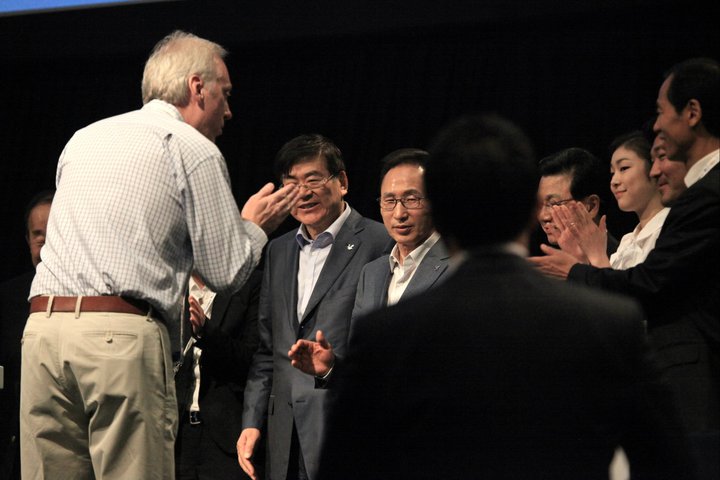
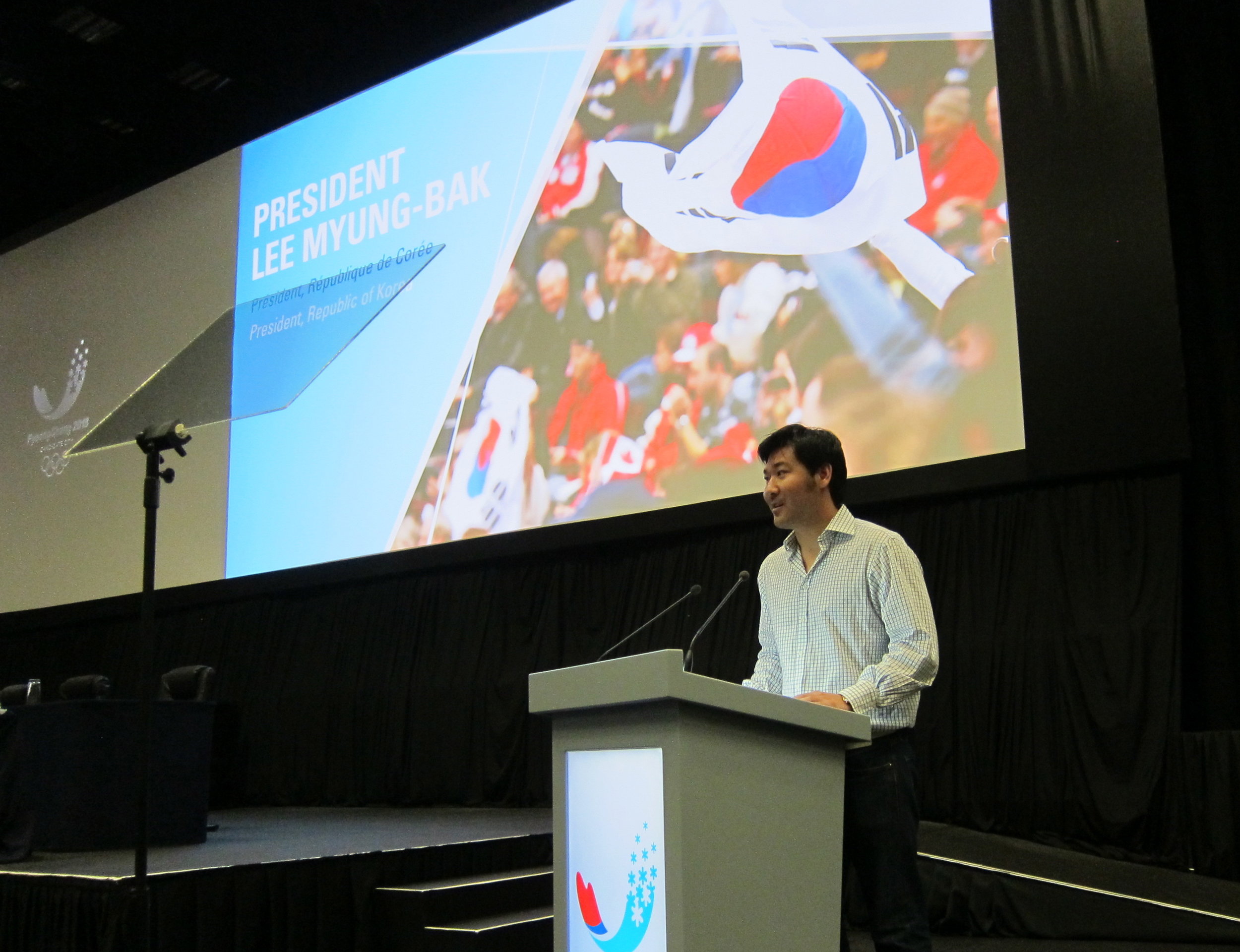


Above left, one of my favorite photographs from the campaign. Chairman Cho, using his smart phone to film Korean President Lee rehearsing
We had Yuna again but with a different message than she delivered in Lausanne. I coached her by telling her that IOC Members were used to seeing and hearing from great Olympic champions like herself. But having a Gold Medal was not enough to move hearts and minds. I told her she had to connect with the audience as “Yuna Kim, the young woman from Seoul”, not as “Queen Yuna, the Olympic Champion.” She listened, nodded her head once, and instinctively got it.
- Yuna Kim, Terrence Burns at the PyeongChang 2018 Technical Film shoot
- Watching and Waiting...
The morning of our presentation finally arrived. Our team was sequestered in a "Green Room" near the presentation hall.
We anxiously watched both Annecy and Munich present first; both were excellent. I felt that Thomas Bach gave his best speech of the campaign. Like all great athletes, he saved his best for the actual competition.
Some of our presenters were practicing their lines, some talking and some were somber.
Chairman Cho and Governor Kim seemed very relaxed - very Zen.
The morning of 6 July 2011, prior to the PyeongChang 2018 presentation. At left, one final run-through with Theresa, at right, Theresa and YH at breakfast.
When it became our turn, we were led into the hall and down a roped off corridor to assemble one last time as a team before we entered the presentation hall. The speaking team sat arrayed around President Kim as he gave them his last words of encouragement. I already had given my pep-talk in the Green Room.


- Theresa Rah, Durban Presentation - photo www.zimbio.com
Theresa once again led us off flawlessly, and after the introductions and protocol she quickly got the heart of her first speech (version 12, by the way).
...I have also learned something else quite interesting: words are very important in the Olympic Movement.
Words can inspire us to take action, and they can even make us believe in the seemingly impossible.
Ten years ago, many people thought hosting the Winter Games in Korea was impossible.
And after our previous bids, we could have been tempted to believe that as well.
But we didn’t.
After each disappointment, we got up; we dusted ourselves off, we listened to you and learned from our mistakes - and we tried again.
To get through these challenges, we focused on two important words – persistence and patience.
- PyeongChang 2018 Chairman YH Cho, Durban Presentation
Chairman Cho’s speech varied little from SportAccord, though we tried a little humor with him, which he pulled off very well. He congratulated both Annecy and Munich and wished them luck…”just not too much of it”. The audience did not expect him to be “cheeky”, and it worked. Chairman Cho also reiterated the unity of the bid, graciously (and surprising to some) thanking Governor Kim for his efforts over two previous bids and YS Park for his tireless efforts on behalf of the bid.
I will state here that Chairman Cho personally wanted to reach out to Governor Kim and YS Park in this last speech – it was not a theatrical ploy. Chairman Cho has a quiet and somewhat shy persona, but behind that quaint smile is a fiercely competitive personality. He understood very well the role he had been thrust into and he understood the tensions inherent in the various factions of the bid. But most importantly, he understood what it would take to win. So he acted accordingly. And finally, for the last time, Chairman Cho explained the concept of “New Horizons”, he said,
Our vision is clear and it is unique.
To deliver on this vision, we offer five compelling reasons for your support:
- We have the most compact, efficient Games plan, including our venues and transport infrastructure;
- We have total government commitment and support at every level;
- We have the passionate support of the Korean people
- We have kept our commitments to the Olympic Family for over ten years, and
- PyeongChang 2018 would be the first Winter Games in Korea and only the third Winter Games in Asia.
- President Lee, Durban Presentation - photo uk.eurosport.yahoo.com
President Lee came next. At first we suggested that he begin his speech in English, then switch to Korean to make it easier for him; as a head of state, that is usually acceptable. But he would have none of it, and insisted that he wanted to give his entire speech in English because that is what he had been practicing. So he did.
He reiterated his history in sport, serving FINA for many years. With great emotion he said that Korea competed in its first Winter Games in St. Moritz in 1948, noting that his nation had no central government and was so poor that it could only send three skaters to the Games. Then, just 40 years later, Seoul hosted the 1988 Winter Games. That was the point in his speech, with accompanying photos of those three 1948 Korean Olympians on the screen behind him, that touched more than a few hearts in the room.
- Governor Jin-Sun Kim, 3-time PyeongChang bid veteran
Governor Kim’s speech was a remarkably personal one.
Imagine standing there in front of the IOC for the third time. Imagine all the hard work, sacrifice and patience he personally endured over the previous ten years of continual bidding, and two broken hearts. Imagine the message he wanted to deliver that day in Durban.
The words below are essentially his, and as he said them. He choked up, just a little – but he took a deep breath – as did we all – and continued on:
Esteemed President Jacques Rogge, and distinguished IOC Members,
I believe it is my destiny to stand before you… for the third time.
And our people have waited… for over 10 years.
It was a moving and sincere moment. I believe every person in the room that day understood, at the deepest personal level, Governor Kim’s passion and desire for the 2018 Winter Games and what a long ten years it had really been for him, personally.
- Yuna Kim, photo - IB Times
Yuna began her presentation by a heartfelt acknowledgment of Katarina Witt as a great champion and great ambassador of their sport.
Up until that point, Yuna and Katarina had been in the same room only once during the campaign, in Lome.
She spoke from the heart as to how and why she chose figure skating as her sport – it was simply because there were very few winter sports options in Korea – thus the need for New Horizons.
Yuna also explained that “there are legacies more important than venues and facilities – there are human legacies – I am one of them.”
Her delivery was perfect and poised, and it was impressive to see so much charisma from such a tiny person fill such a large room.
- Dae-Sung Moon, Olympic Gold Medalist, IOC Member
Next came Dae-Sung Moon. He gave an excellent overview of the Games and venue plan. Dae-Sung noted that Seoul ’88 was the first time that the Olympic and Paralympic Games appeared together, which highlighted the issue of accessibility for all Koreans. Dae-Sung grew from a reluctant presenter in Acapulco to a powerful and dynamic speaker by Durban. His martial arts training was evident when he made an emphatic point in his speech with a powerful pump of his fist. I learned to stay out of the way of it during rehearsals. He also had an infectious smile and a gentle sense of civility that help calmed nerves in stressful situations.
- Yuna Kim, YS Park, Theresa Rah
YS Park came next. YS is truly one of the most original “characters” in the Olympic Movement. He has more energy than men half his age. He seemingly knows everyone in the Olympic Movement on a personal basis and more importantly, he understands how “it all works”. YS was originally quite difficult to script – meaning, it was difficult to get him to stay on script.
His mind was always far ahead of what was going on in the present tense. But by Durban, he too had buckled down and was adept at delivering his lines.
Because it would be unexpected to the audience, I felt that we needed a bit more humor in the presentation and that YS was the only person who could deliver – and get away with the two items I planned for his remarks. He began by acknowledging President Rogge and the IOC Members, and then he said:
I know that it has been a long day for you. Well, it’s been a long time for us, too!
Many in the audience laughed out loud and YS, with his impeccable timing, waited for it to die down.
For background, Prince Albert of Monaco had literally just married that month (July 2011). YS continued,
But if you would allow me please, I would first like to offer our sincere congratulations to Prince Albert on his wedding, and to say:
“Your Serene Highness, I am sorry that you are spending your honeymoon listening to PyeongChang’s bid for a third time.”
The room howled with laughter. YS tilted his head, appearing to look at the audience out of one eye and smiled slyly – and they laughed even more. Later, my IOC friends in Bid City relations told me that PyeongChang had broken a rule by directly addressing an IOC Member during the presentation. We did not receive the dreaded IOC warning letter.
- Toby Dawson, US Bronze Medalist Torino 2006, Durban Presentation
YS introduced Toby and the room grew very quiet; they wondered why his title slide said US Bronze Medalist.
We had kept Toby away from the media (mostly) in the days leading up to the presentation because we wanted him to be a surprise.
When Toby first arrived in Durban I went to his hotel room and asked him to read the speech for me. He did, and looked up at me and said, “dude, you’re in my head…” which I took to be a compliment. We worked on the speech until version six, which was what he delivered.
Toby, who had never given a presentation to the Olympic Family in his life, paused at the podium after being introduced by YS.
He took a breath, and he took it all in.
Then he blew the room away.
Good afternoon,
My name is Toby Dawson.
My name is also Kim Bong-Seok.
I am a free-style skier, and, I am an Olympian.
I am a Korean by birth, yet I am also an American.
He paused…
That last sentence contains an entire story about the true potential of PyeongChang 2018 and the legacy of New Horizons, and it is why I am honored to be here today.
I was born in Busan, South Korea in 1978. When I was three years old a couple in the United States adopted me – luckily for me, they lived in Vail, Colorado.
My parents introduced me to skiing at an early age as a means to adapt to a new family and a new culture.
It gave me the confidence to believe in myself as a kid, as a teenager and as a young man.
That is the true gift of sport – it provides hope.
Thinking back on it now, I realize that had I remained in Korea, I may not have had the chance to be an Olympian.
New Horizons has a simple goal: to give young Koreans and young athletes from other regions access to world-class winter sport facilities for the first time, in Korea, in their own region – the same chance that I was fortunate to receive in America.
That’s what this bid is about. It’s about... hope.
So, you may ask yourself: to whom are we listening, today?
To Toby Dawson, the American Olympian?
Or to Kim Bong-Seok, the lost little Korean boy with the ability to be an Olympian but with limited opportunities to do so…
Well, to be honest, you are listening to both.
I came here today to achieve two things:
- First, I want to honor my home country and its people – my people; I want to return, in some small measure the good fortune that I’ve received in my life from sport; and
- Second, I want to speak for future generations in Korea and beyond – I ask you to give them the same chance that I received when I moved to America in 1981. The chance to hope, the chance to participate, the chance to excel and the chance to succeed.
Your support today of PyeongChang 2018 would truly change the lives of millions of kids dreaming of being a winter Olympian, who, frankly have never had that opportunity.
I believe that there is no greater honor than representing one’s country at the Olympic Games. It is my dream that every child, everywhere in the world, can hope for that possibility.
- Jace Oh, Seihwa Kim, Terrence Burns, Durban Presentation
The one hundred PyeongChang guests in the room, most of whom had not seen any of the rehearsals, leapt to their feet cheering, many if not most in tears.
I admit I had a hard time not getting emotional myself, and I knew what he was going to say!
Toby and his story proved the doubters wrong. His was a story that not only touched people’s hearts, it once again proved the powerful, singular argument of New Horizons.
After the presentation and PyeongChang’s win, Toby reconnected with his homeland and his birth family. He went on to coach the Korean ski team. Good things happen to good people. Go, Toby, go.
- Theresa Rah, Communications Director PyeongChang 2018 Bid Committee
Finally we were nearing the end of not just the presentation, but of almost two long years together as a team; no, let me rephrase that, as a family. For our “close”, we brought our “ace” back onstage to bring us home and to victory: Theresa Rah. I honestly cannot find enough superlatives to say about Theresa Rah.
Clearly she was the anchor, the backbone of all PyeongChang presentations. She gave us credibility when we needed it and she delivered the message consistently and professionally, sometimes when all else fell short. She gave simple words I wrote incredible new meaning and passion. She was a great collaborator on her speeches and others’ too. She also spent hours with Chairman Cho, helping him with his presentation skills.
But Theresa was more than a tremendous presenter. She was also a tremendous person; kind to all, helpful to everyone and a solid, logical thinker in times (and there are many in an Olympic bid) of strife or crisis.
The Olympic Movement fell in love with her, and it will neither see nor hear the likes of her again unless she decides to participate in the PyeongChang Organizing Committee. I personally hope she finds a role in PyeongChang 2018. The Olympic Movement needs more people like Theresa Rah.
For Theresa’s closing speech we again returned to the theme of geography and our strategy to turn Munich’s new message around to our own benefit.
Theresa opened with this:
Some have said that this is a contest between the roots of traditional winter sports and the new shores of opportunity.
Some have said that the Winter Games need to return to their traditional markets to be replenished.
Actually, of the 21 Winter Games held so far since 1924, 19 of them have been held in traditional winter sports markets, and only two have been hosted in Asia, and none in Korea.
So, if any region needs replenished, we humbly propose that we need the Winter Games in Asia to nurture the seeds that were planted in Sapporo and in Nagano so that they too, can grow and flourish.
But this race is not about geography.
It is a race about dreams.
It is a race about human potential.
Once again we asked Theresa to switch to speaking in French and she explained that the legacy of PyeongChang 2018 would reach far beyond venues and facilities – it would enable and energize the dreams of Asian youth.
She closed the presentation in English with another powerful message about hope.
Today is one of the most important days in the lives of every member of our team. Although I will admit, the memory of this day will be a lot sweeter if you choose PyeongChang.
It is an honor to represent our country, but perhaps even more poignant, it is an honor to have the chance to impact the lives of millions of young people in the future.
That is something that only the Olympic Movement can provide to us, and it is something that only PyeongChang 2018, can provide to you.
Uniquely, PyeongChang 2018 offers you both a historic choice and a historic chance: to bring the Winter Games to Korea for the first time and back to Asia for only the third time - and in doing so, help us to deliver the potential, the promise, and yes, the hope, of PyeongChang 2018 to millions of new hearts and minds around the world.
So, one last PyeongChang film and then it was over; it was suddenly, irrevocably over. The response from the audience was immediate, intense and warm. Ed Hula, veteran Olympic journalist, editor and founder of Around the Rings was seated a few feet away. He instantly texted me the following: “superb presentation, best of the day, well done.” Ed does not hand out compliments easily.
After we left the hall there was a certain sense of very cautious optimism. Every presenter knew they had "hit their marks" in the presentation. In the final dress rehearsal the day before, we (those of us in the room) felt the magnitude of all of the speeches, films and graphics coming together for the first time. Presentations are truly like symphonies, all the disparate pieces come together and the whole is greater than the sum of its parts.
After the final presentation with a live audience, we felt this emotion again, but even more so. We felt the audience's energy reflected back to the team on stage. And we felt their emotions "willing" the team along. There is no doubt that there was a lot of sympathy for PyeongChang and its third attempt, but sympathy does not win bids.
Later that day on a beautiful Durban afternoon, the three bids all assembled in the hall for the announcement. The large and anxious contingents of French, German and Korean delegates sat literally on the edge of their seats. The IOC Members assembled onstage. I remember looking at each of them, trying to catch an expression or a glance at any city that might give a hint as to who had won. Nothing. They were smiling, but not giving anything away.
Finally, the sealed envelope was passed to IOC President Jacques Rogge. He opened it and read the words that millions of Koreans had been waiting to hear for almost ten years: "The International Olympic Committee has the honor of announcing that the 23rd Olympic Winter Games in 2018 are awarded to the city of PyeongChang."
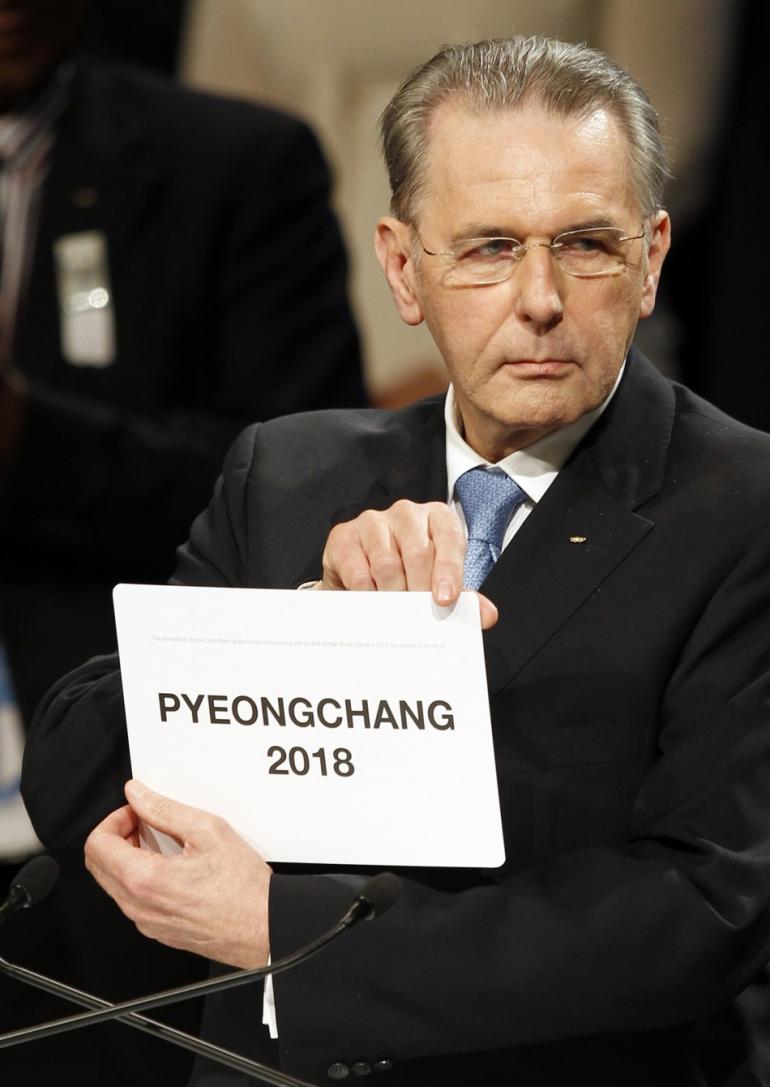
The response was instantaneous and it was volcanic.
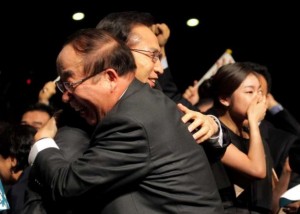
- YS Park, President Lee - PyeongChang wins! - photo asiancorrespondent.com
The Korean delegation exploded in a frenzy of hysterical delight. For a people who claimed they did not like to smile, the eruption of emotion was amazing.
I saw many hugs, including the famous one above with YS and President Lee. There were literal tears of joy streaming from face after face. If there is a Gold Medal for winning a bid, PyeongChang should win that, too.
The parties and celebrations lasted long into the night. We met with our friends from Munich and Annecy, all of whom were gracious and kind in spite of their disappointment. The spirit of Olympism is real and other than the field of play, nowhere does it both inspire and soothe more so than an Olympic bid.
The next day was a haze of hastily set up meetings, interviews and yes, long and tearful goodbyes. It was incredibly hard to say goodbye to the PyeongChang team. I was extraordinarily fortunate and honored to work with them. I loved them all not just for who they were or what they did, but for what they represented: indomitable will and determination. They embodied hope. They made me better.

To my PyeongChang family, I say "thank you" for the trip of a lifetime, in so many ways. The experience with you gave me insight into the young man who was my father, from 1950-1952.
His time serving in the Korean War changed him and his life. He treasured his time there, as much as one can in war, and his words, which I recall hearing virtually all of my life took on a new meaning for me after spending almost two years among these incredible people that he loved so well.
Dad would look at me and say, “Son, the Korean people are the smartest and hardest working people on earth…I learned everything I know about hard work from them.” And for the record, my father worked very, very hard.
So PyeongChang, more than winning a bid, you provided something even more precious to me. You gave me a very real, enduring and new connection with my dear, departed father. That is a gift that is impossible to describe or to repay. Thank you.
Every bid has a story – whether it wins or loses. And each of these stories is full of incredibly brave, dedicated people all of whom fervently believe that the Olympic dream and its ideals will help make their home, and the world a better place. And each of these bids, win or lose, deserves our tremendous respect and gratitude.
They are the dreamers. They are the believers. They are our tomorrow.
So to Munich, Annecy and every other bid who ever took the leap of faith and walked on stage, I say Godspeed, great job, thank you for believing and I pray that you all live to compete again.
The world today needs something to believe in; it needs heroes, and the Olympics provide heroes in droves. But heroes aren’t always found on the field of play. Heroes are also found in that most fragile and humble member of the Olympic Family, Bid Committees.
These are the people dreaming of hosting an Olympic Games against all odds.
These are the people standing, sometimes petrified, behind a podium in giant, dark rooms pouring out their hearts to the Olympic Family.
These are the people who sacrifice precious time away from their families and friends, travelling the globe in an exhausting effort to find at least one more friendly voice of support.
And these are the average citizens, not connected to the Bid Committee, who stand in the snow or rain for hours to warmly welcome the IOC Evaluation Commission when it comes to town. These are the quiet Olympic heroes.
Without them, there would be no Host Cities.
Without Host Cities there would be no Olympic Games.
And without the Olympic Games, there would be no hope.
__________________________
- Stratos Safioleas, David Woodward, Laszlo Vajda, Terrence Burns (all PyeongChang advisors) & George Hirthler- Munich 2018; 6 July 2011
Special thanks to Stratos Safioleas for use of his photos and review/edit/memory help. Stratos served PyeongChang 2014 and 2018 as their external International Media and Social Media Advisor.
Special thanks as well to Theresa Rah and Sharon Huff for their review/edit/memory help.
OUTTAKES FROM PYEONGCHANG 2018
- TB, Jiyoung & Randy - Acapulco. Hot.
- Theresa & Stratos; Acapulco dinner
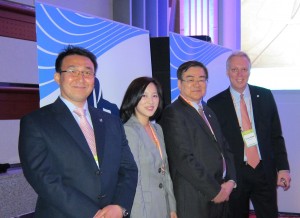
- Kwang-Bae, Theresa, YH & TB - AIPS, Seoul
- TB and Dae-Sung; Seoul
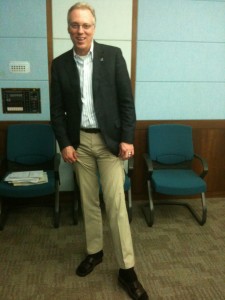
- Korean slippers
![Durban-1955[4]](http://static1.squarespace.com/static/5a0d00b1a803bb9d2ea4b4e4/5a38517e005559637eaf5c6e/5a385192005559637eaf60c8/1513640338650/Durban-195541-300x225.jpg?format=original)
- Bonnie and me helping YS come out of his shell.
- Fine Dining at 34,000 ft on Elvis 1
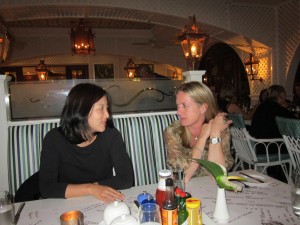
- Dinner with Theresa and Caroline Rowland, of New Moon
- The King & I.
- Yuna, TB, Theresa - Durban
- Dae-Sung & Toby - Korean Olympians
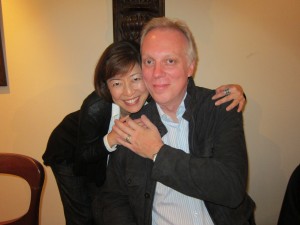
- YS & me
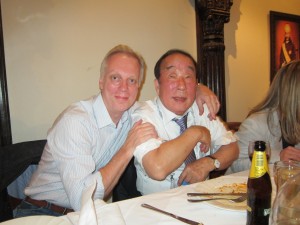
- The "Other YS" (Big Brother) and me.
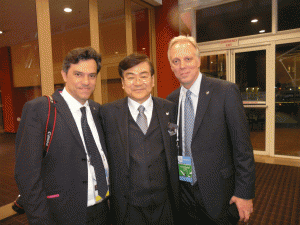
- Stratos, YH and TB - Durban
- Theresa

Third Time's The Charm - Part IV, Final Chapter
 PyeongChang’s 2018 Path to Victory
Part IV, Final Chapter: May - July 2011
Terrence Burns ©2014
With SportAccord behind us, we could now focus on our final three presentations, ANOCA in Togo, the IOC Technical Presentation in Lausanne (hereafter referred to as “Lausanne”), and the Final Presentation in Durban (hereafter referred to as “Durban”). As with every presentation we made, I told the team it was irrelevant how well we did or did not do in the last presentation, what mattered was the next presentation.
The Lausanne Presentation was added during the 2016 Olympic Games campaign in order to provide the IOC Members with a forty-five minute presentation on the technical aspects of the bids. Given IOC Members were still not allowed to visit the bid cities, many felt this new presentation would give them an opportunity to delve more deeply into the technical aspects of each bid given the IOC Final Presentations tend to be more emotional than technical.
Much mystery and myth surround the IOC Technical Presentations because each team bid can only have six presenters (plus their IOC Members if they have any), and the presentation is a closed-door session to the IOC Members only. Although the IOC does not publish absolute guidelines, it is generally felt, or imagined, that they would like each presentation to be about seventy percent technical and about thirty percent emotional.
The prevailing Olympic legend is that in the 2016 race, Rio was behind at this late stage of the campaign. Realizing this, Rio decided to do three bold things for Lausanne: they attacked the economic question by bringing in the president of Brazil's Central Bank, Henrique Meirelles, to assure the IOC members of the country’s solvency and long-term economic outlook. They focused on the more emotive and festive aspects of their bid, instead of the technical ones. And, that is when they also introduced "The Map." Perhaps that strategy helps to explain the current, ongoing drama with the technical preparations for Rio 2016.
Each successive bid since that time has attempted, in one way or another, to emulate some of the Rio strategy for the Lausanne presentation; e.g., more emotion. We certainly did.

Over the course of the previous presentations, Theresa Rah established herself amongst the Olympic Family as the “must see” portion of each PyeongChang performance. Now it was time to launch our second secret weapon, Yuna Kim.
Prior to Lausanne, we received intense inquiries from the media and from friends around the Movement as to when we would “unveil” Yuna. Given what we believed at the time (and what we were hearing from our Olympic Family friends), Rio really did alter the 2016 race with their Lausanne presentation. Rio not only made up ground on its competitors, but also emerged as the perceived front-runner in many people’s minds.
Based on this, it made sense to introduce Yuna to the IOC during the Lausanne presentation. We did not want to “save” her for Durban for two reasons: 1) we felt we were getting closer to Munich, so a strong Lausanne presentation with her presence might help us be perceived as “equals”, and 2) we had another “surprise” for Durban (more on that later).
Preparations for the Lausanne presentations took place again first in Seoul and then in Lausanne. We made the decision early to place more emotional emphasis than expected in Lausanne. Part of this was of course ensuring we had memorable films to support the overall message. I envy filmmakers, I really do because I lack any talent whatsoever to be one and I think they do interesting work. But I am also glad that I am not a filmmaker in bids. Films, or any design or art, are extremely subjective – especially across cultures.
For Lausanne, we had scheduled two “emotive” films and one technical film. As I said, emotive films are often a challenge across cultures and this presentation proved no exception.
The bid committee wanted changes to the two New Moon films.
Barnaby Logan, Jace Oh and I spent many hours in our Montreux hotel (where we were holding the Lausanne rehearsals) refining the films to the bid committee’s satisfaction. It happens with virtually every bid.
As I said, I do not envy filmmakers, but Caroline Roland and Barnaby Logan of New Moon came through with great films for Lausanne.
The evening before our presentation we all had a traditional Swiss dinner of meat and cheese fondue at Le Chalet Swiss.
This authentic Swiss chalet is located in the Sauvabelin woods, overlooking the city of Lausanne and Lake Geneva.
In addition to Yuna, we had two new “speakers” for the Lausanne presentation. I use quotation marks for the word “speakers” as one was live and one appeared via video.
Below left, the president of Korea, Mr. Myung Bak Lee, appeared on video, and below right, Mr. Sung-Hwan Kim, Minister of Foreign Affairs and Trade, Republic of Korea had an onstage speaking role.
These two gentlemen focused on Korea’s commitment to sport and affirmed Korea’s commitments to the guarantees that are required by the IOC. Minister Kim’s English was impeccable and he was an excellent speaker.
Presidents of countries have gravitas that always manifests better live than on video. President Lee's video was good in that he followed the script we created (that is not always the case with some heads of state), but we had no control over the set up or filming. In the film, I thought President Lee was difficult to understand, and it was shot at a curious angle. But I also knew we would have him “live” in Durban. The point for Lausanne was to illustrate complete government commitment to the bid. President Lee and Minister Kim did that in spades.

At first I struggled with exactly how and where to use Yuna in the presentation. What message would she be most effective in delivering? What area of the bid narrative best fit her personality and experience?
The most obvious section of the presentation to use an athlete pertains to the venue plan or the Village. So, we made the decision to let Yuna and Dae-Sung Moon (Olympian and IOC Member) handle these two areas.
Initially this seemed like a “waste”, using a vivacious personality like Yuna to discuss the technical plan. But we were able to use her unique personality and fame in a humble way. She began by telling the IOC Members that she was more nervous speaking English in front of them than she had been in front of billions of television viewers watching her perform live in Vancouver – and she was nervous, but it came across as charming and sweet.
She also told them that her purpose there that day was much more important than a Gold Medal. She told them about the often-lonely nature of her sport, and she told them that her success as an athlete was directly attributed to Korea’s “Drive the Dream” program; a program that supports young winter sports athletes in Korea.
Her performance was touching and very personal. She managed to inject emotion and honest personal feelings into the technical portion of our presentation. And, she looked great onstage with Dae-Sung and Theresa.
Lausanne also held another surprise. For the first time, PyeongChang used the French language in a portion of our presentation. By this point in the campaign, the messaging from Munich shifted to something like “this is not a race about geography” in an attempt to counter the New Horizons platform for a Winter Games in Asia.
Theresa’s opening remarks were calculated to counter attack that notion head on by using the same precise words, and she did so in flawless, emotional French. This is the gist (the original English text) of how she began her presentation:
Geography refers to a place, to a space that we can feel, touch and see.
But the Olympic spirit is not attached to one geographical location: it is universal.
The Olympic Spirit lives in the dreams, expectations and the hearts of all people, young or old, wherever they are.
That is why this is not a competition about geography.
This is a competition about dreams.
It was a beautiful sentiment delivered beyond description. It used Munich’s own argument – “this is not a race about geography” – to great effect for PyeongChang’s cause. And it illustrated that PyeongChang was capable of delivering a sophisticated, international, and cosmopolitan image to the world.
Theresa often protested (politely) that her French was not perfect, and she was self-conscious about it – but who would not be, speaking in not one but two non-native languages in front of the IOC. But no one in the room expected perfection. What they did expect was determination, heart, passion and a desire to host the 2018 Winter Games. I believe they got all of that, and even more.
As the team left the presentation room the media surrounded them. The presenters were beaming. They went into the “Lion’s Den” and came out not only alive, but certain in their hearts that they did a superb job.
I have worked with a lot of bids but I have never seen a team of people work as hard as did the Koreans – not just the presenters, but everyone on the PyeongChang bid committee.
They were relentless in their preparations and it finally paid off.
It was a brilliant day full of Swiss sunshine and Swiss blue sky; hard to describe if you have not seen it. It looked like an advertising poster.
The PyeongChang team gathered on the steps of the Olympic Museum to savor the moment.
Everyone was smiling and taking pictures of the Museum, the lake, the sky and each other.
The non-presentation team members of the PyeongChang bid committee were there too, interacting with, well…with everyone. It was, as they say, a “moment”.
The post-presentation meeting held in a tiny bar of the bid committee’s Lausanne hotel was crisp and upbeat, as everyone was leaving. The team was still buoyant, perhaps buoyed by many large glasses of Swiss beer. Everyone realized that we made tremendous progress for the bid in Lausanne. We had time for one large breath of relief, but we also knew that I was delivering a new showflow and round of speeches to the team within seven days to start rehearsing for Durban.
I got on a train for Zürich to catch a flight, and immediately received a call from an IOC Member who not only stated that he thought PyeongChang had the best presentation, but that it was surprisingly good.
His call and other immediate, similar feedback made me realize that we had finally broken through the “star power” of the excellent Munich 2018 bid team. Munich’s presentation was still extraordinary both in style and in substance, but I now felt we at least had a fighting chance. But we still had a very long way to go.
The Final Lap
But before we got to Durban, we had one more stop to make in Africa. Late in 2010, the bid committees all elected to move the presentation to the African National Olympic Committees (ANOCA) on 29 June of 2011; just one week prior to our Final Presentation in Durban. Bad timing. Had we known how exhausted we would all be by June of 2011, I believe that we would have voted to keep the ANOCA presentation in 2010.

We combined our ANOCA and Durban presentations rehearsals in Seoul because the presentations were only 8 days apart.
We would fly (again on Elvis 1) from Seoul, then a fuel stop in Austria, then over the Sahara Desert to Lomé, Togo; all of this for a fifteen-minute presentation.
The ANOCA presentation was to a smaller audience so we decided to give Yuna another speaking role along with YH Cho, Theresa and YS Park. The content was essentially the same as the other continental NOC presentations, but with extra key messages aimed at the African NOCs.
The flight to Lomé was spectacular. We flew directly over the Saharan Desert. It was an incredibly clear day and we could easily see the details of the massive, red desert below. It looked like the pictures from the Mars Rover. Again, those of us in the plane were dashing from window to window, from side to side to take pictures of the stunning landscape below.

At over 9,400,000 square kilometers (3,600,000 square miles), the Sahara (Arabic: الصحراء الكبرى, aṣ-Ṣaḥrāʾ al-Kubrā , 'the Great Desert') is the world's hottest dessert. It is also the world’s third largest after Antarctica and the Arctic. The Sahara covers most of North Africa, making it almost as large as China or the United States.
And here is something I did not know until I researched it for this post (thank you Wikipedia). “The climate of the Sahara has undergone enormous variations between wet and dry over the last few hundred thousand years. This is due to a 41,000-year cycle in which the tilt of the earth changes between 22° and 24.5°. At present (2,000 CE), we are in a dry period, but it is expected that the Sahara will become green again in 15,000 years (17,000 CE)."
Upon arrival in Lomé we were led to a VIP lounge while our passports and visas were examined. The lounge, though basic, was comfortable, had air-conditioning and they offered us cold drinks.
As we made our way to the hotel, we looked intensely at the city around us. It was a whirling menagerie of color and sound.
And when we arrived at the hotel, dozens of people were there, cheering and singing for us and the other bid teams. We all felt like rock stars.
Again, the intimacy of this presentation brought the three bid teams closer together. Maybe it was the realization that this was our last time together before Durban, but we all seemed a bit melancholy. Below left, Gunilla Lindberg, YS Park, Thomas Bach and Young-Sook Lee. Below right, Bernhard Schwank, Theresa Rah and YH Cho.
YS Park was always the life of the party, even in Togo. Below, Here he is with Yuna and Theresa, both of whom I am sure have this photo proudly displayed on their walls.
The hotel had new mattresses for every room – mine still wrapped in plastic. The hotel wireless network worked better outside on the balcony than in the cement walled rooms, so we often stood out on our balconies to do our email and get online. John Moon’s room was next to mine.
After the presentation, we had an afternoon of free time. Chairman Cho took the team sightseeing and to a great lunch.

Lome lunch with the team.
Above Left: Theresa Rah, Seungwon Chung and Young-Sook Lee
Above Right: Laszlo Vajda, Yong-Soon Kim, Jiyoung Jung
The journey to Durban from Lomé was a bit complicated. Chairman Cho had a few things to do in France first, so we flew overnight, arriving very early in the morning in Nice, France. After a quick morning nap, we had a nice day walking around Nice. Later that evening, most of us took a flight to Doha for an overnight connection, and then onto Durban the next day.
Below is our group photo on our last Elvis 1 trip, arrival in Nice.
Below left, Yuna and her team upon arrival in Nice early in the morning; below right, the gang later that afternoon for lunch.
Durban Town, Finish Line

Durban is a surfer’s town on the east coast of South Africa. It is also the city that would break the hearts of two 2018 Candidate Cities and send one Candidate City home with the Olympic prize.
In April, Mr. Sangil Woo of the PyeongChang bid committee sent me a video about a young Korean-American skier, Toby Dawson. The documentary, “Lost and Found” chronicled Toby’s remarkable story and life. Toby was born in Korea and was “lost” at a supermarket when he was just three years old. A couple from Vail, Colorado in the United States adopted him. Toby learned how to ski and eventually won a Bronze Medal in Moguls at the 2006 Turin Winter Games.
A light went off in my head. Toby was the ultimate “proof point” for New Horizons. His story and his life were precisely why Asia needed the 2018 Winter Games. Toby could put a face and a real story behind our New Horizons strategy. It was perfect. There was just one catch. Many in the bid committee had misgivings about Toby presenting - here is why.
First, Toby self identified as an “American”. He may have been born in Korea, was ethnically Korean and looked Korean, but in many Korean’s eyes he was an American – he was even an American Olympic medalist. Why do we need an American in our presentation?, I was asked.
Second, and perhaps more importantly, around the time of Toby’s disappearance and adoption, there was an accusation that some Korean families were selling their infant and toddler children for money to adoption agencies in other countries, such as the United States. Whether this was true or not, it understandably upset enough of my Korean colleagues that they did not want any hint of this terrible accusation linked to the bid.
I understood all of this – but I knew Toby and his story would be crucial to our narrative in Durban. I needed an ally.

The first thing I knew I had to do was to get Theresa onboard with the idea because she too had misgivings about Toby’s participation. I remember the email exchange.
She was nervous about upsetting me, so as usual she was very diplomatic and precise. She simply was not sure how his story would add credence to the bid.
Toby was also an “unknown” to the speaking team and its chemistry, and yes, his kidnapping and adoption story was also a cause of concern.
I said, "Theresa, before you make up your mind, will you please read the first draft of his speech?"
She said, “Yes, I will read it.”
I sent her the speech.
I waited for the reply.
She replied and the email read, “I had tears in my eyes reading it…yes, yes, yes, I am onboard with Toby.”
The Final Presentation to the IOC in Durban, on 6 July 2011 was either going to be the end of a ten-year Olympic odyssey for the PyeongChang bid and the people of Korea, or the beginning of a new chapter in the country’s Olympic dream. This was high stakes at its most visible and tense. After three bids, millions of dollars, investments in new winter sports venues and unbelievable persistence, the people of the PyeongChang 2018 bid committee were either going to have a very long plane ride home with a lot of explaining to do once they arrived, or, go home as heroes. It was that simple. Our job was to help them achieve the latter. That part, is never that simple.
Thinking back to those early days of internal conflict, warring factions and resistance to outside influence, I found it hard to believe how far the bid had come. Acapulco seemed like years ago, even though it was only a brief eight months past. But during those eight months, mountains were moved.
The bid had a new brand and a new message that was clear and powerful. The entire bid committee, the people behind the scenes and not on stage, was executing as a finely tuned unit on all aspects. And as predicted in Acapulco, the bid presentation team had improved each and every time, to the point of being considered an “equal” of Munich and Annecy.
Chairman Cho found his voice and role in the bid as its quiet but effective leader. Theresa Rah emerged as our muse, our spokesperson and our star. As we began the long march to Durban, I was very pleased at our progress and positioning in the race as of May of 2011.

As I began working with the showflow I came up with an idea that I knew I would have to “sell” hard to the bid committee – because it was unconventional. Heretofore, Theresa had proven to be our most persuasive and effective speaker. In bid presentations you must begin and end with your strongest two speakers. For PyeongChang’s final presentation, I suggested (strongly) that we do something unique: although Theresa was not the bid leader, I argued that after the opening “mood setting” film, we let Theresa both open, and then close the presentation.
The opening of these presentations always starts with a long list of salutations, expressions of gratitude as well as team introductions. It takes away valuable time from the forty-five minute time limit. I knew that Theresa could quickly move through the necessary Olympic protocol and still deliver our opening key messages. There was of course some strenuous debate, but Chairman Cho listened to my argument and agreed immediately; again, no ego, what a wonderful thing.
Here was the showflow of the PyeongChang 2018 Final Presentation in Durban.
Film 1 – Korea Loves Winter Sport 2:30
Theresa Rah 4:00
YH Cho 3:00
President Lee 3:30
Governor Kim 3:00
Yuna Kim 3:30
Technical Film 4:00
Dae-Sung Moon 3:00
YS Park and film 2 5:00
Toby Dawson 4:00
Theresa Rah 4:45
Film 3 3:00

For Durban we also had Korean President Lee as a presenter. He and I did not have an opportunity to rehearse in Seoul, but he had received his speech prior to leaving for Durban. He arrived in Durban hoarse from rehearsing his speech over and over on the plane. That did not stop him however, and we immediately began intense rehearsals onsite. Dedicated people.
In Durban he was affable and easy going. I have worked with heads of state that raised the tension (or fear) in a room the second they walked in; not so with President Lee.
He was likable, approachable, coachable and willing to work as hard as everyone else. I told him if he moved to the US I would vote for him, but he could not run for the office of the US presidency, as he was not native born. He laughed.
Durban also marked the first and only time that Governor Kim, leader of the two former bids, presented onstage with PyeongChang 2018. He and I worked a lot on his speech.
As a veteran of the two previous bids, he had a great deal of personal insight and a lot of emotion to share. I think he also sensed that this was it – this was the last attempt for PyeongChang.
He put a tremendous amount of effort into his rehearsals. His presence onstage in a speaking role also helped to nullify some of the rumors being spread about that our bid was politically dysfunctional. Everything one does or says communicates in a bid.
More PyeongChang rehearsal photos from Durban:
Above left, one of my favorite photographs from the campaign. Chairman Cho, using his smart phone to film Korean President Lee rehearsing
We had Yuna again but with a different message than she delivered in Lausanne. I coached her by telling her that IOC Members were used to seeing and hearing from great Olympic champions like herself. But having a Gold Medal was not enough to move hearts and minds. I told her she had to connect with the audience as “Yuna Kim, the young woman from Seoul”, not as “Queen Yuna, the Olympic Champion.” She listened, nodded her head once, and instinctively got it.

The morning of our presentation finally arrived. Our team was sequestered in a "Green Room" near the presentation hall.
We anxiously watched both Annecy and Munich present first; both were excellent. I felt that Thomas Bach gave his best speech of the campaign. Like all great athletes, he saved his best for the actual competition.
Some of our presenters were practicing their lines, some talking and some were somber.
Chairman Cho and Governor Kim seemed very relaxed - very Zen.
The morning of 6 July 2011, prior to the PyeongChang 2018 presentation. At left, one final run-through with Theresa, at right, Theresa and YH at breakfast.
When it became our turn, we were led into the hall and down a roped off corridor to assemble one last time as a team before we entered the presentation hall. The speaking team sat arrayed around President Kim as he gave them his last words of encouragement. I already had given my pep-talk in the Green Room.
Theresa once again led us off flawlessly, and after the introductions and protocol she quickly got the heart of her first speech (version 12, by the way).
...I have also learned something else quite interesting: words are very important in the Olympic Movement.
Words can inspire us to take action, and they can even make us believe in the seemingly impossible.
Ten years ago, many people thought hosting the Winter Games in Korea was impossible.
And after our previous bids, we could have been tempted to believe that as well.
But we didn’t.
After each disappointment, we got up; we dusted ourselves off, we listened to you and learned from our mistakes - and we tried again.
To get through these challenges, we focused on two important words – persistence and patience.

Chairman Cho’s speech varied little from SportAccord, though we tried a little humor with him, which he pulled off very well. He congratulated both Annecy and Munich and wished them luck…”just not too much of it”. The audience did not expect him to be “cheeky”, and it worked. Chairman Cho also reiterated the unity of the bid, graciously (and surprising to some) thanking Governor Kim for his efforts over two previous bids and YS Park for his tireless efforts on behalf of the bid.
I will state here that Chairman Cho personally wanted to reach out to Governor Kim and YS Park in this last speech – it was not a theatrical ploy. Chairman Cho has a quiet and somewhat shy persona, but behind that quaint smile is a fiercely competitive personality. He understood very well the role he had been thrust into and he understood the tensions inherent in the various factions of the bid. But most importantly, he understood what it would take to win. So he acted accordingly. And finally, for the last time, Chairman Cho explained the concept of “New Horizons”, he said,
Our vision is clear and it is unique.
To deliver on this vision, we offer five compelling reasons for your support:
- We have the most compact, efficient Games plan, including our venues and transport infrastructure;
- We have total government commitment and support at every level;
- We have the passionate support of the Korean people
- We have kept our commitments to the Olympic Family for over ten years, and
- PyeongChang 2018 would be the first Winter Games in Korea and only the third Winter Games in Asia.

President Lee came next. At first we suggested that he begin his speech in English, then switch to Korean to make it easier for him; as a head of state, that is usually acceptable. But he would have none of it, and insisted that he wanted to give his entire speech in English because that is what he had been practicing. So he did.
He reiterated his history in sport, serving FINA for many years. With great emotion he said that Korea competed in its first Winter Games in St. Moritz in 1948, noting that his nation had no central government and was so poor that it could only send three skaters to the Games. Then, just 40 years later, Seoul hosted the 1988 Winter Games. That was the point in his speech, with accompanying photos of those three 1948 Korean Olympians on the screen behind him, that touched more than a few hearts in the room.

Governor Kim’s speech was a remarkably personal one.
Imagine standing there in front of the IOC for the third time. Imagine all the hard work, sacrifice and patience he personally endured over the previous ten years of continual bidding, and two broken hearts. Imagine the message he wanted to deliver that day in Durban.
The words below are essentially his, and as he said them. He choked up, just a little – but he took a deep breath – as did we all – and continued on:
Esteemed President Jacques Rogge, and distinguished IOC Members,
I believe it is my destiny to stand before you… for the third time.
And our people have waited… for over 10 years.
It was a moving and sincere moment. I believe every person in the room that day understood, at the deepest personal level, Governor Kim’s passion and desire for the 2018 Winter Games and what a long ten years it had really been for him, personally.
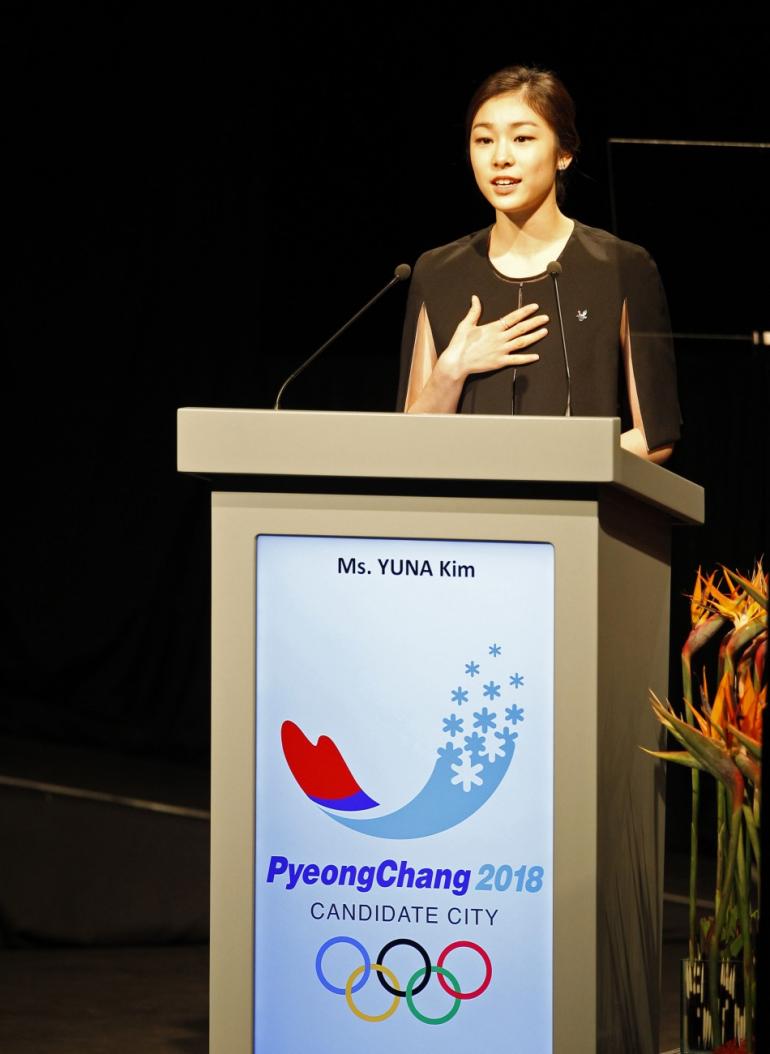
Yuna began her presentation by a heartfelt acknowledgment of Katarina Witt as a great champion and great ambassador of their sport.
Up until that point, Yuna and Katarina had been in the same room only once during the campaign, in Lome.
She spoke from the heart as to how and why she chose figure skating as her sport – it was simply because there were very few winter sports options in Korea – thus the need for New Horizons.
Yuna also explained that “there are legacies more important than venues and facilities – there are human legacies – I am one of them.”
Her delivery was perfect and poised, and it was impressive to see so much charisma from such a tiny person fill such a large room.

Next came Dae-Sung Moon. He gave an excellent overview of the Games and venue plan. Dae-Sung noted that Seoul ’88 was the first time that the Olympic and Paralympic Games appeared together, which highlighted the issue of accessibility for all Koreans. Dae-Sung grew from a reluctant presenter in Acapulco to a powerful and dynamic speaker by Durban. His martial arts training was evident when he made an emphatic point in his speech with a powerful pump of his fist. I learned to stay out of the way of it during rehearsals. He also had an infectious smile and a gentle sense of civility that help calmed nerves in stressful situations.

YS Park came next. YS is truly one of the most original “characters” in the Olympic Movement. He has more energy than men half his age. He seemingly knows everyone in the Olympic Movement on a personal basis and more importantly, he understands how “it all works”. YS was originally quite difficult to script – meaning, it was difficult to get him to stay on script.
His mind was always far ahead of what was going on in the present tense. But by Durban, he too had buckled down and was adept at delivering his lines.
Because it would be unexpected to the audience, I felt that we needed a bit more humor in the presentation and that YS was the only person who could deliver – and get away with the two items I planned for his remarks. He began by acknowledging President Rogge and the IOC Members, and then he said:
I know that it has been a long day for you. Well, it’s been a long time for us, too!
Many in the audience laughed out loud and YS, with his impeccable timing, waited for it to die down.
For background, Prince Albert of Monaco had literally just married that month (July 2011). YS continued,
But if you would allow me please, I would first like to offer our sincere congratulations to Prince Albert on his wedding, and to say:
“Your Serene Highness, I am sorry that you are spending your honeymoon listening to PyeongChang’s bid for a third time.”
The room howled with laughter. YS tilted his head, appearing to look at the audience out of one eye and smiled slyly – and they laughed even more. Later, my IOC friends in Bid City relations told me that PyeongChang had broken a rule by directly addressing an IOC Member during the presentation. We did not receive the dreaded IOC warning letter.
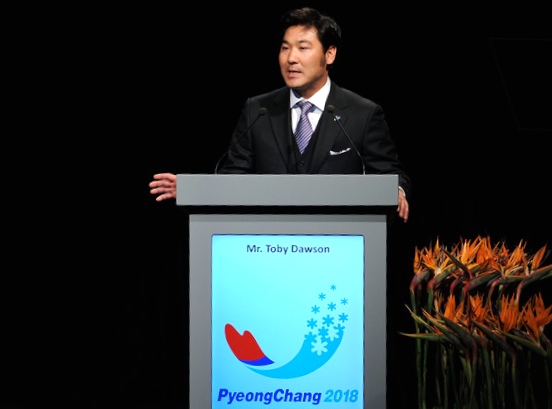
YS introduced Toby and the room grew very quiet; they wondered why his title slide said US Bronze Medalist.
We had kept Toby away from the media (mostly) in the days leading up to the presentation because we wanted him to be a surprise.
When Toby first arrived in Durban I went to his hotel room and asked him to read the speech for me. He did, and looked up at me and said, “dude, you’re in my head…” which I took to be a compliment. We worked on the speech until version six, which was what he delivered.
Toby, who had never given a presentation to the Olympic Family in his life, paused at the podium after being introduced by YS.
He took a breath, and he took it all in.
Then he blew the room away.
Good afternoon,
My name is Toby Dawson.
My name is also Kim Bong-Seok.
I am a free-style skier, and, I am an Olympian.
I am a Korean by birth, yet I am also an American.
He paused…
That last sentence contains an entire story about the true potential of PyeongChang 2018 and the legacy of New Horizons, and it is why I am honored to be here today.
I was born in Busan, South Korea in 1978. When I was three years old a couple in the United States adopted me – luckily for me, they lived in Vail, Colorado.
My parents introduced me to skiing at an early age as a means to adapt to a new family and a new culture.
It gave me the confidence to believe in myself as a kid, as a teenager and as a young man.
That is the true gift of sport – it provides hope.
Thinking back on it now, I realize that had I remained in Korea, I may not have had the chance to be an Olympian.
New Horizons has a simple goal: to give young Koreans and young athletes from other regions access to world-class winter sport facilities for the first time, in Korea, in their own region – the same chance that I was fortunate to receive in America.
That’s what this bid is about. It’s about... hope.
So, you may ask yourself: to whom are we listening, today?
To Toby Dawson, the American Olympian?
Or to Kim Bong-Seok, the lost little Korean boy with the ability to be an Olympian but with limited opportunities to do so…
Well, to be honest, you are listening to both.
I came here today to achieve two things:
- First, I want to honor my home country and its people – my people; I want to return, in some small measure the good fortune that I’ve received in my life from sport; and
- Second, I want to speak for future generations in Korea and beyond – I ask you to give them the same chance that I received when I moved to America in 1981. The chance to hope, the chance to participate, the chance to excel and the chance to succeed.
Your support today of PyeongChang 2018 would truly change the lives of millions of kids dreaming of being a winter Olympian, who, frankly have never had that opportunity.
I believe that there is no greater honor than representing one’s country at the Olympic Games. It is my dream that every child, everywhere in the world, can hope for that possibility.

The one hundred PyeongChang guests in the room, most of whom had not seen any of the rehearsals, leapt to their feet cheering, many if not most in tears.
I admit I had a hard time not getting emotional myself, and I knew what he was going to say!
Toby and his story proved the doubters wrong. His was a story that not only touched people’s hearts, it once again proved the powerful, singular argument of New Horizons.
After the presentation and PyeongChang’s win, Toby reconnected with his homeland and his birth family. He went on to coach the Korean ski team. Good things happen to good people. Go, Toby, go.
Finally we were nearing the end of not just the presentation, but of almost two long years together as a team; no, let me rephrase that, as a family. For our “close”, we brought our “ace” back onstage to bring us home and to victory: Theresa Rah. I honestly cannot find enough superlatives to say about Theresa Rah.
Clearly she was the anchor, the backbone of all PyeongChang presentations. She gave us credibility when we needed it and she delivered the message consistently and professionally, sometimes when all else fell short. She gave simple words I wrote incredible new meaning and passion. She was a great collaborator on her speeches and others’ too. She also spent hours with Chairman Cho, helping him with his presentation skills.
But Theresa was more than a tremendous presenter. She was also a tremendous person; kind to all, helpful to everyone and a solid, logical thinker in times (and there are many in an Olympic bid) of strife or crisis.
The Olympic Movement fell in love with her, and it will neither see nor hear the likes of her again unless she decides to participate in the PyeongChang Organizing Committee. I personally hope she finds a role in PyeongChang 2018. The Olympic Movement needs more people like Theresa Rah.
For Theresa’s closing speech we again returned to the theme of geography and our strategy to turn Munich’s new message around to our own benefit.
Theresa opened with this:
Some have said that this is a contest between the roots of traditional winter sports and the new shores of opportunity.
Some have said that the Winter Games need to return to their traditional markets to be replenished.
Actually, of the 21 Winter Games held so far since 1924, 19 of them have been held in traditional winter sports markets, and only two have been hosted in Asia, and none in Korea.
So, if any region needs replenished, we humbly propose that we need the Winter Games in Asia to nurture the seeds that were planted in Sapporo and in Nagano so that they too, can grow and flourish.
But this race is not about geography.
It is a race about dreams.
It is a race about human potential.
Once again we asked Theresa to switch to speaking in French and she explained that the legacy of PyeongChang 2018 would reach far beyond venues and facilities – it would enable and energize the dreams of Asian youth.
She closed the presentation in English with another powerful message about hope.
Today is one of the most important days in the lives of every member of our team. Although I will admit, the memory of this day will be a lot sweeter if you choose PyeongChang.
It is an honor to represent our country, but perhaps even more poignant, it is an honor to have the chance to impact the lives of millions of young people in the future.
That is something that only the Olympic Movement can provide to us, and it is something that only PyeongChang 2018, can provide to you.
Uniquely, PyeongChang 2018 offers you both a historic choice and a historic chance: to bring the Winter Games to Korea for the first time and back to Asia for only the third time - and in doing so, help us to deliver the potential, the promise, and yes, the hope, of PyeongChang 2018 to millions of new hearts and minds around the world.
So, one last PyeongChang film and then it was over; it was suddenly, irrevocably over. The response from the audience was immediate, intense and warm. Ed Hula, veteran Olympic journalist, editor and founder of Around the Rings was seated a few feet away. He instantly texted me the following: “superb presentation, best of the day, well done.” Ed does not hand out compliments easily.
After we left the hall there was a certain sense of very cautious optimism. Every presenter knew they had "hit their marks" in the presentation. In the final dress rehearsal the day before, we (those of us in the room) felt the magnitude of all of the speeches, films and graphics coming together for the first time. Presentations are truly like symphonies, all the disparate pieces come together and the whole is greater than the sum of its parts.
After the final presentation with a live audience, we felt this emotion again, but even more so. We felt the audience's energy reflected back to the team on stage. And we felt their emotions "willing" the team along. There is no doubt that there was a lot of sympathy for PyeongChang and its third attempt, but sympathy does not win bids.
Later that day on a beautiful Durban afternoon, the three bids all assembled in the hall for the announcement. The large and anxious contingents of French, German and Korean delegates sat literally on the edge of their seats. The IOC Members assembled onstage. I remember looking at each of them, trying to catch an expression or a glance at any city that might give a hint as to who had won. Nothing. They were smiling, but not giving anything away.
Finally, the sealed envelope was passed to IOC President Jacques Rogge. He opened it and read the words that millions of Koreans had been waiting to hear for almost ten years: "The International Olympic Committee has the honor of announcing that the 23rd Olympic Winter Games in 2018 are awarded to the city of PyeongChang."
The response was instantaneous and it was volcanic.

The Korean delegation exploded in a frenzy of hysterical delight. For a people who claimed they did not like to smile, the eruption of emotion was amazing.
I saw many hugs, including the famous one on the left. There were literal tears of joy streaming from face after face. If there is a Gold Medal for winning a bid, PyeongChang should win that, too.
The parties and celebrations lasted long into the night. We met with our friends from Munich and Annecy, all of whom were gracious and kind in spite of their disappointment. The spirit of Olympism is real and other than the field of play, nowhere does it both inspire and soothe more so than an Olympic bid.
The next day was a haze of hastily set up meetings, interviews and yes, long and tearful goodbyes. It was incredibly hard to say goodbye to the PyeongChang team. I was extraordinarily fortunate and honored to work with them. I loved them all not just for who they were or what they did, but for what they represented: indomitable will and determination. They embodied hope. They made me better.
To my PyeongChang family, I say "thank you" for the trip of a lifetime, in so many ways. The experience with you gave me insight into the young man who was my father, from 1950-1952.
His time serving in the Korean War changed him and his life. He treasured his time there, as much as one can in war, and his words, which I recall hearing virtually all of my life took on a new meaning for me after spending almost two years among these incredible people that he loved so well.
Dad would look at me and say, “Son, the Korean people are the smartest and hardest working people on earth…I learned everything I know about hard work from them.” And for the record, my father worked very, very hard.
So PyeongChang, more than winning a bid, you provided something even more precious to me. You gave me a very real, enduring and new connection with my dear, departed father. That is a gift that is impossible to describe or to repay. Thank you.
Every bid has a story – whether it wins or loses. And each of these stories is full of incredibly brave, dedicated people all of whom fervently believe that the Olympic dream and its ideals will help make their home, and the world a better place. And each of these bids, win or lose, deserves our tremendous respect and gratitude.
They are the dreamers. They are the believers. They are our tomorrow.
So to Munich, Annecy and every other bid who ever took the leap of faith and walked on stage, I say Godspeed, great job, thank you for believing and I pray that you all live to compete again.
The world today needs something to believe in; it needs heroes, and the Olympics provide heroes in droves. But heroes aren’t always found on the field of play. Heroes are also found in that most fragile and humble member of the Olympic Family, Bid Committees.
These are the people dreaming of hosting an Olympic Games against all odds.
These are the people standing, sometimes petrified, behind a podium in giant, dark rooms pouring out their hearts to the Olympic Family.
These are the people who sacrifice precious time away from their families and friends, travelling the globe in an exhausting effort to find at least one more friendly voice of support.
And these are the average citizens, not connected to the Bid Committee, who stand in the snow or rain for hours to warmly welcome the IOC Evaluation Commission when it comes to town. These are the quiet Olympic heroes.
Without them, there would be no Host Cities.
Without Host Cities there would be no Olympic Games.
And without the Olympic Games, there would be no hope.
__________________________
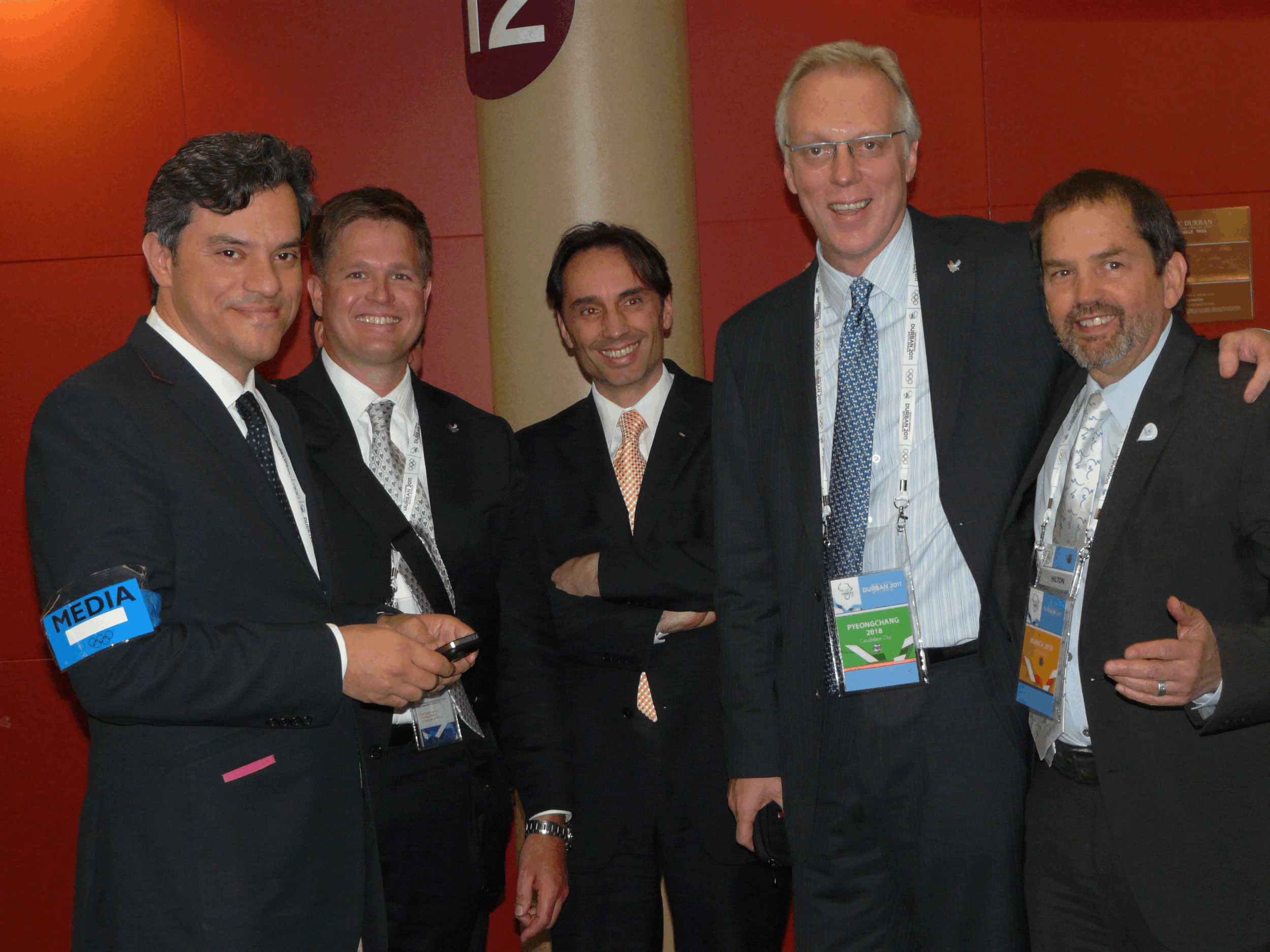
Special thanks to Stratos Safioleas for use of his photos and review/edit/memory help. Stratos served PyeongChang 2014 and 2018 as their external International Media and Social Media Advisor.
Special thanks as well to Theresa Rah and Sharon Huff for their review/edit/memory help.
OUTTAKES FROM PYEONGCHANG 2018



![Durban-1955[4]](http://static1.squarespace.com/static/5a0d00b1a803bb9d2ea4b4e4/5a38517e005559637eaf5c6e/5a385192005559637eaf60c6/1513640338640/Durban-195541.jpg?format=original)




Third Time's the Charm - Part III
PyeongChang’s 2018 Path to Victory
Part III: January - April 2011
Terrence Burns ©2014
The year 2011 ushered in a string of staggered (and staggering) presentations to the Olympic Family and the IOC, beginning with the IOC Evaluation Commission Visit to PyeongChang, 16-19 February. For any Bid Committee this is probably the longest sustained period of stress (and more than a little fear) in the entire bid process.
During the EC Visit, a team of eleven Olympic Movement and Games subject matter experts visited the Alpensia resort in PyeongChang for four days of non-stop presentations on all themes of the bid book, venue and site visits/presentations and meetings with government officials. All presentations included thorough and specific Question & Answer sessions as well.
The 2018 Winter Games IOC Evaluation Commission:
Gunilla Lindberg SWE IOC Member Chairwoman
Angela Ruggiero USA IOC Member
Barry Maister NZL IOC Member
Dwight Bell USA US Luge Federation President
Tsunekazu Takeda JPN Japanese NOC President
Ann Cody USA Paralympic Games athlete and administrator
Gilbert Felli SUI IOC Olympic Games Executive Director
Simon Balderstone AUS IOC Environmental Advisor
Philippe Bovy SUI IOC Transport Advisor
John McLaughlin CAN IOC Advisor (finance)
Grant Thomas USA IOC Infrastructure Advisor
![Seoul-086[3]](http://static1.squarespace.com/static/5a0d00b1a803bb9d2ea4b4e4/5a38517e005559637eaf5c6e/5a385190005559637eaf5ee1/1513640336484/Seoul-0863.jpg?format=original)
To begin the story of PyeongChang 2018’s EC visit, one must go back to November and December 2010. During those months, the external consultants team including myself, Charlie Battle, Erskine McCullough Luciano Barra, Mike Lee, Stratos Safioleas, Laszlo Vajda and others met the proposed Evaluation Commission Visit speaker team.
We worked very closely with Bid Team member Byungnam Lee, a great colleague, friend and a key player in PyeongChang’s eventual victory.
On December 15, 2010, the candidates were led one by one into a large room and asked to read a portion of a draft speech in order for us to ascertain each person’s English language speaking ability. Virtually every speaker was an academic, and had also participated in the drafting of the Bid Book in his or her functional area.
Imagine walking into a room of bid leaders and foreign Olympic “experts”, and being asked to read aloud with conviction and passion a technical speech in another language. Not easy. Fortunately, as academics many of the speakers were experienced presenters in front of groups – albeit students.
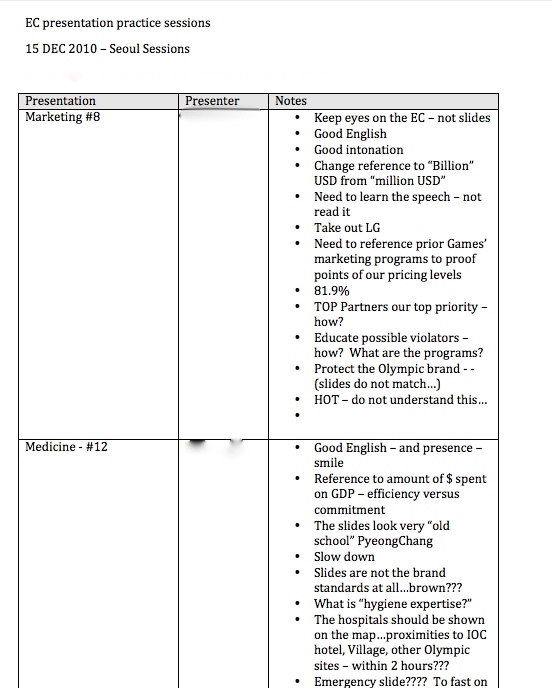
None of the speakers had a problem with content knowledge, but more than a few required extensive presentation and language training; but that is what we were there for. We took notes on the good, the bad and the “bridge-too-far” aspects of each speaker’s presentation, an example of my notes are to the right.
Our team, working with the first round of drafts (mostly) supplied by the speakers and bid committee, finished reviewing and editing (sometimes re-writing entirely) the seventeen (17) EC theme speeches by mid-December.
The second round of drafts was delivered mid January. We then refined each version many times over until the day – or in some instances, the moment – of the actual presentations.
In late January, we first traveled to Seoul for rehearsals and presentation prep, then we went onto PyeongChang. Here is our core external presentation development team: from left: Sara Blease, Terrence Burns, Ansley O'Neal, Lou Lauria, Randy Phipps and David Woodward.
By now Caroline Roland and Barnaby Logan of New Moon films were onboard working alongside our Cheil colleagues, and our films were improving greatly. We were trying to counter the points that Munich 2018 were making in their presentations about the beauty and variety of fun shopping, dining and entertainment options in the city of Munich (the implication: those amenities were not available in PyeongChang).
It was a good strategy because the IOC members and the Olympic Family often spend two or more weeks at the Games, and they must have something to do when not at an Olympic event. Obviously, Munich offered a lot more entertainment value to the Olympic family than did the closest “big” city to PyeongChang, Gangneung - population 230,000.
To answer this challenge, our team created a concept called “The Best of Seoul”, later changed to “The Best of Korea”. The idea was simple: given that we were at least 90 minutes away from Seoul, a large, thriving world-city with many great restaurants, shopping malls and entertainment options, why not bring those amenities to PyeongChang for the period of the Games?
It was agreed to build a Best of Korea Pavilion in and around the Alpensia Resort (heart of the Winter Games). In this space we would have temporary versions of Seoul’s most popular restaurants, shopping experiences and nightclubs. Voila – Seoul in PyeongChang.
One of the best things about Korea is the food, and our team had ample time to sample just about every type of Korean food – and alcohol – imaginable.
Nothing breaks down barriers such as sitting on the floor, serving each other food and drink (we learned to always pour your fellow diners’ drinks first, before one’s own) and cooking meat on a Korean Barbeque Grill.
The beef that originates in the PyeongChang region is said to be the best in Korea; by the way, I concur.
Here are three of our presenters, Young-hee Lee, Minjung Sung & Won-ho Park at one of our many dinners in PyeongChang.
Korean Drinking Games - not sure what else I can say about this picture other than it was a solo performance by our Games Security expert.

Over the course of the EC preparations it began to snow… a lot. Frankly it was what we were hoping for because it added to the winter ambience of the countryside and surroundings. The day the EC Commission arrived, the city of Gangneung received over three feet of new snowfall – a blessing, as everything looks better in a fresh coat of white snow and it proved we would have plenty of snow for the Winter Games.


To be honest those days all tend to run together in my memory. We were up early every morning for hours of speaker training and rehearsals, and then long evenings for Question and Answer preparation. Each slide’s content, spelling (both French and English) had to be checked, re-checked and then checked again because we were still adjusting speeches throughout the rehearsals. They were easily one hundred-hour weeks for everyone on the PyeongChang team.


Lou Lauria and Ansley O'Neal led the venue presentation preparations for our team. Lou and Ansley prepared the presentations and prepped the speakers at every venue for the EC’s visit. A lot of these presenters were Olympians and athletes. One of the best parts of our job is when we get the opportunity to work with athletes. Athletes are comfortable taking direction, which means they are "coachable". They are also competitive, which makes them want to excel.
One of the most emotional stops for the EC during the tour was a stop at the Gangneung Skating Rink - the proposed curling venue for the Games. A choir of 2,018 residents serenaded the EC team, and media, with Abba’s classic “I Have A Dream”.
Their beautiful voices filled the arena with a warmth beyond mere temperature. Many of the Evaluation Commission members as well as the PyeongChang 2018 team (and media) were touched with the simple emotion of the moment; eyes welled and tissues appeared.

The performance illustrated the gentle, almost innocent nature in certain aspects of Korean culture. It was a genuine, heartfelt moment that was classically Korean in its conception and implementation. It was a beautiful gesture, and one learns to appreciate those in a long bid campaign.
After a long and stressful week with hours of presentations, hours of answering questions and hours of worrying, it was suddenly over. There is nothing quite like the sense of relief and release at the end of an IOC Evaluation Commission visit. It is difficult to describe the commingled emotions of anxiety and anticipation that precede the visit. At first, the week seems like it will go on forever – then suddenly all the scripts, drafts and urgent notes from the previous few days are lying on the ground, spent. It is very much like an Olympic Games.
Each day is an exercise of the Bid Committee holding its collective breath, praying nothing goes wrong. It is our job, as external advisors who have experienced this many times, to assure the Bid Committee that the Evaluation Commission visit is not an attempt to trip up or trick anyone into making a mistake; quite the contrary.

The EC want to be informed and they want to help. Many times during the presentations EC members such as Gilbert Felli would offer incredible, experienced guidance on many issues. Moreover, the Bid City Relations team, led by Jacqueline Barrett, was also there to lend support and guidance, which they always did with patience and grace.

The post-EC visit recap meeting at the Alpensia resort was slightly euphoric for the team; the alcohol helped. Frankly, the team did a spectacular job. The presentation room looked great thanks to our Cheil colleagues, especially Jace Oh.
Chairman Cho was the consummate host, both inside the room and at the social functions. Theresa shined as always, but even brighter (although there were many PyeongChang team members in the room who had participated in previous PyeongChang bids’ EC visits, neither Chairman Cho nor Theresa had any idea of what to expect – and they handled it flawlessly). Everyone executed well with his or her speech. The slides and films looked great – no technical glitches. And due to exhaustive preparation and rehearsal, the dreaded Question & Answer sessions went very well.

The EC visit was also the first time we, as external consultants had the opportunity to witness the abilities and professionalism of the entire PyeongChang bid team on a grand scale. Everything was extraordinarily well organized and prepared.
The internal team worked magically with us and the presenters on content changes and adjustments. And it was the first real opportunity for us to interact with the broader team on a large project.
I left the EC visit tremendously impressed by the entire Bid Committee. I could see the benefits of experience from the two previous bids. I thought, “These guys will host a perfectly organized Winter Games…”

I also thought the international media present were both surprised and charmed by what they saw and heard. I believed that these veterans of many bids began to realize that Pyeongchang 2018 was something entirely different from what they expected or had seen before. Their feedback was very positive and encouraging for our team.
And we had a few glitches. At the Ski Jump venue presentation, no one seemed to be managing the Asian media crush and they descended into the presentation itself, obscuring the EC members’ ability to listen and learn. The EC team were visibly agitated and decided to descend to the ski jump landing field and walk to the next presentation at the Cross Country venue, rather than fight their way back through the media group to the bus. But that was just one small issue in an otherwise flawless week.

Unfortunately we had little time to relax or revel in the accomplishemnt because we had to prepare for two quick presentations in March:
- 23 March – 74th Association Internationale De La Press Sportive Congress (AIPS) – Seoul, Korea
- 26 March – Association of Oceania National Olympic Committees (ONOC) – Noumea, New Caledonia

The AIPS presentation, in Seoul was the easiest of all the presentations we did because it was on home ground. The presentation team was a bit tired after the marathon EC Visit. It took a little coaxing to get them focused on the AIPS; they were simply exhausted.
I can only imagine how tired the Munich and Annecy teams were as they had to fly half-way around the world for AIPS. Because this presentation was to media professionals, the content was a general overview of the bid, without a particular focus on any particular Olympic stakeholder - other than the media professionals. We felt it was crucial for them to understand our key differentiator - New Horizons - perhaps more than issues such as the venue plan, for example

True to Olympic practice, we too had a "map" similar to the one Rio used with great effect at the IOC Session in Copenhagen in 2009. Our map showed where all of the Winter Games had been held through the years, with an obvious gap in Asia. In the end I am not sure how effective this was, but I do think it made a subtle point - but that is only if geographic rotation still mattered in the Host City selection process.
Next stop was both a challenge (to get to) and thrilling (to see); we went to Noumea, New Caledonia to present to ONOC. Once again we were fortunate to fly on Elvis 1, Chairman Cho's plane. This made the trip quiet relaxing.
Theresa catching up on the news, on the way to Noumea on Elvis 1.
The presentations were very short, and French Polynesia was a long way to go to speak to a few NOCs for just a few minutes. Still, every presentation made us a little bit better. Again, I think PyeongChang had an advantage here because of geography. Once again, Munich and Annecy had to fly half-way around the world and to the Southern Hemisphere.

One very nice thing about the ONOC presentations was the intimacy of it. We were presenting in a smallish boardroom. We practically sat next to and on top of each other, and we were all in the same hotel. It broke down barriers and we actually had to time talk, drink and eat with the other bid teams.
Munich sat next to us in rehearsals and we were watching each other furiously write and re-write our scripts.

As I wrote, the presentation room was small but adequate.
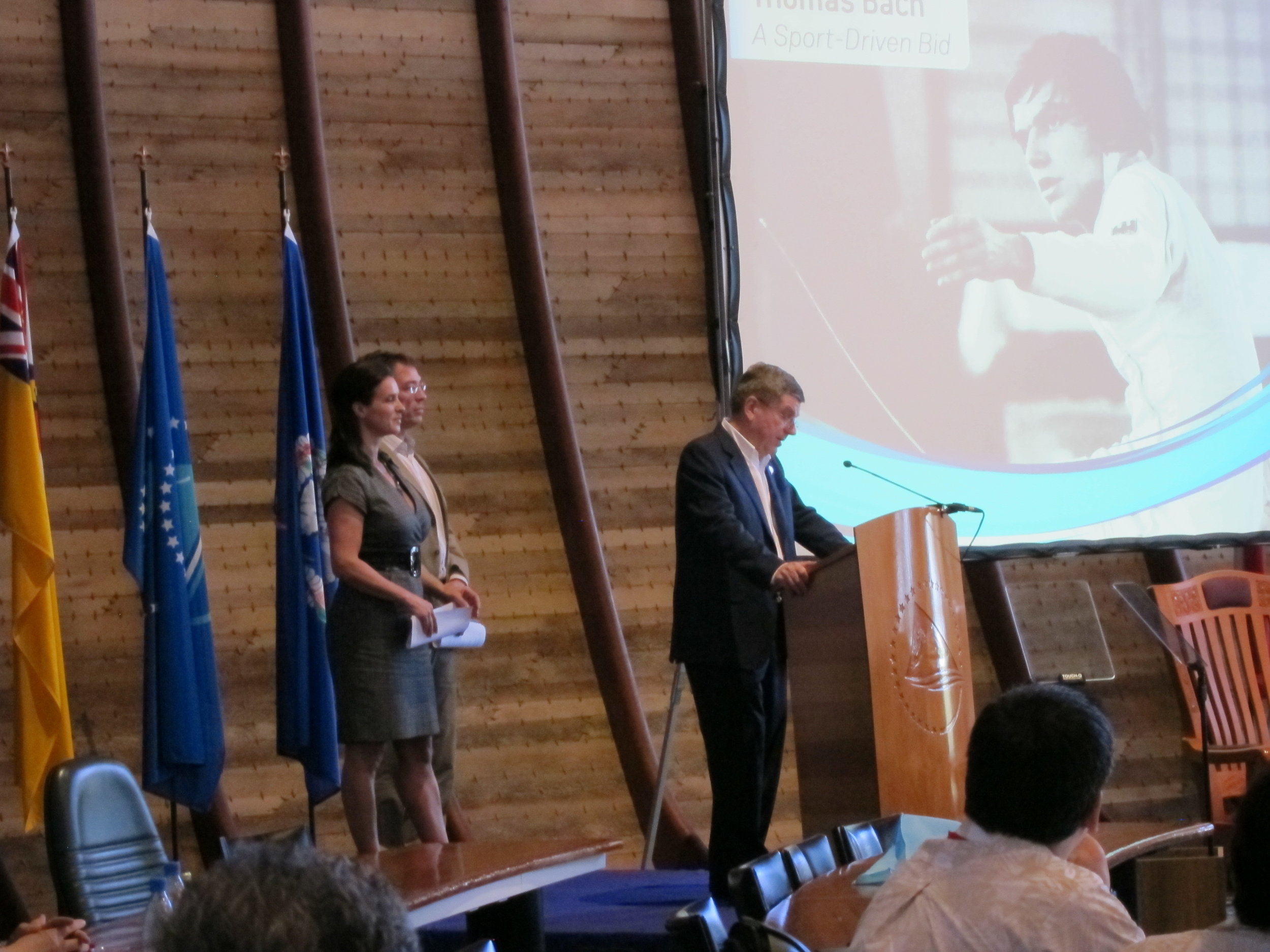
George Hirthler and I had a great time at the piano bar one evening.

After we took off from Noumea headed back to Seoul, Chairman Cho casually asked us if we would like "fly over" and see Australia's Great Barrier Reef as if it were a normal question to ask. No kidding. So, we did. The flight crew radioed Australian Air Traffic Control and off we went. When we got there, we were able to descend to around 5,000 feet and fly circles over one of the most beautiful sights in the world. It was incredible. I am adding some of those photos here. The pictures may not add much to the story of the bid, but it was an amazing moment most of us will most likely never experience again.


SportAccord, London
Our next target was the SportAccord presentation in London on 7 April. SportAccord is the first official ”next step up” from the preceding presentations. This convention is actually the bid cities’ first official time onstage in front of a truly international media set, as well as sports and sports business professionals from around the world. It is, and should be, a warm up to the final two presentations – the IOC Technical Presentation and the IOC Final Presentation - albeit in a shorter format. SportAccord’s twenty-minute presentation seemed an incredible amount of time compared to the team’s previous presentations, which were limited to ten or fifteen minutes in length.
We began work on the SportAccord presentation almost as soon as we returned home from the EC visit. The first thing we did was review the scripts and “performances” from the previous presentations. Looking at the scripts, I noted how we had gradually refined and clarified our central message of New Horizons within the presentations and communications channels. We noted the continual progression of films with our partners at New Moon and Cheil. And, we decided to introduce one new speaker to our SportAccord presentation, Mr. Byoung-gug Choung, Korea’s Minister for Culture and Sports.
Given Katarina Witt’s extraordinary popularity in the previous Munich 2018 presentations, we were getting a significant amount of pressure to bring Olympic Champion Yuna Kim onto the PyeongChang 2018 presentation team. My personal opinion was that Munich 2018 was relying too much on Katarina, and that over time this would fatigue the Munich 2018 message. Many friends in the Olympic media privately concurred. I had the same concerns about Theresa as we were leaning very heavily on her up to SportAccord. But the more the media saw Theresa, the more they wanted to see her speak. She was our secret weapon, but suddenly she was not so secret any more.

Yuna's eventual participation in the bids presentations, an appearance in our technical film at SportAccord and then speaking roles at the IOC Technical Presentation and the Final Presentation, was driven both by logistics and strategy.
First, up to SportAccord, her training schedule simply would not allow time to practice for multiple presentations.
Second, and more importantly, we wanted to “hold” her until the Lausanne presentation to the IOC Members. We had not seen Yuna speak publicly yet, and the IOC Technical Presentation would give us the opportunity to allow her to speak in front of the IOC members alone, without hundreds of other people (and pressures) in the room.
And third, we needed more athletes, female athletes and younger athletes (no offense, Dae-Sung and Kwang-bae) in the speaker set. And, it helped that she was the reigning Olympic Champion and a superstar in her own right after her stunning Vancouver 2010 Gold Medal performance. What I was unprepared for was just how powerful a combination that she and Theresa would make onstage together – but more on that later.
Munich was already experimenting with its positioning against “New Horizons” with language such as “new territories are fine, but the Olympic Movement must also replenish its roots from time to time…”, or words to that effect. I interpreted this to mean that our New Horizons message was hitting home – hard. Anytime a bid city changes its key messages to react to a competitor’s key messages is a good sign the competitor is making progress.
We delivered the first set of drafts on 3 March, and thirty (30) revisions later we were ready on 7 April. For SportAccord, we opened with a new film “The Best of Both Worlds (the Best of Korea concept) at 1:40 in length, Chairman Cho (2:45), Minister Choung (1:30), Theresa Rah (6:30), Kwang-Bae Kang (1:45), Venue plan film with Yuna Kim at 3:45), Dae Sung Moon at 1:00 and a new, New Moon film to close.
The timing on paper was about 21:00, one minute over the 20:00 maximum. It is my practice to attempt to follow the IOC’s stated timing guidelines to the letter. You can tell when a bid city accidentally exceeds its time limit by a minute, or even two – often the audience reactions and applause slow down a well-timed presentation. But you can also tell when a bid city is deliberately taking advantage of the rules. My view is that it is difficult enough to win while reacting to things beyond your control, so why risk a warning letter from the IOC over something that you can control, such as presentation time limits? Bottom line: follow the rules.
Our rehearsals both in Seoul and London were markedly different from the year prior. The EC visit really gave our team a boost and new confidence. It is an understatement to say that the PyeongChang bid team was under extreme pressure from all levels of Korean society and government to win 2018, its third attempt at the Winter Games. I honestly believed that bidding for the third straight time would be appreciated by the membership, but I also believed that if we were not good enough we would not win – regardless of the number of attempts. But the team never panicked, never broke ranks and never let the stress show. I was truly humbled at their work ethic and commitment. They did not get rattled, ever; they were tough, focused people.
During the SportAccord rehearsals I noticed the birth of something new. The presentation team was having a good time. There was a lightness and air of humble confidence about them for the first time. They made fun of each other (in a Korean kind of way). They let me (gently) make fun of them (I liked calling Chairman Cho “cowboy” in order to get him to laugh a little and relax). There was much laughter. I think they really began to respect each other and understand the most important thing in the race: that they could only win by being a team. This is what I had been waiting for; sometimes it happens, sometimes it doesn’t, but when it does happen it is magical to watch.
The SportAccord presentation room in London was packed, and with more media than we’d ever seen. The ceiling was lower than a normal auditorium and I felt that the audience was very close to the stage, almost in the laps of the presentation teams. I thought this was good for us because up close, the audience could see our team’s newfound camaraderie and confidence, and understand that this was a NEW PyeongChang bid. We had a new energy at SportAccord and I was glad the audience could see it up front. We were not afraid of Munich anymore.

Leading up to SportAccord, Theresa and I (mostly Theresa) spent intensive time and effort working with Chairman Cho on his English and presentation delivery at his office in Seoul. He was becoming much more comfortable with the teleprompter, and he was learning to add emotion and passion to some of the key phrases.
My number one objective with Chairman Cho was to try to humanize him onstage; it wasn’t that he seemed inhuman; he just needed to relax and be himself. By that, I mean make him less “Chairman-esque” and more like the personable, kind person that he actually was.
His culture and his role as head of a multi-national conglomerate and other associated entities formed his public speaking persona, and his interaction with team members. Business presentations in Korean culture of a certain age, and in Asian culture in general, tend to be straight forward, humorless and, well…often bland. I recall asking the bid team to smile more onstage, and was told that Koreans considered people who smiled a lot to be idiots. That of course, may have explained my initial communications challenges with the team the year prior…
In the end, I realized that there was only so much we could accomplish with Chairman Cho’s presentation skills in such a short period, so we had to focus on what was most relevant and possible. With Chairman Cho’s encouragement and consent, we agreed that I would give Theresa many of the lines and phrases I would traditionally give to a bid leader in a presentation. In retrospect, they made a great team because we had to be creative in their respective roles and I think it made them more interesting onstage.
By SportAccord, Chairman Cho was effective in delivering his number one message:
Our vision, called “New Horizons”, is simple: we want to help promote the Olympic Movement, and to grow winter sport to new regions of the world…
To leave a legacy of new potential like never before.
- We want to give 650 million young people in new markets the opportunity and the access to enjoy winter sport
- We want to plant the seeds to grow new roots for winter sports; and
- We want to diversify the financial support for winter IFs and sport through new investment from new regions.
Direct. Clear. Simple.
And most of all, very difficult to attack by our competitors.
One of the reasons we were able to distill the concept of New Horizons down to a few simple messages was because we had to do so for the speakers (other than Theresa) and for the Korean domestic audience. It was a good lesson for me.
Both Annecy and Munich gave their usual excellent presentations, but for the first time I felt a bit of the spark had gone out of Munich’s routine. I am not sure why, maybe it was the room, but they appeared to be constrained. Having seen them present several times, I thought they were almost struggling to get their points across. Maybe I was seeing what I wanted to see but I also sensed, rightly or wrongly, that they were beginning to take us seriously; that we were emerging as a real threat. They could, perhaps for the first time, hear PyeongChang’s footsteps behind them.
When our team finished, there was a rush of media (a new experience for us) for interviews and comments that rivaled that of Munich. The team was proud, slightly surprised and very relieved. I recall standing aside, out of (always, as advisors should be) the photographers’ shot lines, watching them congratulate each other.
They were emotional and they were smiling, and no one looked the least bit like an idiot.
That is when I knew in my heart that we could actually win this race.
NEXT: The last three presentations of the 2018 campaign
Special thanks to Stratos Safioleas for use of his photos and review/edit/memory help. Stratos served PyeongChang 2014 and 2018 as their external International Media and Social Media Advisor.
Special thanks as well to Theresa Rah and Sharon Huff for their review/edit/memory help.
Third Time’s the Charm - Part II
 PyeongChang’s 2018 Path to Victory
Part II: April – December 2010
Terrence Burns ©2014
This is part two of four in a series about PyeongChang 2018's road to winning the 2018 Olympic and Paralympic Winter Games.
After the SportAccord meetings in April, we all had our “marching orders”. The PyeongChang Technical team was busy preparing the initial drafts of the PeyongChang 2018 Candidature Files. Our team was poised to review and edit the drafts for brand messaging consistency to ensure the bid’s new message, “New Horizons”, was reflected as much as possible and where appropriate in the texts.
Our team also began mapping the outlines and strategies for the ten (10) presentations that PyeongChang 2018 (and Munich and Annecy) would be making over the next 16 months. It was a daunting task, but in retrospect, having 10 opportunities to practice our message and presentation skills was a Godsend, as we shall later see. For edification, the ten presentations for the 2018 campaign were as follows:
The 2010 presentations:
- 21 October – 17th Association of National Olympic Committees (ANOC) General Assembly - Acapulco, Mexico
- 13 November – 29th Olympic Council of Asia (OCA) General Assembly - Guangzhou, China
- 26 November – 39th European Olympic Committees General Assembly - Belgrade, Serbia
The 2011 presentations:
- 16-19 February - IOC Evaluation Commission Visit – PyeongChang, Korea
- 23 March – 74th Association Internationale De La Press Sportive Congress (APIS) – Seoul, Korea
- 26 March – Association of Oceania National Olympic Committees (ONOC) – Noumea, New Caledonia
- 7 April – SportAccord – London, England
- 18 May – IOC Technical Presentation – Lausanne, Switzerland
- 28 June – Association of African Olympic Committees (ANOCA) – Lome, Togo
- 6 July – IOC Final Presentation – Durban, South Africa
For each of these presentations, we created a unique communications objective and strategy, given that each presentation had a different target audience and varying message to deliver. This entailed first creating the showflow, meaning:
- Defining how many speakers
- Identifying the speakers
- Defining how many films, helping write film briefs
- Drafting every speech
- Speech training raining every speaker
- Directing a design team on the “speaker support” (Keynote or PowerPoint) in both French and English
- Where applicable, Q&A definitions and practice sessions.
Each presentation took anywhere from four weeks to three months to prepare. It is a lot of work.
My two favorite activities were drafting the speeches and training the speakers. In total, we spent literally hundreds and hundreds of hours writing and re-writing drafts, and training speakers.
For PyeongChang I was insistent that everyone spoke English in his or her presentations. Why? It has nothing to do with language snobbery – it is purely pragmatic. English is the language in which the Olympic Movement does business. Speaking English to an international audience indicates that you and your team will be easy to communicate with – which means easy to work with – and it means less time fumbling with the simultaneous translation headsets during the presentation.

Often, senior officials or politicians simply cannot – or do not wish to – deliver a speech in English. I understand this – as a head of state or senior politician, one does not wish to appear less than perfect.
In this case I have a protocol. If they are the head of state, or a very senior minister, we let them give a (shortened) speech in their own language. Prime Minister Rajoy of Spain is the most recent client of ours (Madrid 2020) who spoke in his native language.
But unless the speaker has ample (and I mean a boatload) time to practice, this is a high-risk solution because we are trying to adapt a speech written in English to another language, and often the prose, syntax, alliteration and emotional flow do not transfer easily – or at all. So generally, I hate doing it. But the usual rule is that most Heads of State get a pass from the audience as long as they are brief; I repeat, as long as they are brief.
Sometimes, we teach the speaker an entire speech in English phonetically. This means the speaker may have no real idea what the words mean, but that he or she has memorized them.
If the speaker understands English well, but has trouble with pronunciation, we adapt the written speech or the teleprompter with various spellings and visual clues as to pronunciation and intonation.
Chairman Cho’s first speech notes (at right) in Acapulco are a good example of this technique; we refined and used it in every presentation and it worked for him, and many others in recent bid presentations.
So, back to PyeongChang.
I felt that PyeongChang had to break out of the stereotype of boring presentations; sorry, there, I said it. And I knew for example, from watching the Tokyo 2016 presentations that it is folly to try to “force” people to be what they are not. But it is also folly to proceed as if it is a (insert major multinational here) board of directors meeting.
For PyeongChang we began with five objectives for the presentations: 1) English language, 2) young speakers, 3) female speakers, 4) emotion and 5) humor, where possible (humor is very tricky in foreign languages). I also knew that with ten presentations, we had to pace ourselves and slowly perfect our messaging and delivery.
We could not peak too soon (as you will read below, after our first presentation in Acapulco, I realized that we were in no danger of peaking too soon). It took us until SportAccord in London in April 2011 to even get close to meeting our presentation objectives. By the Lausanne IOC Technical presentation in May, we were peaking and by Durban in July, we reached our crescendo.
For the 12 October ANOC meeting in Acapulco, we delivered the first set of speeches to the team on August 24th. The standard procedure was for me to send the speeches to the presenters and ask for any written feedback (you learn quickly that only about 10% of the presenters give you written feedback). The bid committee team however, did not like my first round of speeches and made substantive changes, or tried to, throughout. We went back and forth, heatedly, via email and phone calls.
Finally I flew to Seoul to address the issue of who controls the presentation content and speeches. It was typical bid committee meeting; me on one side of a long table and about 15 bid committee members on the other side. Chairman Cho was there (at the head of the table). We began the discussion on who was or was not writing the drafts. There was a lot of frustration - on all sides. I was ready to go home, to be honest.
I am sure they got tired of my refrain "if you want to do what you did twice before you will lose again - be my guest...". It was tense. Finally Chairman Cho called a break. He and I talked. He gave me advice on how to deal with Koreans, as well as my "style" dealing with them, which he found too aggressive and too blunt; it was a fair assessment. I listened. He listened. We went back in the room and he said to the team, "too many cooks in the kitchen, from now on Terrence writes all the speeches."
Then, we began an intensive seven to ten days of one-on-one and full rehearsal training sessions, and then we would continue with one-on-one and full rehearsal sessions on-site.

After our first set of practice sessions in Seoul it was clear to everyone in the room that Theresa Rah was going to “carry our water” for the presentations going forward. Theresa, a former television presenter in Korea, grew up in various locales around the world and her English accent was impeccably Canadian-esque.
Her delivery was flawless and she always had excellent feedback and input on her drafts. Moreover, she also worked tirelessly to help other PyeongChang presenters with their presentation skills and English.
Our international relations team utilized Theresa’s skills as well. She was a true team player.
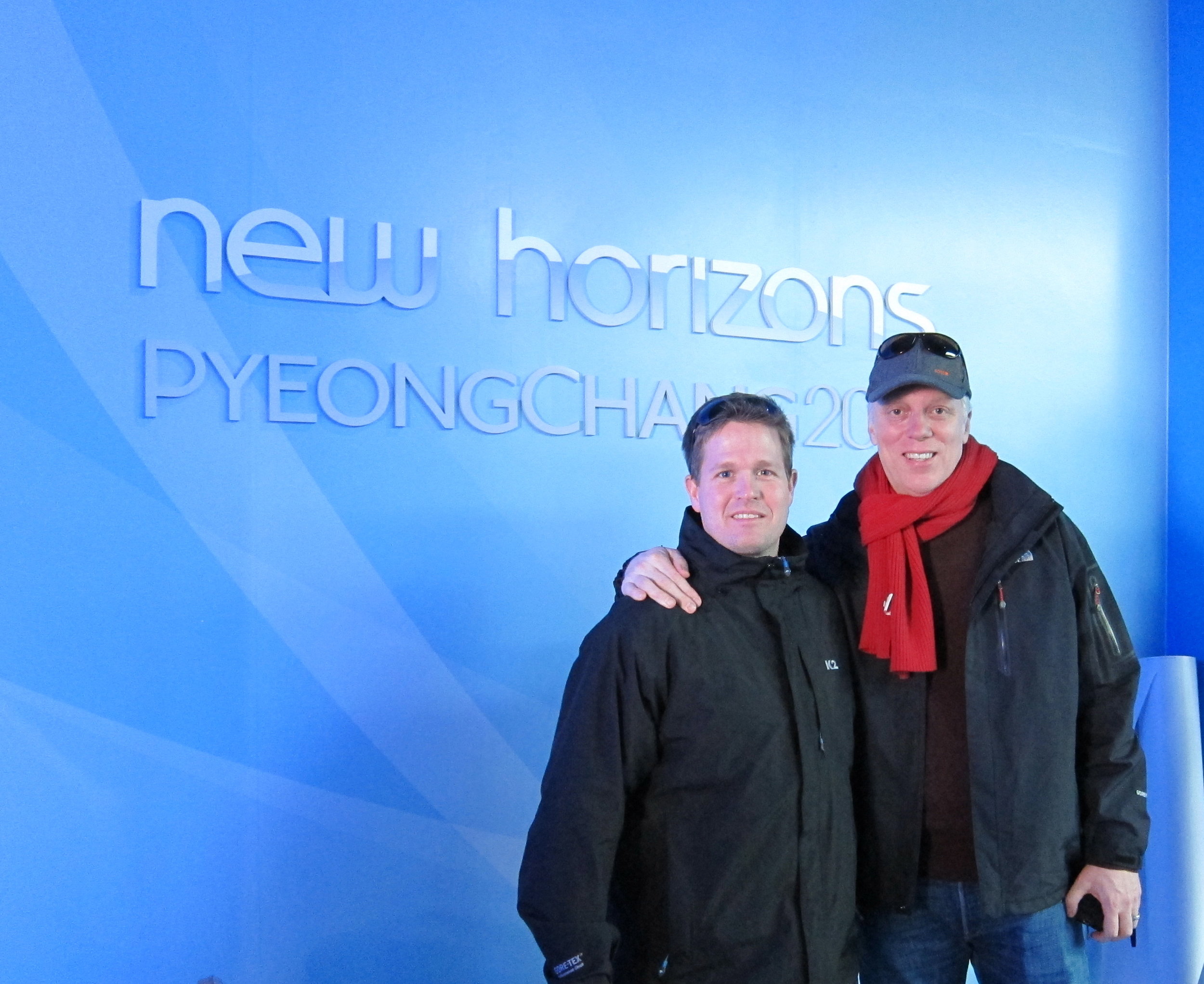
By this time North Design joined us to help with the presentations’ graphics. I have worked with David Woodward (Woody) and his design team on Olympic and World Cup presentations since 2003. Woody knew how to deal with the complexity – and pressure – of live presentations. There are always changes or adjustments to speeches up until the last-minute – which means the accompanying speaker slides must be changed as well, real-time – in two languages. It was a high wire act – Woody and his team handled it flawlessly.

I recall Munich taking the stage with their superstars (and they were superstars) – Thomas Bach, Katarina Witt and Bernard Schwank leading the way. The scripts prepared by my friend, mentor and former business partner George Hirthler, were crisp and on target.
They even had a video of Angela Merkel, the Chancellor of Germany supporting the bid (remember, this was the first presentation to the Olympic Family and they already had the Chancellor of Germany on film…that is called being prepared). They were upbeat and looked fabulous – they seemed happy and confident, and it showed. At that moment, I felt that they were everything that we were not.
Munich 2018 had an incredible technical video that “flew” the viewer through and around the mountain venues, accompanied by a live voice-over by Bernhard onstage. At that point our technical “film” was only maps and still images.
![Mex-1292[3]](http://static1.squarespace.com/static/5a0d00b1a803bb9d2ea4b4e4/5a38517e005559637eaf5c6e/5a385190005559637eaf5ea3/1513640336266/Mex-12923.jpg?format=original)
Munich also had a series of creative, atmospheric films capturing the beauty of the city and its people. Reto Lamm, a former snowboarding champion from Switzerland, and the epitome of cool, produced the films. We were still “struggling” with our own films at that stage. I remember having a dry mouth while watching them present. As presenters, they were amazingly good on their first shot out of the gate.
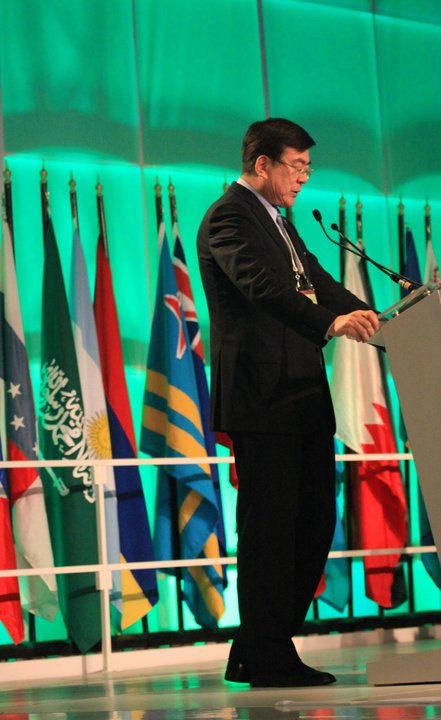
Finally, it was our turn. This first presentation was our “shake out cruise”. It was my opportunity to see how well our “New Horizons” message resonated and judge our speaking team live, in front of an audience.
For that presentation we had Y H Cho, Theresa Rah, Y S Park, Dae-Sung Moon (Korean IOC member and Olympic Champion) and Governor Lee (the new governor of Gangwon Province).
After our first presentation in Acapulco in October 2010, “improbable” was my first impression of our chances having watched Munich’s presentation to ANOC.

Acapulco is where we first introduced the tagline and theme that would carry us nine long months, thousands of miles and ten presentations around the globe - New Horizons. Here is the slide we used to describe "our vision" to the ANOC audience. The focus was on "new growth and new potential like never before."

My notes from that day read:
- New Horizons seemed to be the only recognizable “theme” by any city – we need to double down on it and provide new proof points going forward
- Ch. Cho needs a lot of work on his pronunciation and delivery…not used to speaking to an international audience…I gave him too much content
- Theresa – fantastic – will use her more
- Y S Park – has certain charm – used to speaking to the OF (Olympic Family) – can make him funny but I gave him too much content
- DS Moon – looks great, hard to understand – needs a lot more work
- Governor Lee – the new Governor of PyeongChang – not needed again until SportAccord, earliest (he didn't last long enough in office to joint us in SportAccord)
- Films: more (lots) work to do – MUST HAVE A TECHNICAL FILM
- Speaker slides design – I think Woody’s design looked the best
- Overall, we have a long way to go – NEXT STEPS:
1) Intensive language and presentation training with Chairman Cho and others
2) Produce a new technical film, brief new film company, New Moon, on new films
3) Find young, athlete presenter(s)
3) Increase Theresa’s role in presentations
4) Blow out “New Horizons” because no one else seems to have a clear and concise message
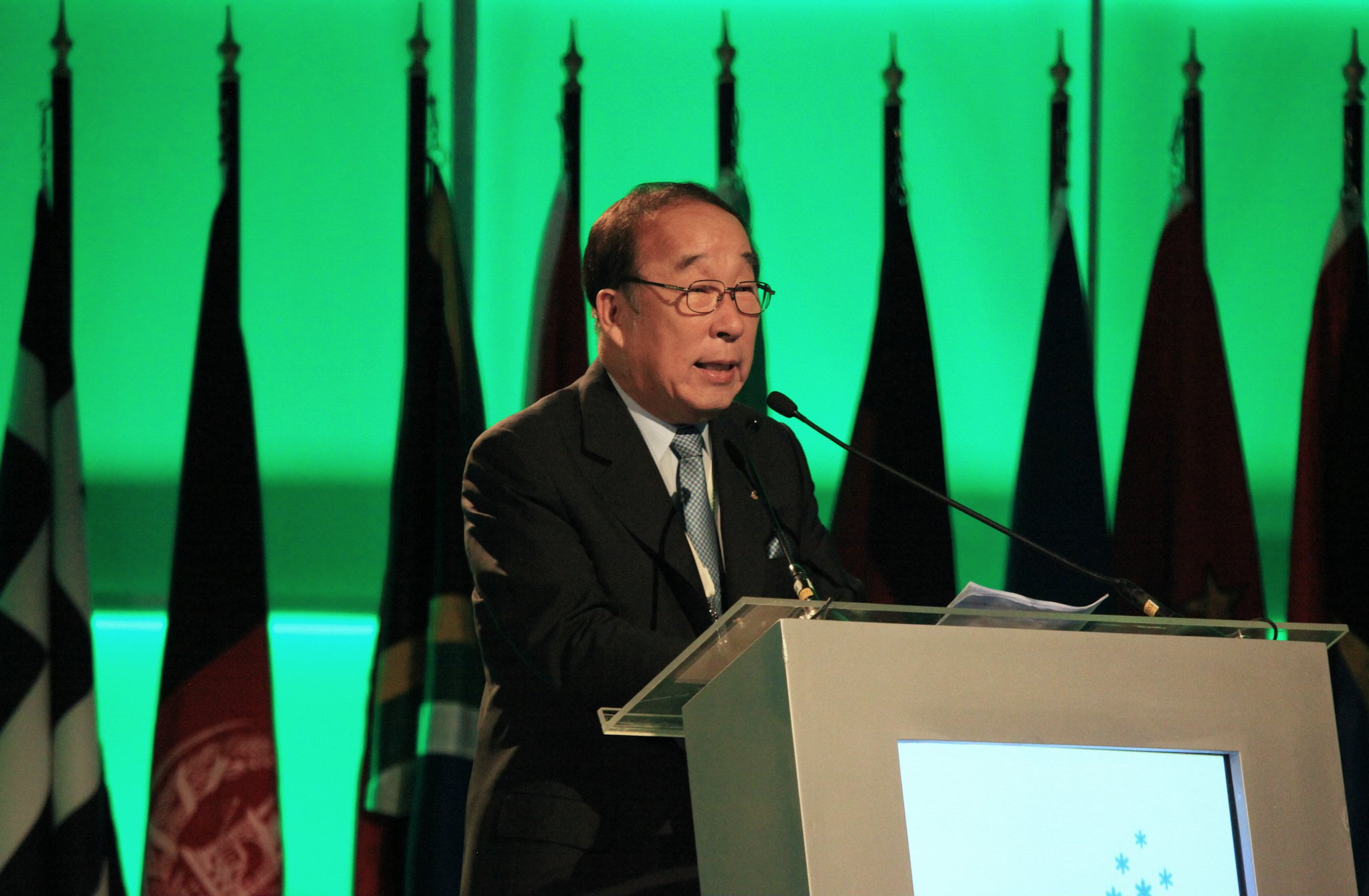
In Acapulco, we had lots of internal drama – politics, factions, consultants leaving (then not leaving), clashing egos and the great battle of two styles of doing business – east and west, hard versus soft, discussions versus decisions, straight-forward versus obtuse...progress or procrastination.
From my perspective, here is the single most important thing to know in an Olympic bid: it has a beginning and an end; meaning, every single day matters.
That is it.
If a bid vacillates on making decisions, then it is sitting still; and if it is sitting still then it is either sinking to the bottom or falling behind.
This may sound dramatic or crazy, but I think no other “Olympic activity” comes as close to what the athletes on the field of play experience as does bidding for the Olympic Games for the bid committee team. It is high drama with no second chances. There is a start and a stop. Each competitor brings his or her own strengths and weaknesses. The "players" endure tremendous personal and professional pressure (how would you like to give a speech in front of the entire world in a foreign language?). It is pure competition and by the way, there is only one medal – gold.
After the presentations we had our debrief meeting. At these meetings all of the PyeongChang team would show up – many of whom I had never seen. One of the “critiques” I shared with PyeongChang 2018 about their previous bids was that Korean bids always brought too many people who seemed to do nothing but stand around in groups (amongst themselves) and not mingle with anyone else. At this point, PyeongChang 2018 seemed to be carrying on the tradition, as a phalanx of expectant faces looked at our team for answers.
I led off the meeting with my critique of our performance – I held nothing back and luckily all of the other external advisors agreed. Like me, everyone recognized the high quality of Munich 2018’s presentation.
There is always "that moment" in a bid campaign, when hope must triumph over fear.
This was that moment for PyeongChang 2018.
The team was quiet. They were confused and close to being dispirited. It was up to us external advisors in the room to address the situation honestly, but also in a way that provided a path forward. Following a summation of the points from my notes and others on how and where we needed to improve, I felt I needed a closing that would help them understand that all was not lost; in fact, we'd only just begun. We had all the ingredients of a great bid. Here is what I said, to the best of my memory:
“Munich 2018 just gave the best presentation that they will ever give in this campaign. It was brilliantly done, it was tremendous…but I believe that they will never give another one that good again. I don’t think they have a message yet that compares to “New Horizons”, and honestly they were so good today that I don’t know how they can top it. On the other hand, I believe that our team will only get better and better, and we will give our best presentation on the stage in Durban next July.”
I don’t know how many people in the room believed me, but I believed it. I just hoped that it was true.
Our next presentation took place on 13 November, to the Olympic Councils of Asia in Guangzhou, China. The presentation time was shorter, so we only had three speakers – Y H Cho, Theresa Rah and Y S Park - and one film.
The team was much more comfortable being in Asia, and I think that helped them onstage. I know one thing that made them relax, and that was a city full of Chinese food. Wherever we went in the world, no matter what city or cuisine, the PyeongChang team always found the local Chinese restaurant for our first or second meal.
Two of the more exciting moments in Guangzhou were 1) the Chinese apparently changed my middle name from "Hugh" to "Huge", and 2) I worked up the nerve to ask Katarina Witt to have her photo taken with me.
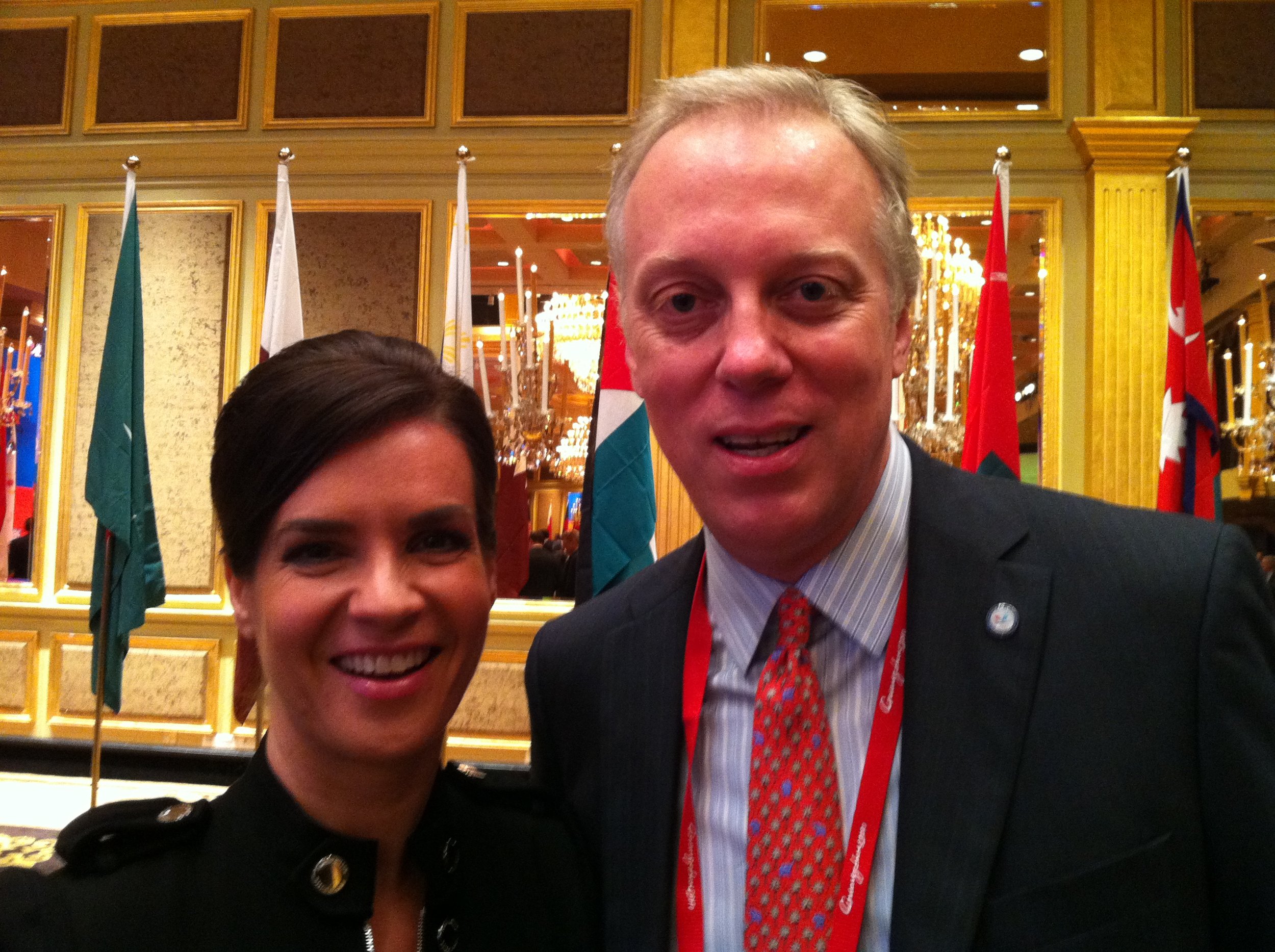
Throughout the 2018 campaign, PyeongChang was fortunate to always be the last to present – this was good for a whole host of reasons. Very often bids are at the mercy of the technical abilities – or lack thereof – of the venue team that is managing technology.
In Guangzhou, both Munich and Annecy had technical problems in their presentations, which were fortunately solved by the time PyeongChang took the stage. Our team’s presentation was tighter in Guangzhou, but we still lacked any emotional cohesion with each other onstage. I thought we made improvement from Acapulco, but we still had issues with everyone’s (except Theresa’s) English delivery and pronunciation. We had to work harder; the good news was that Koreans work very hard.
The last presentation of 2010 was to the EOC in Belgrade, just 13 days after Guangzhou. A “perk” on this trip was that a few of us were able to hitch a ride from Seoul to Belgrade with Chairman Cho on his own plane from the Korean Air Boeing Business Jet fleet. It was a beautiful plane with four bedrooms, eight luxurious seats and a couch.
I dubbed the plane “Elvis-1” because someone asked me “how did you like flying on Chairman Cho’s plane?” I said, “I feel like Elvis.” So, it stuck. We had our own Korean Air attendant and the food and the wine were exquisite. It sure beat standing in line at the airport.
Given both Munich and Annecy were from European NOCs, we felt as if we were going into the proverbial “Lion’s Den”. I felt that this presentation, on European soil, would be tremendously important for our bid, but perhaps that is also how they felt in Guangzhou. I put a lot of pressure on the presentation team and in retrospect, maybe too much for some.

We were still experimenting with the speaker line up, e.g., who would open, and who would close.
For Belgrade we decided on the following order: begin with Chairman Cho again as the opener but with less content followed by a film, then Theresa, then Korean Olympian Kwang-Bae Kang, then Y S Park and close with a another film.

One incredibly valuable new asset in Belgrade was the use of teleprompters. Other team members had suggested it for earlier presentations, and I resisted. That was a mistake and I should have realized it earlier. Now we were using a teleprompter (as were both Munich and Annecy) and it helped all of the speakers a great deal.
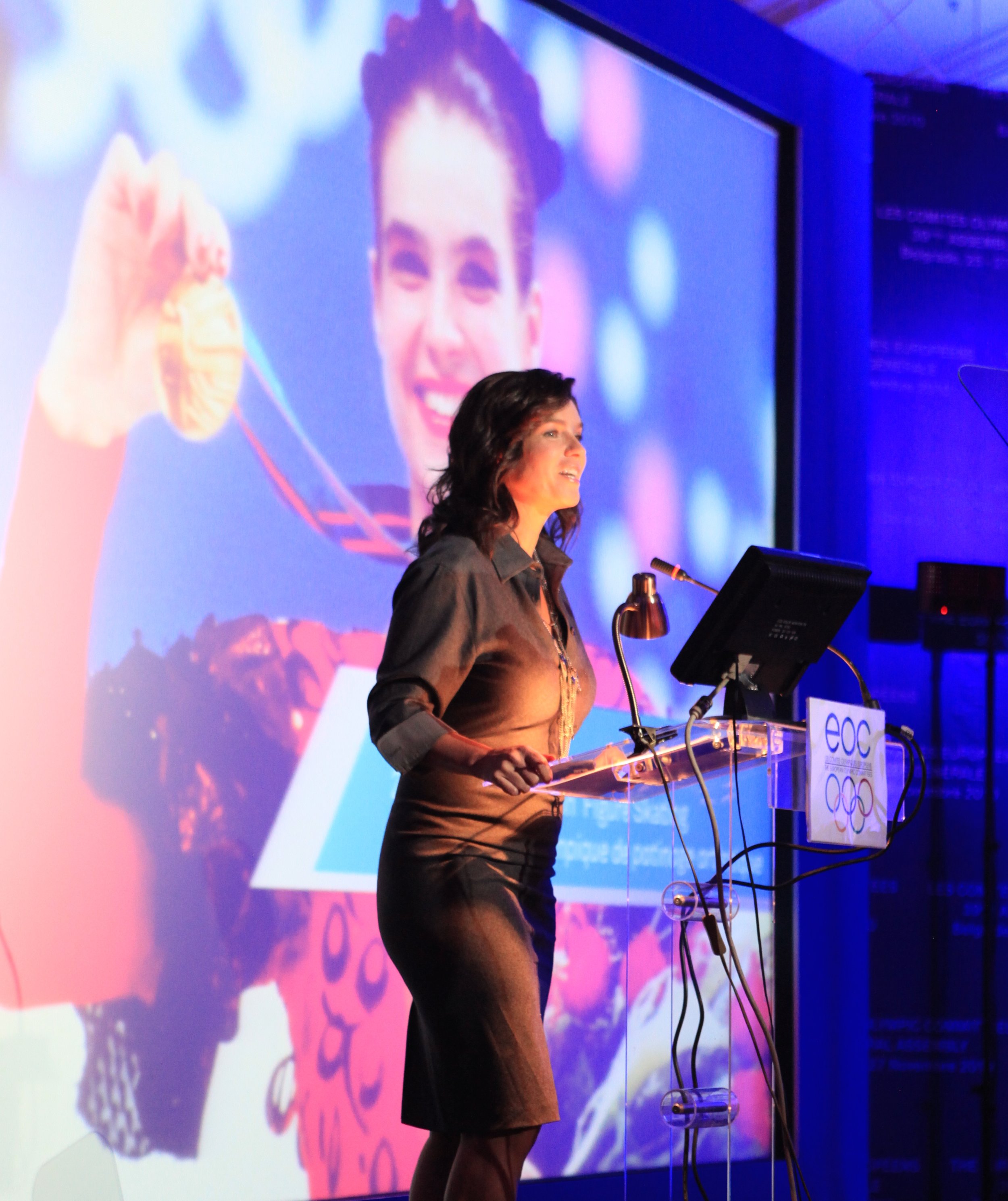
Belgrade taught us a few more things. After the presentation, we were told by many of the Olympic media in the room that “PyeongChang wins on the words and the message…Munich wins on style and video…”. I appreciated the compliment, but I knew that words and message were only half the battle. In a forty-five minute presentation in a giant room, (as in Durban) style points will matter, I thought.
We simply had to get better at presenting. Both Theresa and Kwang-bae were very well received as speakers – young, enthusiastic and easy to understand; there was a lesson in that.
Our post-presentation meeting the next morning was not an easy one. We had a lot of ground to cover with little time.
I was departing Belgrade that morning on my way to Zürich to meet our team and prepare our other bid client, the Russia 2018 FIFA World Cup Bid, for their Final Presentation to FIFA on 2 December, but that's another story. I was working hard to keep the two different bid’s films and speeches straight in my mind.
![Beograd-1193[7]](http://static1.squarespace.com/static/5a0d00b1a803bb9d2ea4b4e4/5a38517e005559637eaf5c6e/5a385190005559637eaf5ed5/1513640336443/Beograd-11937.jpg?format=original)
After the Belgrade re-cap meeting, I had one of the most extraordinary conversations I’ve ever had with a bid client. Chairman Cho cleared the room to speak to me alone. This is the gist of the conversation.
Chairman Cho: “I know I did not do well yesterday…”
Me: “No, you didn’t and it may have cost us a couple of votes…what happened…you were good in rehearsal…”
Chairman Cho: “I got nervous. Even though I am fluent, presenting in English is still very difficult. Listen - I do not need to speak. In fact if I am not good enough, please tell me. I don’t need the recognition – I am a busy, successful person. I am doing this bid because the president of my country asked me to, and he said to me “we cannot lose again”. I want us to win too, but I will NOT be a reason that we lose. If you want me to just sit on the stage and smile, I will be happy to do so…”
I was taken aback.
In most bids there is no small amount of infighting amongst the bid leadership as to who gets the most “air time” during a presentation. Some people even keep track of the length of other speakers’ speeches - really. I have even felt that some bid leaders were more interested in their own personal agenda than the bid’s. That is why this conversation was so refreshing – and invigorating. Chairman Cho meant it. He had no ego in this – he simply wanted to win for his country.
Whatever differences Chairman Cho and I had up until then, and there were a few, simply vanished in my mind. I really respected what he said. I committed to him, and to myself, to help him work harder. And he did work harder – he was tireless. Once, he called me at home and asked if I had seen the new film" The King's Speech". I said "yes". He said, "good...that's you and me" and then he hung up. Y H didn't waste words.
We hired a London-based English language elocution firm to assist, but in the end it was simply Chairman Cho and I, or even more so, Chairman Cho and Theresa Rah practicing hours on end to improve his English pronunciation and presentation skills. The progress he made from Acapulco to Durban was extraordinary. When someone wants to succeed that badly, it is an inspiration to everyone else on the team.
2010 was drawing to a close and we set our sights on what we had to accomplish in 2011.
After three presentations in 2010, we knew we had a strong central message that so far, no other bid was able to counter effectively.
“New Horizons" was turning out to be something powerful and differentiating, but we still had not been able to communicate it fully, yet. We would, in time.
We knew our strengths and weaknesses. And most importantly, the intangible feeling of settling into a real “team” was beginning to take place. Often it takes the “heat of battle” to draw people together, to get them to assemble and follow one true banner of leadership and direction.
We had been humbled; yet thanks to the unique Korean culture, we persevered with great patience. That culture, and working with our Korean colleagues for almost two years, proved a powerful lesson for me, personally.
As we prepared for the last year of the campaign, it was evident that we were well on our way to being “competitive” in the race. And for the first time we were gaining a little momentum – and more importantly, confidence.
But I still did not know if we could really win; that would not come until later.
Next: Presentation Overdrive
Special thanks to Stratos Safioleas for use of his photos and review/edit/memory help. Stratos served PyeongChang 2014 and 2018 as their external International Media and Social Media Advisor.
Special thanks as well to Theresa Rah, for her review/edit/memory help.
Third Time's The Charm - Part I
 PyeongChang’s 2018 Path to Victory
Part I: Autumn 2009 – SportAccord Dubai 2010
Terrence Burns ©2014
As I have written many, many times - consultants and advisors do not win Olympic bids; Bid Committees win bids. To do so they must have a great team, great leadership, great relationships throughout the Olympic Movement, a great technical plan, a great message and the ability to communicate that message to the Olympic Family in a myriad of effective ways throughout the course of the campaign.
This series of four articles is about the PyeongChang 2018 Winter Games bid's journey to victory from my perspective as an external advisor consulting on the bid's brand messaging strategy (helping the bid define the answer to "Why PyeongChang?"). I was also responsible for the development and preparation of PyeongChang 2018's presentations to the Olympic Family.
Many other crucial moving parts of the bid were working hard as well, simultaneous with our team's efforts during the course of our almost two years together. The bid's administration, technical planning, communications, international relations, and sport and venues teams to name a few worked equally hard in their respective areas to ensure the final, victorious result in Durban.
Can we be friends?
Our first meeting with the PyeongChang 2018 bid was a brief one. The meeting took place in an almost springtime snowstorm, with Governor Jin Sun Kim at the Denver SportAccord during March 2009. Governor Kim (Governor of Gangwon Province, where PyeongChang is located) was the instigator, driving force and leader of PyeongChang’s two previous bids, 2010 and 2014 respectively - both of those bids almost won, by the way. I worked for Vancouver 2010 and Sochi 2014, both of whom eventually defeated PyeongChang. Given those facts I wasn’t really sure how the meeting would go.
During the discussion, Governor Kim listened politely and nodded periodically. He spoke to us through his interpreter, though without committing to anything. I remember thinking that he seemed very tired - time zones are a killer. At the end of the meeting I wasn’t really sure what, if anything had been accomplished.
Only later did I learn that Governor Kim was listening acutely, very well indeed. Although I'd worked closely with Koreans many years before (I worked for Meridian Management, the IOC’s marketing agency in 1997 when Samsung joined the TOP Program), this meeting with Governor Kim reminded me again about the particulars of Korean business meeting etiquette. Today, by the way, Governor Kim is President & CEO of the PyeongChang 2018 Organizing Committee.
Over the course of the next few months we began a dual dialogue with both PyeongChang and Munich. Truth be told, my heart was with Munich because of my German wife, my love for the country (I worked there in 1991 with Delta Air Lines) and the city of Munich. Munich’s young bid was, as are most bids at that stage, somewhat chaotic with two initial leaders, Mr. Bernard Schwank and Mr. Richard Adams. PyeongChang’s team was no less confusing with various powerful entities jostling for internal influence and control of the bid.
In September of 2009, we flew to Seoul to present for the first time. The initial PyeongChang bid team now included personnel from Korean Air because Korean Air’s Chairman, Y H Cho, was selected to co-Chair the 2018 bid with Governor Kim. I particularly recall meeting Mr. Jiyoung Jung for the first time who would become a true friend as well as a colleague. The scope of requested work changed a few times – first PyeongChang wanted us to include a PR and Communications partner, and then they asked us to compete against a PR and Communications partner.
This is not unusual. Young bids generally have little understanding of the bid process, the work ahead, the skills they will need, the roles of advisors and the work that they could/should perform. And, consultants who claim credit for and/or exaggerate their work performed on previous bids often exacerbate this confusion. CV inflation is the most reckless, profuse and hidden Olympic "sport". Lesson for future bid cities: extensively check references with former Bid CEOs.
Pitching a new bid committee is an exhaustive and often expensive exercise. For example, we made three trips and presentations to the Tokyo 2016 bid and believed, based on our final meeting, that we were hired. We were so certain that we bought Japanese mobile phones for our team (Japan had a proprietary telecommunications platform at the time). We weren’t hired, and I heard about buying those phones from my colleagues for years.
Pitching a bid can be exhausting as well because not only are you trying to explain what you do, what you have done and what you can do for a bid, you are often walking a thin line explaining (because bids always ask) what a competitor did or did not do on a previous bid.
For the record: when asked, I shoot straight; never denigrate, but always educate.
A logo for dessert
We were having dinner in Seoul at a Korean barbeque restaurant during the period we were still negotiating with PyeongChang. Earlier that day, the bid committee told us they were ready to select a logo. More often than not, new bids tend get this process wrong. To get to a serviceable logo, one should begin with a brand assessment and positioning exercise. This work then “informs” the designers so that their visual interpretation of the brand is consistent with its mission, vision and values.
But as I said, this rarely happens.
Usually someone decides that a friend or colleague can create a logo cheaply, or, they farm it out to a few designers with virtually no real briefing for the design. The designers are left to their own devices and we get bid logos that sometimes defy logic.
But I digress; back to the PyeongChang 2018 bid logo.
We expressed our “concerns” that they plowed ahead with logo development before the bid's brand assessment and positioning work. We asked, “What is the logo trying to express? What part of the PyeongChang 2018 vision is it trying to articulate?” They listened politely and seemed to understand our points.
Later, at the aforementioned dinner (again, before we were hired) three gentlemen entered the crowded restaurant with 3 large advertising boards. Each board had a single, different version of a potential PyeongChang 2018 logo.
They cleared the table in front of me and said, “Mr. Burns, would you please tell us which logo you think is best?” No set up, no explanation of each designer’s intent – just a cold presentation to a jet-lagged foreigner with several Korean beers in him. I chose one, admittedly purely subjectively, and it eventually became the PyeongChang logo - whether or not my choice had anything to do with it, I do not know. By the way, the logo worked out just fine.
PyeongChang 2018 did eventually win, so I guess we can save the debate about the efficacy of brand positioning work for logo development for a later post – or, maybe even the efficacy of bid logos in general.
As an aside, I remember asking why are you spelling “PyeongChang” with a capital “C” in the middle of the name?
“We don’t want to be confused with Pyongyang…in North Korea,”someone answered.
“Ah”, I said; and the capital “C” stuck.
Finally Official
In late 2009, we had a final meeting/presentation with bid Co-Chairman Cho in the Korean Air headquarters in downtown Seoul. His daughter, Emily, a Korean Air marketing executive attended as well, and although not part of the bid committee she was extremely helpful to us throughout the campaign. We also had our final meeting with the Korean NOC.
In early January of 2010, we went on a venue tour in PyeongChang. I was on crutches from a little motorcycle mishap, and I remember standing on the icy ledge at the top of the ski jump. I think the Koreans were nervous that I would fall off. Perhaps that is why PyeongChang 2018 finally hired us - maybe they thought we were just as desperate as they were for PyeongChang to finally win. Time to go to work.
The Bid Committee had already written the Application File (they had two solid, previous versions as a foundation). Their technical plan was very good, not as attractive as Munich’s due to Germany's existing winter sports infrastructure, but certainly very good.
What they lacked was a story and an answer to the question “Why PyeongChang?”
The first real challenge I recall was the IOC Teleconference after the submission of the Applicant File. The bid team already had sectional heads for each functional area, virtually all of whom were academics with excellent knowledge of their subject areas, but with minimal Games or Olympic Movement experience.
This short teleconference presentation to the IOC is designed to give the IOC a better understanding of the bid’s motivation and vision as well as its general technical and operational plans in as an efficient and affordable manner as possible.
Some of the speakers had taken part in previous PyeongChang bids and a lot of the technical material was simply updated and refreshed from PyeongChang 2014’s bid – which was fine, they were able to show progress with each successive bid.
As I read the drafts, again what was missing for me was the answer to “Why PyeongChang?”
Message Matters - A lot
As background, the 2010 and 2014 PyeongChang bids relied heavily on the message of the Winter Games as a peaceful means to unify the Korean peninsula. Now, there is no doubt that this is a vital geo-political issue, and it is a very personal and passionate issue for the Korean people. But there’s just one problem: the message had no real relevance to the Olympic Movement or for the Winter Games.
While working for Vancouver and Sochi, we knew this – and we were able to exploit it with clear, powerful value propositions that illustrated what each of these two cities could provide to the Olympic Movement and to winter sport.
I tried to adapt the presentation remarks (they were already written) around a concept that was taking shape in my mind, but was by no means a formal brand or communications platform, yet. At this point we could only adjust the texts, not re-write them (it’s easier to re-write than “fix by editing”, by the way, if one has the time).
I flew to Seoul to be in the room with them (off camera) for a few hours of presentation training, and the Q&A. The presentation went fine.
Then we got serious about creating the answer to the question, “Why PyeongChang?”
Initially, I received a great deal – a great deal – of pushback from some members of PyeongChang 2018 regarding the bid’s positioning and its brand platform.
It was difficult to make them understand that this brand work would serve as the very foundation for every single piece of PyeongChang 2018 communication over the course of the bid (speeches, brochures, press releases, presentations, advertising, direct mail, website, Bid Books, etc.). It is important to undergo a rigorous process to get it right because in the end, a clear and singular message is a bid’s only true point of differentiation from competitor bids.
We were competing against one of the greatest cities in the world, Munich, (the perceived “front runner” in the race up until a few months before the selection was made in July 2011) and a country, Germany, with a winter sports heritage and facilities second to none.
Munich 2018 also had a sophisticated bid committee, led by the extraordinarily competent Bernard Schwank, the extraordinarily popular Olympic Champion, Katarina Witt – and, for good measure, extraordinarily well-known and highly experienced German IOC member and IOC Vice President (then rumored to be the next IOC president) Thomas Bach. And, they had the Alps. It just didn’t seem fair.
We were also competing with another alpine gem, Annecy, France. Led initially by Olympic champion Edgar Grospiron, and then Charles Beigbeder, Annecy's bid also offered bonafide winter sport credentials that PyeongChang could not compete with on a head to head basis. Annecy was also a stunning site for the Winter Games: picture postcard perfect.
But the Annecy bid suffered from a venue plan that many considered "too spread out" to be efficient. Nevertheless, we knew that the French could host a magnificent Winter Games and, they knew their way around the Olympic Family and the world of Winter Sport.
We considered both cities real competitors for the crown up until the last moments in Durban.
But I knew that we helped Sochi defeat Salzburg under similar “image” constraints – we just needed our own story.
One evening at home in Atlanta I spent hours on the phone, literally, arguing with a few members of the bid committee on the other side of the world about a suggested tagline for the bid. Someone wanted a tagline called “A Bigger Winter”. Even after accounting for translation and transliteration, I tried to gently explain why I thought "A Bigger Winter" was not a good idea in the context of this bid campaign.
If you have conducted business in Korea, gentle doesn’t always work. Koreans are passionate – which is why I enjoy working with them. You always know where you stand. So, I gave up on being gentle. We all agreed that we would wait until I delivered a new PyeongChang 2018 brand model before we addressed the “tagline” issue again.
The Journey to New Horizons
We all met for the first time as “the PyeongChang 2018 team” in Vancouver for the Games. Vancouver was Chairman Cho’s first major Olympic experience as head of the bid committee and we were all getting used to each other. Bid Cities at Olympic Games are a bit like new kids on the first day of school. They know they are supposed to be there, but aren’t sure what it is they are supposed to be doing (or what the IOC will allow them to do).
In Vancouver I was also introduced to a young woman named Theresa Rah. Theresa, I was told, was the new Communications Director. Little did I know that Theresa would become my creative muse for the bid’s story, and the anchor for PyeongChang presentations over the next 17 months.
In Vancouver I gave a presentation on Olympic branding and PyeongChang, and we agreed that I would present the final PyeongChang 2018 brand model to the entire team at SportAccord in Dubai in April.
By Dubai, the bid committee included representation from the Korean NOC, Gangwon Province personnel, members of previous bids and new bid members from Korean Air; it was a heady, complex mix of factions.
Y S Park, then head of the Korean NOC and a strong and consistent advocate of our work, was present as well with his excellent team lead by John Moon and Seihwa “Bonnie” Kim. Governor Kim was also in the room with his team, led by Byungnam Lee and Zoo-Whang Kim.
By this time PyeongChang had hired other consultants such as Vero, Stratos Safioleas (Stratos was onboard from the beginning and had in fact worked on the 2014 bid), Charlie Battle, Young-Sook Lee, and Laszlo Vajda to name a few. Cheil Communications also had a team led by Jooho Kim, Jace Oh and Alexis Choo.
The brand presentation I shared that day was a 110-page PowerPoint deck. That’s a lot of pages for anyone to sit through, especially listening to what may be one’s second or third language (or via a translator).
But it had to be done to prove why the old messaging would not work and why new messaging was required to win. It also had to be done with painstaking detail and metrics.
It had to be done precisely and with supporting documentation because that is what Korean people respect and expect, and it is how they conduct their own work.
And it is why the muddy fields of emptiness, death and destruction, in which my father toiled for three years as a young soldier in the Korean War, now comprise one of the most modern, dynamic and exciting cities in the world – Seoul.

Measuring Opinions Qualitatively and Quantitatively
I took the team through the PyeongChang 2018 brand research.
The words most highly associated and relevant to the words Korea/Korean people:
Family, Corruption, Precise, Hopeful, Hard working, Insular and Aggressive
I showed them what foreigners thought about Koreans, and we talked about how to build this research into a "story" for PyeongChang 2018.
Hard working = making and keeping promises
Precise (intelligent) = best plan for 2018
Dynamic = fast growing economy, new markets for winter sport
I showed them purposefully simplistic images of old thinking and perceptions of Korea versus the new Korea today.
For example, many non-Asians think of this when they think about Korean Culture...
or this...
But not about this...
or this...
I showed them how foreigners around the world and people within the Movement perceived them and their country - including the previous bids. And while it is true that cars, mobile phones, refrigerators, ships and all manner of manufactured goods are made in Korea...she, the girl pictured below, is also "Made in Korea" along with millions of other young, hip, Koreans just like her.
This was not an easy discussion.
We had many veterans of those previous bids in the room.
There were a few uncomfortable moments of silence.
The Road Ahead
But we had only one chance of defeating Munich and it had to be predicated on creating our own story and evaluation set. If left to comparisons with Munich’s architectural beauty, cultural attractions, leisure options, dining and shopping opportunities – let alone the sporting venues – PyeongChang would lose again. We had to create something new, something imaginative that could nullify or at least blunt Munich’s many strengths.
We had to look outward instead of inward. This meant we would not be mentioning reunification of the Korean peninsula as a key message for the bid. Again, that was not an easy or popular message to deliver, but it's what we get paid to do.
I watched the reactions and tried to read the room. I was keenly interested in Chairman Cho's perception of the message I was delivering, especially given that he was pictured in one photo example of the "old" Korea! Thankfully, he was in total support. He understood branding and marketing very well as head of a global airline, and he understood that we had to be modern and international in our image going forward.
There was also plenty of words of agreement and support, both from many Koreans in the room and from my fellow foreign colleagues, all of whom knew this was exactly the path that we had to take.
At the end of the presentation, we conducted an exploration in “taglines” and key messages. We recommended about 5-6 taglines, and I remember specifically leaning towards the concept of “Dream Big.” I liked the connotation of it; how it related to the people of Korea and the miracle that they have created in the last 60 or so years.
I liked the way it spoke to “persistence” – this was their third bid and they were not giving up. And I liked the unexpected nature of this bold, modern, international message for a PyeongChang bid because I thought it would surprise the Olympic Movement. (Spoiler Alert: "Dream Big" did not make the cut, it was in use already commercially)
As the presentation drew to a close I felt a general sense of relief in the room – certainly I was glad to have it over. I felt a lot of “buy-in” from the team. They understood the call for a new energy, a new dynamic and a new way of thinking about a PyeongChang Olympic bid.
I admit that the one person I was most concerned about offending was Governor Kim; after all, he led the two previous bids. Much of my presentation was a comparison of the old versus the new messages. I was afraid he might take it personally.
Nothing could have been further from the truth; he was a gentleman.
At the end of the presentation he thanked me and said, in English, “…well done, good job – I liked it…” He also liked “Dream Big” as a tagline – I think he and I, alone in the room, liked that option.
As a footnote, Governor Kim was the only person in the bid who sent me a thank you letter after PyeongChang’s victory in Durban. I received many emails and calls from my friends in the bid, but Governor Kim’s was the only “official” letter of thanks that I ever received– from anyone, in Korea. It was a gracious gesture. I still have it.
At the end of SportAccord, the bid team had very good understanding of PyeongChang 2018’s new brand positioning, its new key messages and the answer to “Why PyeongChang?”
We had our story.
We had our answer to "Why PyeongChang?"
And we had our new tagline.
We called it "New Horizons"
Now we just had to put it into practice, which is always harder than it appears.
Next: Part II - 2010 - The Year of Patience and Humility
Timing Is Everything.
Heartbreak, History & Hope - The story of Ukraine and Lviv 2022
Terrence Burns ©2014
My colleague Ansley O’Neal and I were invited to Lviv, Ukraine in June 2013 to discuss the city’s bid for the 2022 Olympic & Paralympic Winter Games. To be honest, we weren’t quite sure what to expect but what we found was a very pleasant surprise. A quaint city square (in 1998, UNESCO named it a World Heritage Site), mobs of hip, happy and optimistic young people (the city has dozens of universities and a huge student population) and some of the most entertaining and eclectic restaurants and bars in Europe. It’s a very cool place full of very cool people.
We met Lviv mayor Andriy Sadovyi to discuss branding and the bid; he was a progressive man with visions of a westernized Ukraine led by the example of a Western looking and leaning Lviv – even though he was wearing a traditional Ukrainian shirt for the meeting and our photo.

In the end, we agreed to help Lviv 2022 create its brand, its key messages, a new logo and a distinct identity for the campaign. We took a lot of time explaining that the audience for an Olympic bid is an international audience, and that we were not creating a new brand for the city of Lviv, rather, a new brand for the city of Lviv’s bid for the 2022 Winter Games; different message, different target audience. For the most part I think everyone got it – even the politicians.
So we began.
We quickly found out that no one (foreigners) knew what Lviv was, or where Lviv was or even how to pronounce it (similar to the start of the Sochi bid). Then we quickly discovered a country that is quite diverse and multicultural. And, we found out that Ukrainians themselves had a hard time describing their own culture because of their fractured history. It was a pleasant exercise in discovery for all of us…like every bid. Ukraine has been generalized as either Russian-focused (eastern Ukraine) or Europe-focused (Western Ukraine). As we have seen from recent events, Ukraine is not that simple.
The Lviv 2022 bid committee is quite young compared to other bid committees with whom we’ve worked. Led by Sergej Gontcharov (he just turned 30 yet is wise beyond his years), the small team really impressed us with their passion for the Olympics and what the 2022 Winter Games could do for Ukraine. To a person, the team was well educated, intelligent (which is different from being well educated), tireless and above all, that most rare of words in that part of the world – optimistic.
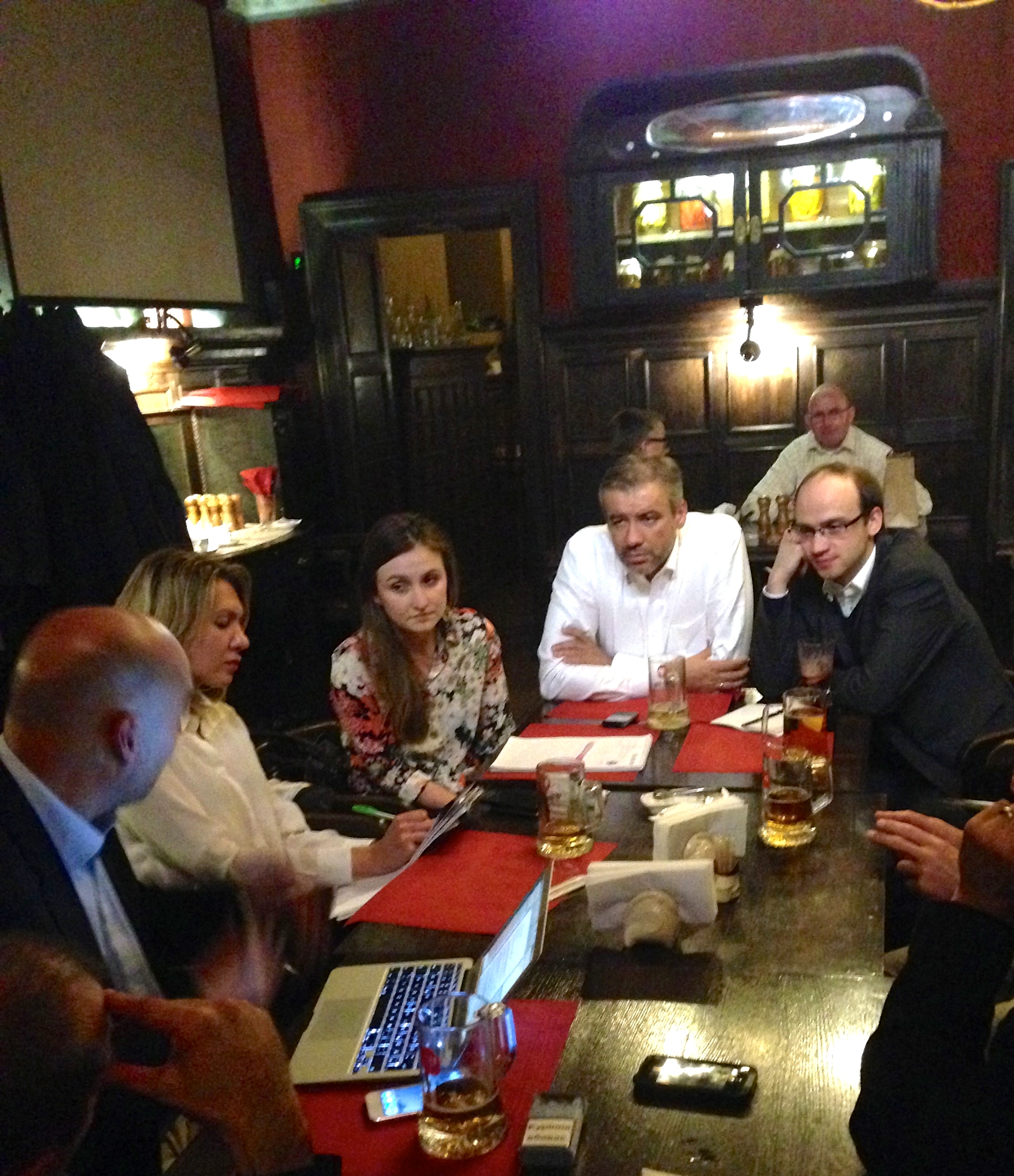
I’ve worked with a lot of bid committees over the years the Lviv 2022 team was probably the most idealistic (in a good way) and willing to listen and learn. Those young, expectant faces that took endless notes and asked endless (good) questions will be Ukraine’s leaders of tomorrow. Which is why the events of this past two weeks have been so devastating.
Ukraine is a country struggling to stand and it is being pulled from every direction by every motivation imaginable. Ukraine is also a country that has truly been independent only 18 years or so of its entire history. They are building the car while they drive it, real time, in front of the world.
Watching the Ukrainian athletes march in Sochi’s Opening Ceremony under one government, then try to focus and compete while their country was falling apart back home, then march back into Closing Ceremony under another government sounds like a movie – but it wasn’t. It was real and it was raw, and it shows once again how the unique prism of the Olympic Games gives the world a window into a country’s people, its culture and history itself.
I saw members of the Lviv 2022 bid team in Sochi on the IOC Observers program. They were putting up a brave face but you could see the strain in their eyes. I saw people far too young with too much ability and hope to be struggling under the weight of their impossible burden. It was impressive and moving.
On Thursday morning the 19th of February, we sat with members of Lviv 2022, the Ukrainian NOC and the great Sergei Bubka as events in Kiev were unfolding. We were trying to help them create Tweets, posts, media statements and releases about the situation, but each time we finished a document, something new transpired.
It was a tense morning but they were not panicking or angry – they were determined that something good would come out of this turmoil for their country, for their home. One of Bubka’s Tweets was taken up by the media and flew around the world - “Dialogue is power, violence is weakness”. He meant every word.
As I write this, I have no idea what will happen in Ukraine tomorrow, or if the Lviv 2022 bid will continue. What I do know is that the members of the Lviv 2022 bid committee and all the Ukrainian athletes who were in Sochi are champions in my eyes. Ukraine is a metaphor for the battle of East and West right now, but the reality is they want to be neither, they want to be a bridge to each – and they want to be themselves.
It isn’t often we see history play out before our eyes, but it is happening in Ukraine right now. Let’s hope they find the self-determination and national identity they crave, as well as the peace that they deserve.
Godspeed my dear friends, Sergei, Sergej, Valeriy, Dima, Oleksandr, Ksenia, Ira, Serhiy, Arsen, Oleg and to those I've omitted.

Bobby, We Hardly Knew Ye...

Bob Stiles' Sochi 2014 Olympic Legacy
Terrence Burns ©2014
In January of 2005, our team began prepping the Moscow 2012 bid committee for the upcoming visit of the IOC Evaluation Commission. In those days we had a very thin advisory team and my forte was not and is not technical planning. It was too late to “adjust” the Moscow bid books, written locally by non Olympic-experienced advisors – that's another story. And, we had to get ready for the IOC EC visit in just two months.
Bob Stiles, an old friend, had just finished his consulting stint with Leipzig 2012. Bob was quite vocal in the media about Leipzig being cut and Moscow passing through. And if you remember Bob, he could be fairly direct. A few years before, Bob hired my former partner George Hirthler and me to work on the US bid for San Francisco 2012 (a great bid…too bad) and also for the US Equestrian Federation’s re-branding. As we do in our business, I felt obliged to return the favor to Bob as soon as I had an opportunity.
Bob had extensive experience in planning, implementing, managing and consulting to major world-class sports events, including six Olympic Games, three FIFA World Cups and numerous other international competitions.
Bob knew his proverbial stuff.
In January 2005, Bob agreed to come to Moscow. He immediately fell in love with the city and its people, and as we shall see, Russia became the consuming passion for the rest of his too-short life.
Bob was a brilliant man - kind of off the charts brilliant, having earned both his BA and MA at Stanford in education and German. In truth, you could drop Bob anywhere on the planet and he could speak the language in about two weeks. He learned Russian as an undergrad (in his spare time) at Stanford and actually visited Moscow on a student trip in 1966 (yes he was busted for selling Levi’s blue jeans out of his backpack on the street). He was fluent in Russian when he was 18, but not when he returned to Russia for the second time of his life in 2005, at the age of 57.
As I said, it didn’t take Bob long to figure it out. I remember walking all over Moscow with Bob – he loved to walk. It was a Rip Van Winkle moment. The Moscow of 2005 was literally a different planet from the Moscow of 1966. Bob was speechless and observant as always. As we sat drinking a glass of good red wine (Bob loved red wine), overlooking Red Square and the new GUM, tears filled his eyes and he said “God I am so happy to be back here and see this…they made it through the nightmare.” Frankly, I’d never seen this side of Bob.
The very first mention I can recall of the word “Sochi” came at lunch one day, in an nondescript little Russian restaurant around the corner from the bid office – just the kind of place that Bob sought out and loved. He and I were having soup and some lovely dark Russian bread, and as usual drinking one of the dozens of flavored tea offerings with Dmitry Svatkovksy.
Dima was the Sydney 2000 Olympic Gold Medalist for Russia in the Modern Pentathlon, and he won a Silver medal in the same discipline competing for the “Unified Team” in Barcelona. Dima served on the leadership team of the Moscow 2012 bid as Sport Director and he was already thinking ahead. He said, “the leadership (a vague term in Russia that could mean anyone from the Sports Minister - then Viacheslav "Slava" Fetisov - up to Putin himself) is thinking about a winter bid for Sochi for 2014…”.
Bob and I were silent, as neither of us knew where Sochi was, and frankly we working hard to keep the Moscow bid afloat. In classic Russian style Dima leaned in, inches from our faces, and with an upturn in his chin, he narrowed his piercing blue eyes and said “Sochi…vhat you think…?” To this day I can’t recall what we actually said, but I don’t remember either of us jumping on it as a “great idea”. Like I said, we didn’t even know where it was. I do remember Dima looking a bit disheartened.
So the Moscow 2012 bid marched on to Singapore. We did our best, but were voted out in the first round with 16 votes behind New York, Madrid, Paris and London.
Four important things happened during that Moscow 2012 bid:
- I reconnected with Russia (I’d worked there briefly in 1992 with Delta Air Lines as their country manager) and learned to love and appreciate it and its people – it’s tough for most foreigners but worth the effort;
- I learned a lot about Olympic bidding from the bottom up;
- I reconnected with Bob Stiles. Although I initially hired him as a consultant to our firm, we always had a partnership relationship. We had different but complimentary skills – but I am sure that I learned a lot more from him that he did from me.
- The final important thing that happened as a result of the Moscow 2012 bid experience was that the Russians called, right after the loss in Singapore and asked us to help them on the Sochi 2014 Winter Games bid. They appreciated our grit, our ability to work hard and frankly, they liked us, trusted us and we liked them.
I called Bob and asked if he was “in” but with a twist. Going forward, we wanted him on our team as part of our company, not a consultant. The world of the independent consultant is a tenuous one. Contrary to common belief, the money is not that great and it is certainly not steady, working from event to event.
To our delight, Bob said yes and joined us full time. We immediately got to work on closing the Sochi deal.
The then head of the Russian Olympic Committee, Leonid Tyagachev, was the former sports minister. He was rumored to be a close friend of Putin’s and also his ski instructor. Tyagachev tasked the “three men left standing” after the Moscow bid, Dmitry Svatkovksy, Alexey Sorokin and Alexander Chernov to get the Sochi bid rolling. They immediately called me and I agreed. To this day people still ask me why I agreed to Sochi and all I can say is that I knew the Russians would not do two bids in a row and lose. They were determined – it was a very different feeling from the Moscow bid. And, I’d never been to Sochi!
Bob and I took a team including David Woodward of North Design, Charlie Battle and David Ficklin representing Jerry Anderson of then-HOK, and Catherine St. Laurent to Sochi in August 2005 for our initial look around. There was no bid committee, no money, no contract – nothing. All we had was the word of Russia via our three friends Svatkovksy, Sorokin and Chernov. But we believed in Russia and we knew, as it always does there, “it will happen”.
Bob and the HOK team, along with other Russian colleagues such as the late Andrei Serpilin of BDO and Dima Mosin, also ex-Moscow 2012 team member went to work on an initial sports and venue plan and budgets, while I went to work on the branding, messaging and the answer to “Why Sochi?” I am not sure which was more difficult at that point. I remember the deputy mayor’s office literally covered in maps. Bob looked at the place where the Olympic Park now resides and said, “what is here…?” After a few exchanges in Russian with his colleagues, the deputy mayor looked at us and said “nothing…we can use it all - what do you want to put there?”
It was an “ah ha” moment and one that frankly only Bob, among us, truly understood in terms of what it could really mean for this bid and for the long term legacy for the city of Sochi. Bob said, and I am paraphrasing from memory, “gentlemen I think we can do something historic for the Olympics here – and for Sochi…we have go over there and look around and measure the place but I think we can offer the Olympic Movement the first ever totally enclosed Winter Olympic Park for all the city/ice venues…including the Village, hotels, lounges, sponsor showcasing – all of it in one place! Do you realize what this means?”
I have to admit I did not know what it truly meant, and I really didn’t understand the true genius behind Bob’s revelation until it began to take shape on paper and in our narrative. Then it was clear: a built from scratch, tailor made plan for the Winter Games – state-of-the-art, brand new and in a region desperately in need not only of the sports infrastructure, but the accompanying city infrastructure needed to host a Winter Games and to serve its citizens for generations to come.
We would also re-introduce a new, vibrant and democratic Russia to the world, and host the Winter Olympic Games for the first time in one of the world’s greatest winter sports nations. Oh, and did we mention it will take place in a summer resort on the Black Sea? This bid had it all, and then some. Most of all, it had Bob.
Bob had a vision in his mind that people around the world are now seeing every night on the Olympic broadcast – he could really see those beautiful, incredible new venues in a glorious park in what was then a vast, empty, unused and frankly blighted area. And he was right – he was right more right than he would ever know. I know a lot of adjustments have been made since the Application File and Bid Books were written, but the foundation is essentially the same. And it was Bob who conceived it and drove it.
Bob worked tirelessly on the Sochi bid – it consumed him. We were in Moscow once a month, every month for at least one week, and often two-plus in Bob’s case. We were, by this time working with the new bid committee team brought in December 2005 by new bid CEO Dmitry Chernyshenko, whose talented leadership led the bid to victory in Guatemala City.
We also had help from new colleagues such Jon Tibbs and his team, IMG, Weber Shandwick, film makers Caroline Rowland and Rupert Wainwright, Andrew Craig and Emma Newbery, speech coach Martin Newman and others I am certain I've omitted (forgive me - let me know and I will update this post!).
Bob’s greatest pride was the Olympic Park – that was a never-been-done-before accomplishment and those are hard to come by in Olympic venue planning. To be sure we had a team of people, foreign and Russian consultants, architects, and analysts working on the bid by now – but it truly was Bob’s inspiration for the Sochi Olympic Park that led to what we see today.
I watched Bob literally become a different, happier more fulfilled person in Russia. “A New Bob.” Yes he could still call down the hammer of Thor when displeased with someone or something (if you ever worked with Bob closely, you’ve been singed a time or two from the accompanying lightening bolt).
But Bob was also a man at peace with himself. Russia gave him that gift and it was a beautiful transformation to watch. The photo at the top of this page was taken when we were leaving Moscow for what we thought was the last time – July 2005 on our way to Singapore for the Moscow 2012 Final Presentation. Little did we know we’d be back constantly over the next several years, and in Bob’s case finally, to stay and call it “home”.
Bob left our firm in 2008, after the Beijing Games and joined the Sochi Organizing Committee as a Vice President. I was sad to see Bob go but also understood it was the best move for him. Bob of course re-learned the Russian language; he also fell in love with a Russian lady, Olga, and got married. Frankly, I think he’d always wanted to end his career with an Organizing Committee.
Tragically, almost one year into his new life in Russia, Bob passed away on a trip back to Atlanta. His loss was devastating to his family, friends and the new Sochi Organizing Committee.
Bob touched everyone with whom he worked in a very special, personal way. Bob was tireless, visionary, relentless, complex and always kind. He was a true professional. And he was my friend.
Rest well my friend, and know that your vision, your dream for the Sochi 2014 Winter Games not only came true, but exceeded everyone’s expectations.
Thank you, Bob.